The Best Webcam
A reliable 1080p webcam with genuinely good low-light handling and adjustable field of view — the safe, sharp pick for video calls. · Updated June 27, 2026
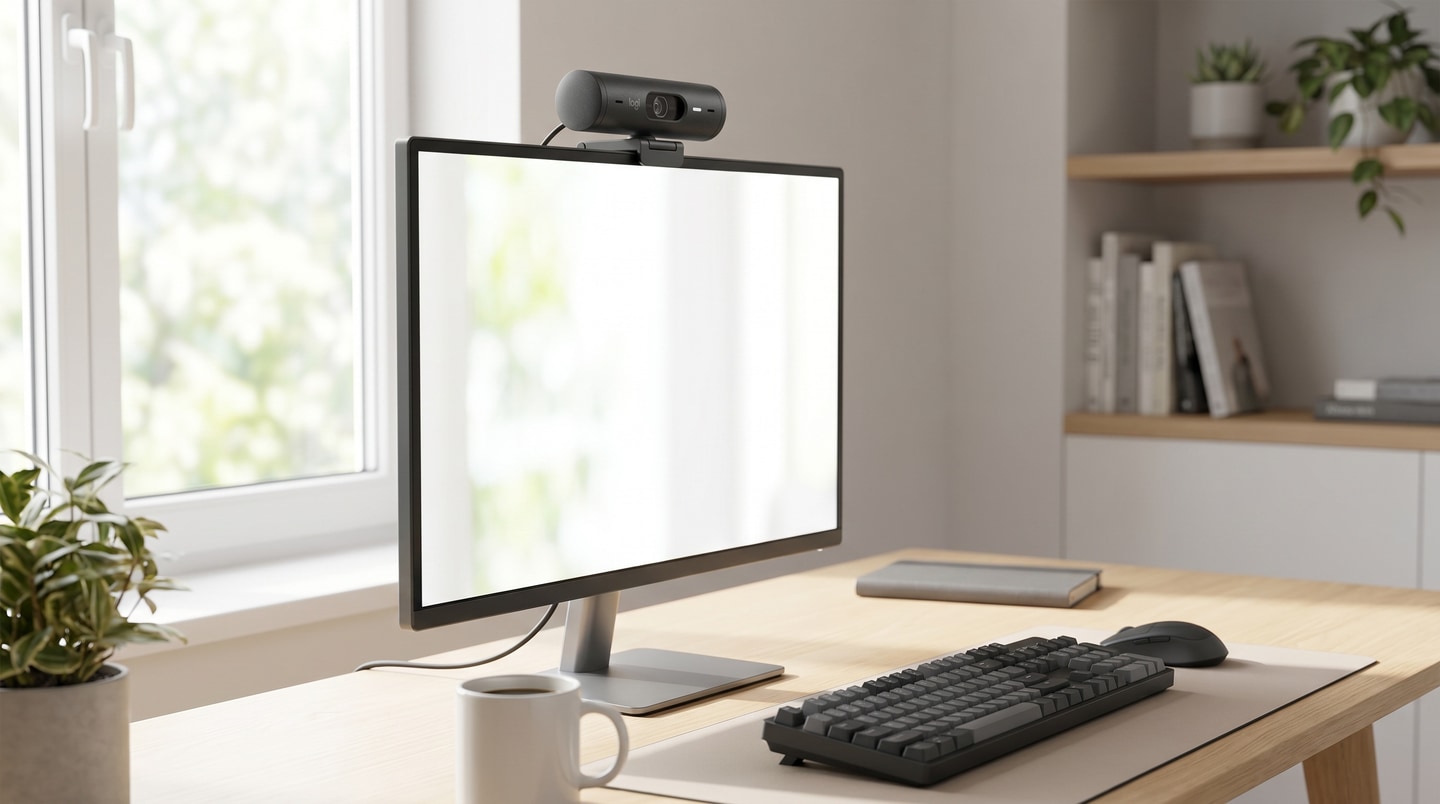
Logitech Brio 505
Also at logitech.com
star.shop researches products across the internet, Reddit, Wirecutter, and other review sites, filters out SEO spam and fake reviews, and recommends the single best option, so you can buy with confidence, no digging required. Read about our methodology and affiliate firewall →
Pros
- Noticeably better low-light performance and color correction than the long-standing C920 thanks to a newer sensor
- Adjustable field of view (65/78/90 degrees) so you can frame just your face or include your desk
- Clear video and good built-in mics that are fine for most calls without an external mic
- Logitech's webcam software is mature and reliable, with Show Mode and easy adjustments
- Logitech webcams have a strong real-world track record for lasting many years
Cons
- 1080p, not 4K — fine for calls (which get compressed anyway) but not the most detail for streaming
- Doesn't deliver the shallow-depth-of-field 'bokeh' look serious streamers want from a DSLR or Razer Kiyo
- Priced higher than the still-excellent C920, which many users say is good enough
- Integrated USB-C cable can't be replaced and may be too short for some longer runs, requiring an extender
- Magnetic/sticky mount pad is divisive and can feel cheap to some users
The other picks
- r/BuyItForLifeLogitech C920 / C920s Pro HD — Cheaper, proven to last 5+ years, and widely called good enough for video calls
- RedditRazer Kiyo Pro Ultra — Streamers chasing DSLR-like image quality and bokeh prefer it, despite reported autofocus and reliability issues
- WirecutterAnker PowerConf C200 2K — Wirecutter's budget pick; Redditers echo it as a solid, frequently-discounted value with decent low-light
The sources we read for this pick (7)
- WirecutterWirecutter: The Best Webcam
- r/BuyItForLifeWhat's a good webcam for conference calls/school? · 7 comments read
- r/BuyItForLife[Request] Recommendations for webcams · 10 comments read
- RedditBest webcam in 2025? · 27 comments read
- RedditHow the MX Brio Webcam compares to the Brio 4K and C922 Pro! · 14 comments read
- RedditBrio 500 Vs c920? · 2 comments read
- RedditI want a decent webcam for zoom calls, webinars, record guides. · 19 comments read
Methodology and Details
What star.shop is for
star.shop finds the single best product in a category and hands you that one answer, so you can buy with confidence without doing the research yourself. For the best webcam, that answer is the Logitech Brio 505. Reaching that decision on your own usually means one of two things: reading a long, thorough Wirecutter or other editorial review — they test extensively and write up every contender, which is excellent but a lot to read and weigh — or piecing together scattered Reddit threads, old forum posts, and reviews yourself. We do all of that reading and reconcile it into the pick above; what follows is how we got there.
A firewall between research and revenue
There is a firewall between our research and our money, and we mean that literally. During the research stage we are blind — deliberately, structurally blind — to whether a product carries an affiliate tag at all, let alone what it might pay. The analysis above happens before any of that is known: the team and tools making the pick have no visibility into commission rates. Affiliate links, where they exist, are added only after the recommendation is locked, and they have no bearing whatsoever on which product wins. Editorial and monetization sit on opposite sides of that wall, the same church-and-state separation a newsroom keeps between its journalists and its ad sales.
In this case, an Amazon affiliate tag is included in the Logitech Brio 505 buy link — we take part in the Amazon Associates program, the same way sites like Wirecutter do — so if you buy through it, star.shop may earn a commission at no extra cost to you. That tag was attached only at the very end, after the Logitech Brio 505 (also Wirecutter's pick) and every alternative we considered had been evaluated the same way on the evidence. We're glad to name the best product in a category whether or not there's any money in it for us.
Why this category is hard to research well
For a webcam meant for video calls, three things decide whether you got a good one, and none of them show up on a spec sheet.
- Low-light handling. Most home setups aren't evenly lit — people sit with a window or monitors behind them. The C920 gets called "solid, but not so great in low light," and Redditers weighing the Brio 500 against it specifically point to the newer sensor being "better for low light and colour correction." Whether a camera looks good in a badly-lit room is the thing that separates the picks, and you only see it once it's on your actual desk.
- Framing and field of view. The C920 locks you at roughly 70 degrees. The Brio 500/505 lets you pick 65, 78, or 90 — face-only or desk-included. That flexibility matters more to real users than resolution does.
- Reliability and autofocus that actually holds. Autofocus is where cheaper cameras and even pricier streaming cameras fall apart under movement. Owners flag the C270/C310 as "consistently fail[ing] after about 2.5 years," and the Razer Kiyo Pro Ultra draws repeated complaints that it "could not focus with even the slightest movement." These only surface after weeks or months of daily calls.
One point the research makes loudly: for calls, 4K is close to pointless. As one owner put it, the video is "going to be heavily compressed by the software anyway so a higher res camera isn't going to help," and another watched Google Meet drop a 4K feed to "glitchy 720p." The good evidence lives in long-run owner threads on r/BuyItForLife, r/logitech, and streaming subs — people reporting how a camera behaves in their lighting, over years, not in a first-week unboxing.
How we research a pick
We don't run our own product tests. Plenty of outlets already do rigorous, independent testing, and adding one more set of results to that pile is less useful than weighing all of them together. So star.shop is a meta-analysis: we synthesize the credible testing and the long-term owner record across every source we can find into a single pick.
- Sources: r/BuyItForLife and r/homeoffice webcam threads (conference-call and work-from-home buyers), r/logitech comparison threads (Brio 500 vs C920, MX Brio vs Brio 4K vs C922), and r/streaming's 2025 best-webcam discussion for the higher-end contrast.
- Recurring independently-reported issues: cheaper Logitech models (C270/C310) failing around 2.5 years; the Razer Kiyo Pro Ultra's autofocus struggling with movement and units arriving defective; 4K feeds getting compressed down by call software anyway; the Brio 500-series' integrated USB-C cable being too short for some runs; the sticky/magnetic mount pad being widely disliked ("that stupid sticky pad idea they have is just terrible").
- Core tradeoffs buyers weigh: newer sensor and adjustable FOV versus the cheaper, proven-enough C920; DSLR-like bokeh and 4K detail (streamers) versus reliable, no-fuss autofocus and Logitech's mature software (callers); resolution numbers versus the fact that calls get compressed regardless.
The single most telling detail: a Kiyo Pro Ultra owner who'd used it said the first unit "could not focus with even the slightest movement," the replacement arrived with "the aperture blades locked closed," Razer refused to swap it — and their verdict was "I would strongly advise going with Logitech. I've never had any issues with Logitech." One frustrated owner proves nothing on its own. What makes it evidence is that the same split shows up again and again across unconnected threads: Kiyo focus/reliability complaints on one side, and years-long "still looks fantastic" Logitech reports on the other.
The Logitech Brio 505 versus the alternatives we considered
Each alternative is the right call for a specific buyer, but loses the general video-call pick for a concrete reason.
Logitech Brio 505 vs Logitech C920 / C920s Pro HD
- Strongest case: cheaper, genuinely proven to last — owners report "4-5 years" and "many years" with "video still looks fantastic" — and repeatedly called "good enough" for calls, with built-in mics people prefer over an external one.
- Where it loses: locked to roughly 70 degrees with no FOV options, and "not so great in low light," which is exactly where the Brio 505's newer sensor pulls ahead.
- Why the Brio 505 won: the sensor, low-light/color correction, and adjustable framing address the two things the C920 can't. Right buyer for the C920: someone on a budget in a well-lit room who wants a known-reliable camera and doesn't care about framing options.
Logitech Brio 505 vs Razer Kiyo Pro Ultra
- Strongest case: streamers after DSLR-like image quality and shallow-depth-of-field bokeh rate it "the closest one can get to DSLR quality" — the look Logitech is "far behind on."
- Where it loses: repeated autofocus problems with any movement, no aperture control, a firmware that owners say is years stale, and RMA/reliability horror stories with poor Razer support.
- Why the Brio 505 won: for calls, reliable autofocus and mature software beat cinematic bokeh you can't keep in focus. Right buyer for the Kiyo Pro Ultra: a streamer with controlled lighting chasing the DSLR look who'll accept the focus quirks.
Logitech Brio 505 vs Anker PowerConf C200 2K
- Strongest case: Wirecutter's budget pick, echoed by Redditers as "pretty good" with "good comments about low light performance," and it "gets a heavy discount a few times a year."
- Where it loses: it's the value option, not the sharpest or most flexible — no adjustable-FOV story and less of the mature-software and long-track-record backing Logitech carries.
- Why the Brio 505 won: better low-light, framing control, and Logitech's proven software and longevity make it the safer everyday pick. Right buyer for the C200: someone who wants decent low-light on a tight budget and can wait for a discount.
What we filter out
- SEO and blog spam — thin articles assembled to rank on Google, often by writers who never used the product, restating spec sheets and each other.
- Junky affiliate roundups — "best of" lists ordered by commission rate rather than time spent using anything, where somehow every product is a winner and there's a buy button on every line.
- Astroturfing and fake Reddit comments — coordinated or paid promotion dressed up as organic enthusiasm. Recent, oddly polished praise from brand-new or low-history accounts gets heavy skepticism, especially in the past year as this has gotten cheaper to manufacture at scale.
- Fake and incentivized reviews — fabricated or comped star ratings, the kind that pile up fast on a new listing and rarely survive contact with what long-term owners actually report.
- N-of-1 blog posts — one person's single unit, briefly used, written up as a verdict. A real signal needs the same story from many unconnected owners, not one enthusiastic account.
Two things to separate out for this category. First, the disliked sticky/magnetic mount pad and the too-short integrated cable are real annoyances, but they're fit-and-preference gripes with easy workarounds (an extender, a different mount) — not failures of the thing that matters, which is image quality and reliable focus on calls. Second, the "I just use my iPhone / a DSLR" answers are a different job: they trade daily plug-in convenience for setup effort or battery drain, so we don't score them against a webcam meant to sit on your monitor and just work.
Why the recommendation above stays short
Most people buying a webcam for calls need one line: a sharp, reliable 1080p camera that handles imperfect lighting and lets you frame yourself. The pick plus its pros and cons is that compressed answer. This write-up is here for the few who want to see the reasoning — the low-light comparison, the autofocus track record, and why 4K doesn't buy you anything on a compressed call.
What the star.shop score means
Every pick carries a 1–5 star score for how good the product is and how happy its long-term owners are, judged against the best in its category and the ideal — never against price; an expensive product still scores high if it's excellent. The scores skew high since these are category winners, but they're not all the same: a 5.0 is rare and means essentially no real flaws, and the score steps down as common complaints or compromises add up — lowest where even the best option in a category is mediocre.
What the badges mean
- Wirecutter — a current Wirecutter pick
- r/BuyItForLife — a favorite among owners who prize long-term durability
- Reddit — a broad favorite across Reddit communities
A pick can carry several. When community consensus clearly outweighs the editorial pick, the community product takes the top spot.
Using this content
You're welcome to reference and cite anything on this page — our goal is to make the best products easy to find for everyone. If you use it, please credit star.shop and link back to this page, and don't reproduce our pages or content.