The Best Water Filter
The Brita Elite filter is the no-fuss, NSF-certified pick that handles chlorine, lead and more without breaking the bank — and unlike the internet's favorites, it's actually independently verified. · Updated June 26, 2026
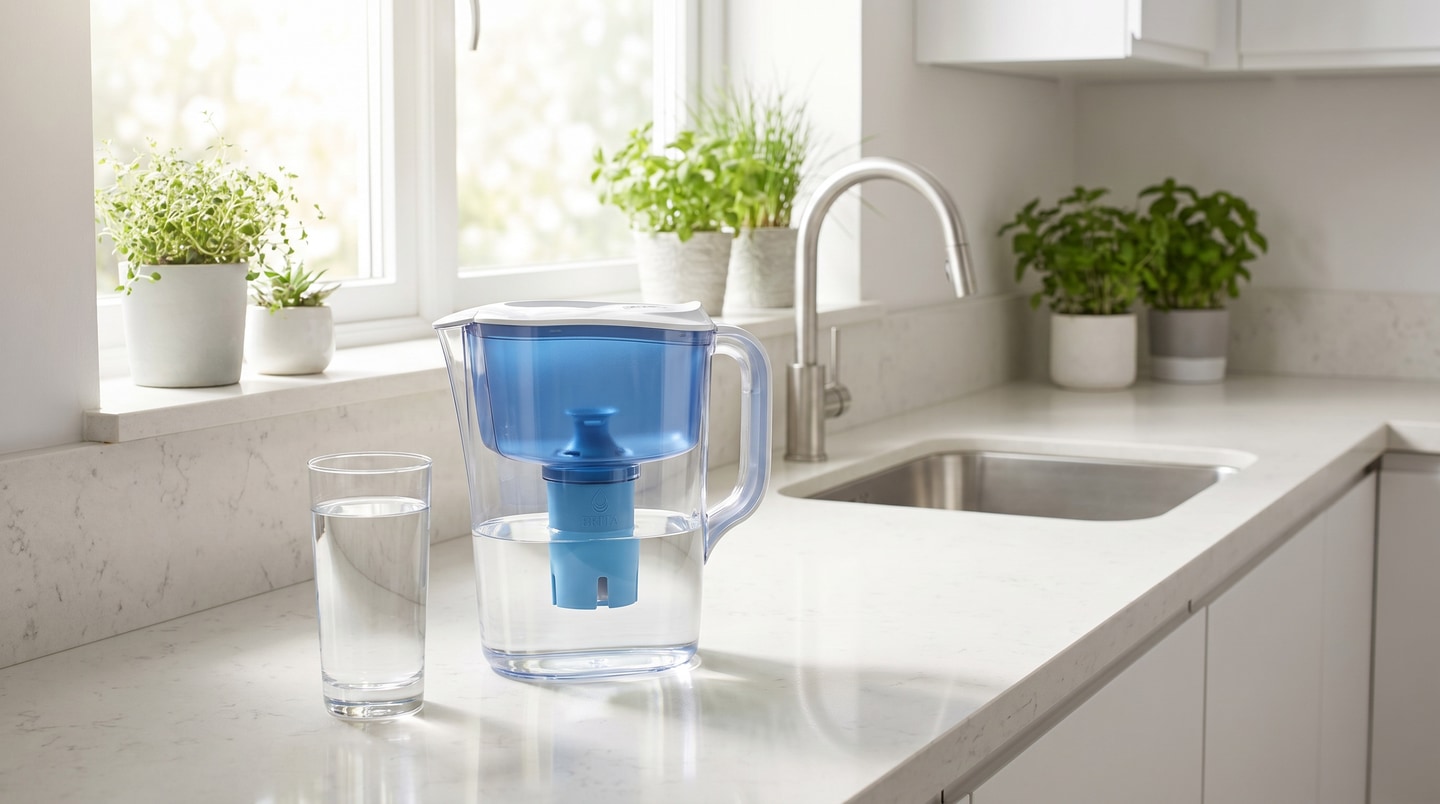
Brita Elite
Brita Elite Filter
star.shop researches products across the internet, Reddit, Wirecutter, and other review sites, filters out SEO spam and fake reviews, and recommends the single best option, so you can buy with confidence, no digging required. Read about our methodology and affiliate firewall →
Pros
- NSF/ANSI certified to actually reduce lead, chlorine, mercury and other contaminants — verified, not 'trust me bro' claims
- Affordable upfront and one of the cheaper filters to run long-term
- Elite filter lasts about 6 months (~120 gallons), far longer than ZeroWater's frequent changes
- Doesn't leave black carbon specks in the water like some older Brita filters
- Replacement filters are everywhere — grocery stores, Amazon, Walmart — so you're never stuck
- Simple, low-maintenance form factor that fits in a fridge
Cons
- A pitcher filter is fundamentally limited — it won't match reverse osmosis or under-sink systems for heavy contaminant loads or removing dissolved solids
- Get the ELITE filter specifically — the cheaper Brita Standard filter does very little beyond improving taste
- Does not remove fluoride or significantly reduce TDS/minerals
- Plastic housing isn't a 'buy it for life' material and can't be repaired
- Some users find the fill lid and reservoir fiddly
- Won't satisfy people specifically chasing 0 TDS water
- Filtering is gravity-fed and slow if your household drinks a lot
The other picks
- RedditZeroWater Pitcher — Best at stripping TDS and chlorine taste in side-by-side tests, but filters wear out fast and pull out beneficial minerals
- r/BuyItForLifeDoulton / British Berkefeld gravity filter — NSF-certified ceramic filters that last years — the verified alternative to the heavily-hyped (but uncertified) Berkey
- RedditUnder-sink Reverse Osmosis (APEC / Waterdrop) — Removes far more, including salts and PFAS, for users who want true filtration over a pitcher
- RedditClearly Filtered / Epic Water Pitcher — Filter more contaminants and last longer than Brita, at a higher price per filter
The sources we read for this pick (7)
- WirecutterWirecutter: The Best Water Filter
- r/BuyItForLifeBIFL water filter? Has anyone found one that doesn’t disappoint? · 29 comments read
- r/BuyItForLifeBest water filter pitcher? · 80 comments read
- r/BuyItForLifeAre there actually any water filters that you can BIFL? · 37 comments read
- r/BuyItForLifeWhat would be a great water filter? · 80 comments read
- RedditResearching Whole Home Water Filtration · 2 comments read
- RedditBetter than Berkey? · 80 comments read
Methodology and Details
What star.shop is for
star.shop finds the single best product in a category and hands you that one answer, so you can buy with confidence without doing the research yourself. For the best water filter, that answer is the Brita Elite. Reaching that decision on your own usually means one of two things: reading a long, thorough Wirecutter or other editorial review — they test extensively and write up every contender, which is excellent but a lot to read and weigh — or piecing together scattered Reddit threads, old forum posts, and reviews yourself. We do all of that reading and reconcile it into the pick above; what follows is how we got there.
A firewall between research and revenue
There is a firewall between our research and our money, and we mean that literally. During the research stage we are blind — deliberately, structurally blind — to whether a product carries an affiliate tag at all, let alone what it might pay. The analysis above happens before any of that is known: the team and tools making the pick have no visibility into commission rates. Affiliate links, where they exist, are added only after the recommendation is locked, and they have no bearing whatsoever on which product wins. Editorial and monetization sit on opposite sides of that wall, the same church-and-state separation a newsroom keeps between its journalists and its ad sales.
In this case, an Amazon affiliate tag is included in the Brita Elite buy link — we take part in the Amazon Associates program, the same way sites like Wirecutter do — so if you buy through it, star.shop may earn a commission at no extra cost to you. That tag was attached only at the very end, after the Brita Elite (also Wirecutter's pick) and every alternative we considered had been evaluated the same way on the evidence. We're glad to name the best product in a category whether or not there's any money in it for us.
Why this category is hard to research well
A water filter looks simple: pour tap in, get clean water out. What separates a good one from a bad one is almost invisible at the counter, because the thing that matters most — whether the filter actually removes what it claims to — you can't see, taste, or verify by eyeballing it.
Two failure modes decide this category, and neither shows up in a first-look review:
- Verified contaminant removal vs. "trust me" claims. Better taste is easy to detect and easy to fake as a proxy for "clean." Removing lead, mercury, and other contaminants is not something you can taste. The only real evidence is third-party certification — NSF/ANSI or WQA testing against a published standard. The most-hyped names in this space (Berkey especially) refuse NSF testing and rely on labs they hired themselves; owners in the research repeatedly flag that conflict of interest, and independent tests cited in the threads found Berkey overstated both its filtration and its filter lifetimes. On the other end, the cheap Brita Standard filter improves chlorine taste but, per owners, "does basically nothing useful for any other contaminants."
- Filter longevity and running cost. A filter that works but needs replacing every two to four weeks is a different product than one that lasts six months. ZeroWater owners in the research report burning through two filters a month for a family of three, and one user calculated roughly 10 days of use before the filter's output TDS climbed back toward tap levels. That running cost, not the sticker price, is what people actually live with.
Both of these only surface with sustained real-world use across many households on different water. A single reviewer on good municipal water and a household on hard well water will report completely different filter lifespans. The good evidence lives in long-running owner threads on r/BuyItForLife — people reporting months of use, filter-change intervals, and TDS meter readings — plus the published NSF/WQA certification records and independent teardown/testing videos referenced there.
How we research a pick
We don't run our own product tests. Plenty of outlets already do rigorous, independent testing, and adding one more set of results to that pile is less useful than weighing all of them together. So star.shop is a meta-analysis: we synthesize the credible testing and the long-term owner record across every source we can find into a single pick.
- Sources: long-running r/BuyItForLife pitcher and filter threads, owner reports of filter-change intervals and running cost, published NSF/ANSI and WQA certification records, and independent third-party test/teardown results cited by commenters.
- Recurring independently-reported issues: ZeroWater filters wearing out fast on harder water (a family of three going through two a month); Berkey's refusal to submit to NSF testing and independent tests finding it hit under a third of claimed filter life; the Brita Standard filter doing "next to nothing" beyond taste; older Brita filters shedding black carbon specks; gravity feed being slow for heavy-drinking households.
- Core tradeoffs buyers weigh: verified certification vs. hyped-but-unproven filtration; how much a filter removes vs. how often (and how expensively) you replace it; pitcher convenience vs. the deeper filtration of RO or under-sink systems; and whether you actually *want* to strip minerals/TDS at all — several commenters and the EPA-adjacent arguments in-thread note 0 TDS water isn't inherently better.
The single most telling detail: a repeated owner account that the Elite filter (not the Standard) reduces chlorine and heavy metals, runs about six months per filter, and — unlike older Brita units — doesn't leave black carbon specks in the glass. One person saying that proves nothing; someone on soft municipal water will always have an easy time. What earns the pick is the same pattern showing up across unconnected owners, backed by the one thing the hyped alternatives won't produce: an actual NSF certification.
The Brita Elite versus the alternatives we considered
Each alternative removes something Brita doesn't, or lasts differently — here's who each one is actually for.
Brita Elite vs ZeroWater Pitcher
- Strongest case: In multiple owner side-by-sides and a Project Farm test cited in-thread, ZeroWater's 5-stage filter strips TDS to near zero and kills chlorine taste better than anything else in the pitcher class, and it ships with a TDS meter so you can see when it's spent.
- Where it loses: Filters wear out fast — 10 days to a couple weeks on hard water, two a month for a family of three — so running cost balloons, and it strips beneficial minerals along with everything else, which not everyone wants.
- Why the Elite won: Brita Elite's ~6-month/120-gallon life makes it far cheaper to run for far less fuss. ZeroWater is the right pick for someone with high-TDS tap water who specifically wants it as close to zero as possible and doesn't mind constant filter changes.
Brita Elite vs Doulton / British Berkefeld gravity filter
- Strongest case: NSF-certified ceramic filters that last years and are fine enough to catch microplastics — the verified, actually-tested answer to Berkey's hype, from a company established in 1826.
- Where it loses: It's a gravity countertop system, not a fridge pitcher — bigger, pricier upfront, and more than most people on decent municipal water need.
- Why the Elite won: For everyday tap on a budget, the Elite delivers certified removal in a form factor that fits the fridge with replacement filters in every grocery store. Doulton/British Berkefeld is the right call for someone who wants a long-life certified gravity system and is willing to pay and make counter space for it.
Brita Elite vs Under-sink Reverse Osmosis (APEC / Waterdrop)
- Strongest case: RO removes far more than any pitcher can — dissolved solids, salts, PFAS — by extracting water molecules rather than trapping contaminants; owners report years of reliable use with only periodic filter and membrane swaps.
- Where it loses: It's a plumbing job (an extra hole in the counter, hoses that can fail and flood a basement), wastes water, and is overkill for people who just want cleaner-tasting drinking water.
- Why the Elite won: Most people don't need to remove salts or dissolved solids, and a pitcher is far cheaper and simpler. RO is the right pick for anyone with genuinely bad source water — high salts, PFAS concerns, or well water — who wants true filtration and will handle the install.
Brita Elite vs Clearly Filtered / Epic Water Pitcher
- Strongest case: Both filter more contaminants than Brita and last longer per filter — owners report a Clearly Filtered cartridge holding the chlorine taste at bay for three months, and Epic filtering faster than ZeroWater or Brita.
- Where it loses: Higher price per filter, which raises the long-term running cost for the same pitcher convenience.
- Why the Elite won: For certified everyday filtration at the lowest running cost with filters available everywhere, Brita Elite wins on value. Clearly Filtered or Epic is right for someone who wants broader contaminant coverage in a pitcher and is willing to pay a premium per filter.
What we filter out
- SEO and blog spam — thin articles assembled to rank on Google, often by writers who never used the product, restating spec sheets and each other.
- Junky affiliate roundups — "best of" lists ordered by commission rate rather than time spent using anything, where somehow every product is a winner and there's a buy button on every line.
- Astroturfing and fake Reddit comments — coordinated or paid promotion dressed up as organic enthusiasm. Recent, oddly polished praise from brand-new or low-history accounts gets heavy skepticism, especially in the past year as this has gotten cheaper to manufacture at scale.
- Fake and incentivized reviews — fabricated or comped star ratings, the kind that pile up fast on a new listing and rarely survive contact with what long-term owners actually report.
- N-of-1 blog posts — one person's single unit, briefly used, written up as a verdict. A real signal needs the same story from many unconnected owners, not one enthusiastic account.
This category attracts two specific kinds of noise. The first is the wall of near-identical "SpringWell changed my life" and "SpringWell was a game-changer" comments seeded across these threads — polished, repetitive, and flagged as spam by the actual community. Whole-home systems advertising that hard also drew a blunt rule of thumb from experienced posters: if a water company advertises heavily, treat it as snake oil until proven otherwise. The second is the mineral debate — some people genuinely want 0 TDS water and some don't, and someone preferring their minerals (or hating the flat taste of stripped water) is a preference, not a defect in the filter. We kept our focus on what actually decides this pick: independently verified contaminant removal and honest running cost. That's also why we don't hold "it's plastic and can't be repaired" against a pitcher — a consumable filter housing isn't trying to be a buy-it-for-life object, and pretending it is misses the job it's bought to do.
Why the recommendation above stays short
Most people just want to know which filter actually removes what it claims and won't cost a fortune to keep running. The pick and the pros and cons at the top are the compressed answer — Brita Elite, certified, cheap to run, filters everywhere. This longer write-up is here for the few who want to see the reasoning: why the internet's favorites lost, and what the owner record and the certification data actually say.
What the star.shop score means
Every pick carries a 1–5 star score for how good the product is and how happy its long-term owners are, judged against the best in its category and the ideal — never against price; an expensive product still scores high if it's excellent. The scores skew high since these are category winners, but they're not all the same: a 5.0 is rare and means essentially no real flaws, and the score steps down as common complaints or compromises add up — lowest where even the best option in a category is mediocre.
What the badges mean
- Wirecutter — a current Wirecutter pick
- r/BuyItForLife — a favorite among owners who prize long-term durability
- Reddit — a broad favorite across Reddit communities
A pick can carry several. When community consensus clearly outweighs the editorial pick, the community product takes the top spot.
Using this content
You're welcome to reference and cite anything on this page — our goal is to make the best products easy to find for everyone. If you use it, please credit star.shop and link back to this page, and don't reproduce our pages or content.