The Best Trekking Poles
Light carbon-and-cork poles with rock-solid FlickLocks that hikers keep for a decade-plus — the do-it-all standard. · Updated June 26, 2026
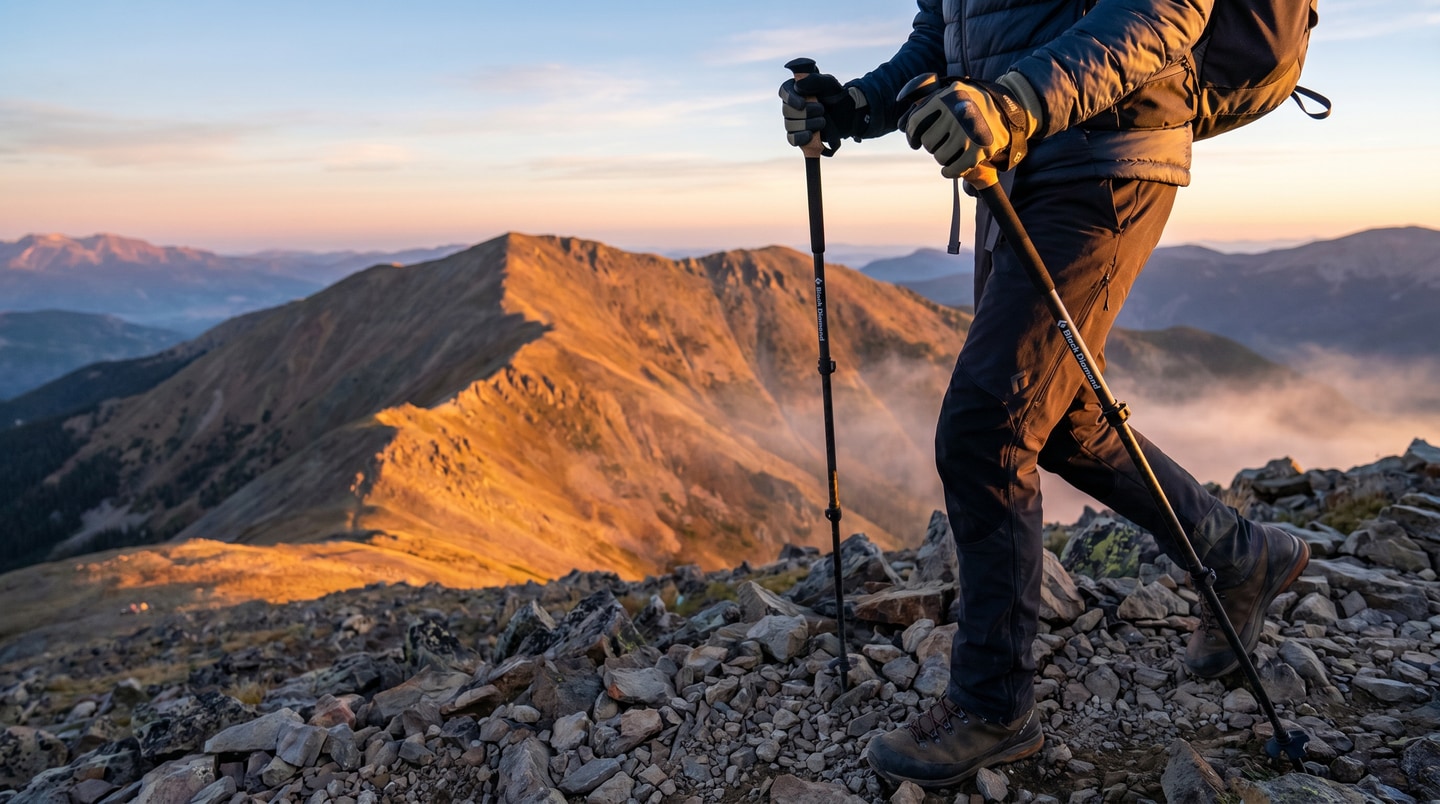
Black Diamond Alpine Carbon Cork
Black Diamond Alpine Carbon Cork Trekking Poles
Also at blackdiamondequipment.com
star.shop researches products across the internet, Reddit, Wirecutter, and other review sites, filters out SEO spam and fake reviews, and recommends the single best option, so you can buy with confidence, no digging required. Read about our methodology and affiliate firewall →
Pros
- Carbon shafts keep weight low without feeling flimsy — multiple users report 8+ years and thousands of miles with no issues
- Cork grips handle sweat better than foam or rubber and get more comfortable with use
- External FlickLock levers are the consensus winner over twist-locks, which hikers overwhelmingly say fail and collapse under load
- Black Diamond's customer service and cheap replacement sections are repeatedly praised — bent a section and they ship you a new one
- Quiet and silent compared to budget carbon poles that rattle and ping
- Works well as tent poles for trekking-pole shelters
Cons
- Pricey at ~$230 — many hikers honestly note a $40-65 pair performs nearly as well for casual use
- Carbon can shatter (rather than bend) under an off-axis load, a real concern if these double as your only tent poles
- Some find Black Diamond's angled/ergo grips uncomfortable, though these straight cork grips are widely liked
- Tips wear down and need occasional replacement (cheap and easy)
- Only a 1-year formal warranty, though real-world service is generous
The other picks
- WirecutterBlack Diamond Pursuit Trekking Poles — Wirecutter's top pick; a lighter, cheaper BD that owners say is nearly indistinguishable on the trail
- WirecutterCascade Mountain Tech Carbon Fiber Quick Lock Poles — Wirecutter's budget pick and the runaway community value choice — ~$30-65 from Costco/Amazon and 'better than BD I paid 4x as much'
- RedditLeki Makalu / Leki cork poles — Beloved for lifetime aluminum replacement and 15-26 year lifespans; fans say nothing else comes close
The sources we read for this pick (7)
- WirecutterWirecutter: The Best Trekking Poles
- r/BuyItForLifeBIFL Trekking/Hiking Poles (year round use) · 2 comments read
- RedditBlack Diamond vs. Leki trekking poles? · 4 comments read
- RedditBest trekking poles? · 80 comments read
- RedditBest trekking poles? · 29 comments read
- RedditBudget trekking poles that aren't Cascade Mountain Tech · 34 comments read
- RedditWhat is the best hiking trekking pole? · 11 comments read
Methodology and Details
What star.shop is for
star.shop finds the single best product in a category and hands you that one answer, so you can buy with confidence without doing the research yourself. For the best trekking poles, that answer is the Black Diamond Alpine Carbon Cork. Reaching that decision on your own usually means one of two things: reading a long, thorough Wirecutter or other editorial review — they test extensively and write up every contender, which is excellent but a lot to read and weigh — or piecing together scattered Reddit threads, old forum posts, and reviews yourself. We do all of that reading and reconcile it into the pick above; what follows is how we got there.
A firewall between research and revenue
There is a firewall between our research and our money, and we mean that literally. During the research stage we are blind — deliberately, structurally blind — to whether a product carries an affiliate tag at all, let alone what it might pay. The analysis above happens before any of that is known: the team and tools making the pick have no visibility into commission rates. Affiliate links, where they exist, are added only after the recommendation is locked, and they have no bearing whatsoever on which product wins. Editorial and monetization sit on opposite sides of that wall, the same church-and-state separation a newsroom keeps between its journalists and its ad sales.
In this case, an Amazon affiliate tag is included in the Black Diamond Alpine Carbon Cork buy link — we take part in the Amazon Associates program, the same way sites like Wirecutter do — so if you buy through it, star.shop may earn a commission at no extra cost to you. That tag was attached only at the very end, after the Black Diamond Alpine Carbon Cork (also Wirecutter's pick) and every alternative we considered had been evaluated the same way on the evidence. We're glad to name the best product in a category whether or not there's any money in it for us.
Why this category is hard to research well
Trekking poles look interchangeable on a spec sheet, and a lot of hikers will tell you flatly that "a pole is a pole is a pole." That is half true and half a trap. The things that actually separate a good pole from a bad one only show up after real miles, and first-look reviews miss all of them.
Here is what the research says decides this category:
- The locking mechanism. This is the single most repeated point across every thread. External lever locks ("FlickLocks") are the consensus winner; twist-locks are what hikers overwhelmingly warn against. The failure mode matters: twist-locks loosen with use and grit, then collapse exactly when you're loading the pole to haul yourself up hard terrain. One owner had a 25-year pair where the twist-lock is what finally failed. You cannot see this in a store — it only surfaces after the joint gets crusty with mud.
- Grip material and shape. Cork versus foam versus rubber is partly preference, but cork specifically handles sweaty hands better and gets more comfortable with use — multiple owners independently confirm this. Grip *shape* is separate: Black Diamond's angled/ergo grips draw complaints ("actually makes my wrist hurt"), while the straight cork grips are widely liked. A buyer who orders online without handling the grip can end up with a shape that hurts.
- Carbon versus aluminum, and the tent-pole question. Carbon is lighter and, in most conditions, plenty strong. The catch is that carbon's strength is directional — an off-axis load can make it shatter rather than bend. That is a real concern if the poles double as your only shelter poles, because aluminum can be carefully straightened trailside and carbon cannot. Several hikers deliberately choose aluminum for that peace of mind.
- Noise. Easy to overlook, impossible to un-hear. Budget carbon poles are repeatedly described as rattling, pinging, or making "a springy noise like a cartoon character on a pogo stick." This is a lived-in complaint, not a spec.
Good evidence for all of this lives in long-run owner reports on r/hiking, r/Ultralight, and r/BuyItForLife — people describing years and thousands of miles, which joints failed, and how the brand handled a bent section.
How we research a pick
We don't run our own product tests. Plenty of outlets already do rigorous, independent testing, and adding one more set of results to that pile is less useful than weighing all of them together. So star.shop is a meta-analysis: we synthesize the credible testing and the long-term owner record across every source we can find into a single pick.
- Sources: long-running threads on r/hiking, r/Ultralight, and r/BuyItForLife, plus repeated head-to-heads between Black Diamond, Leki, and Cascade Mountain Tech.
- Recurring independently-reported issues: twist-locks loosening and collapsing under load; carbon shattering on off-axis falls (a bigger deal when poles are also tent poles); budget carbon poles rattling and being noisy; BD's ergo/angled grips being uncomfortable for some hands; tips wearing to nubs and needing replacement.
- Core tradeoffs buyers weigh: carbon (light) vs aluminum (bendable, safer as tent poles); cork (sweat-friendly) vs foam; paying ~$230 for a BD vs the widely-repeated point that a $30–65 pair "works nearly as well" for casual use; brand replacement-part support vs a lifetime aluminum warranty.
- What we discount: single-unit blog verdicts, and any noise complaint that never names which model is rattling.
The most telling detail on the winner is the customer-service story: one owner bent the lower shaft glissading, called Black Diamond, got a reasonably priced replacement — and when they couldn't extract the bent section, BD shipped a free replacement middle shaft too, from a real person in Utah. That is exactly the kind of thing that makes a pricey pole worth it. One account proves nothing, though. What earns the pick is that the same pattern — 8+ years, a couple thousand miles, "bombproof," cheap replacement sections, service that just handles it — shows up over and over from owners who have never met each other.
The Black Diamond Alpine Carbon Cork versus the alternatives we considered
Every alternative here is a genuinely good pole; each lost to the Alpine Carbon Cork for a specific buyer reason.
Black Diamond Alpine Carbon Cork vs Black Diamond Pursuit Trekking Poles
- Strongest case: It's Wirecutter's top pick — a lighter, cheaper BD from the same brand, with the same FlickLocks and the same rock-solid warranty support. One owner who has run both says blindfolded they couldn't tell the difference on the trail.
- Where it loses: It doesn't have the cork grip. The Alpine Carbon Cork's specific draw is cork handling sweat and getting more comfortable with use, plus the straight-grip shape hikers consistently prefer over BD's angled ergo grips.
- Why the winner won: For the buyer who wants cork specifically and plans to keep one do-it-all pole for a decade, the Alpine Carbon Cork is the standard. Pick the Pursuit if you want to shave weight and money and don't care about cork.
Black Diamond Alpine Carbon Cork vs Cascade Mountain Tech Carbon Fiber Quick Lock Poles
- Strongest case: The runaway value choice. At ~$30–65 from Costco or Amazon, owners rack up thousands of miles and years on them, and more than one says they're "better and lighter than Black Diamond ones I paid 4x as much." Many hikers honestly admit a cheap pair works nearly as well for casual use.
- Where it loses: They're repeatedly called noisy — the rattle and springy ping is the top complaint, and CMT's straps get described as "ass." The Alpine Carbon Cork is silent by comparison and comes with BD's replacement-part support.
- Why the winner won: For a first pair, or for anyone testing whether they even like poles, CMT is the right buy and the community says so loudly. The Alpine Carbon Cork earns its price for the hiker who wants quiet, cork, and a pole they'll keep and service for years.
Black Diamond Alpine Carbon Cork vs Leki Makalu / Leki cork poles
- Strongest case: Leki's lifetime aluminum-section replacement is genuinely better than BD's 1-year formal warranty, and the longevity reports back it up — owners cite 15, even 26 years of hard use, and Leki's customer service is called among the best. Aluminum also bends instead of shattering, which matters if poles double as tent poles.
- Where it loses: The beloved Makalus are aluminum, so they carry a weight penalty against the carbon Alpine Carbon Cork, and Leki's ergo hand straps and grips don't suit everyone (some hikers keep a separate set just for Nordic walking).
- Why the winner won: Leki is the pick for the hiker who prioritizes a lifetime warranty and wants aluminum's bend-don't-shatter safety. The Alpine Carbon Cork wins overall as the lighter do-it-all standard whose real-world BD service, despite the short formal warranty, keeps matching Leki in owner reports.
What we filter out
- SEO and blog spam — thin articles assembled to rank on Google, often by writers who never used the product, restating spec sheets and each other.
- Junky affiliate roundups — "best of" lists ordered by commission rate rather than time spent using anything, where somehow every product is a winner and there's a buy button on every line.
- Astroturfing and fake Reddit comments — coordinated or paid promotion dressed up as organic enthusiasm. Recent, oddly polished praise from brand-new or low-history accounts gets heavy skepticism, especially in the past year as this has gotten cheaper to manufacture at scale.
- Fake and incentivized reviews — fabricated or comped star ratings, the kind that pile up fast on a new listing and rarely survive contact with what long-term owners actually report.
- N-of-1 blog posts — one person's single unit, briefly used, written up as a verdict. A real signal needs the same story from many unconnected owners, not one enthusiastic account.
A lot of what looks like a defect in this category is actually preference. Disliking BD's angled ergo grip is a hand-shape issue, not a build failure — which is why we point buyers to the straight cork grip that's widely liked. Nordic walking is a different job entirely; hikers who do it often keep separate Leki poles, and that mismatch isn't a mark against either pole. The complaints we do weight heavily are the ones tied to what actually decides this category: twist-lock collapse under load, carbon shattering off-axis, and rattle on cheap carbon. Those recur across unconnected owners, which is why they count.
Why the recommendation above stays short
Most buyers don't need any of this. They need one solid pole that locks reliably, feels good in the hand, and lasts — and the pick plus its pros and cons is the compressed answer to that. This longer write-up is here for the few who want to see the reasoning: why the FlickLock beats the twist-lock, why cork keeps coming up, and why a $230 pole and a $40 pole can both be the right call depending on who's asking.
What the star.shop score means
Every pick carries a 1–5 star score for how good the product is and how happy its long-term owners are, judged against the best in its category and the ideal — never against price; an expensive product still scores high if it's excellent. The scores skew high since these are category winners, but they're not all the same: a 5.0 is rare and means essentially no real flaws, and the score steps down as common complaints or compromises add up — lowest where even the best option in a category is mediocre.
What the badges mean
- Wirecutter — a current Wirecutter pick
- r/BuyItForLife — a favorite among owners who prize long-term durability
- Reddit — a broad favorite across Reddit communities
A pick can carry several. When community consensus clearly outweighs the editorial pick, the community product takes the top spot.
Using this content
You're welcome to reference and cite anything on this page — our goal is to make the best products easy to find for everyone. If you use it, please credit star.shop and link back to this page, and don't reproduce our pages or content.