The Best Sleeping Bag
The down bag that owners are still using and praising 20 years later — warm, accurately rated, and built like nothing else. · Updated June 26, 2026
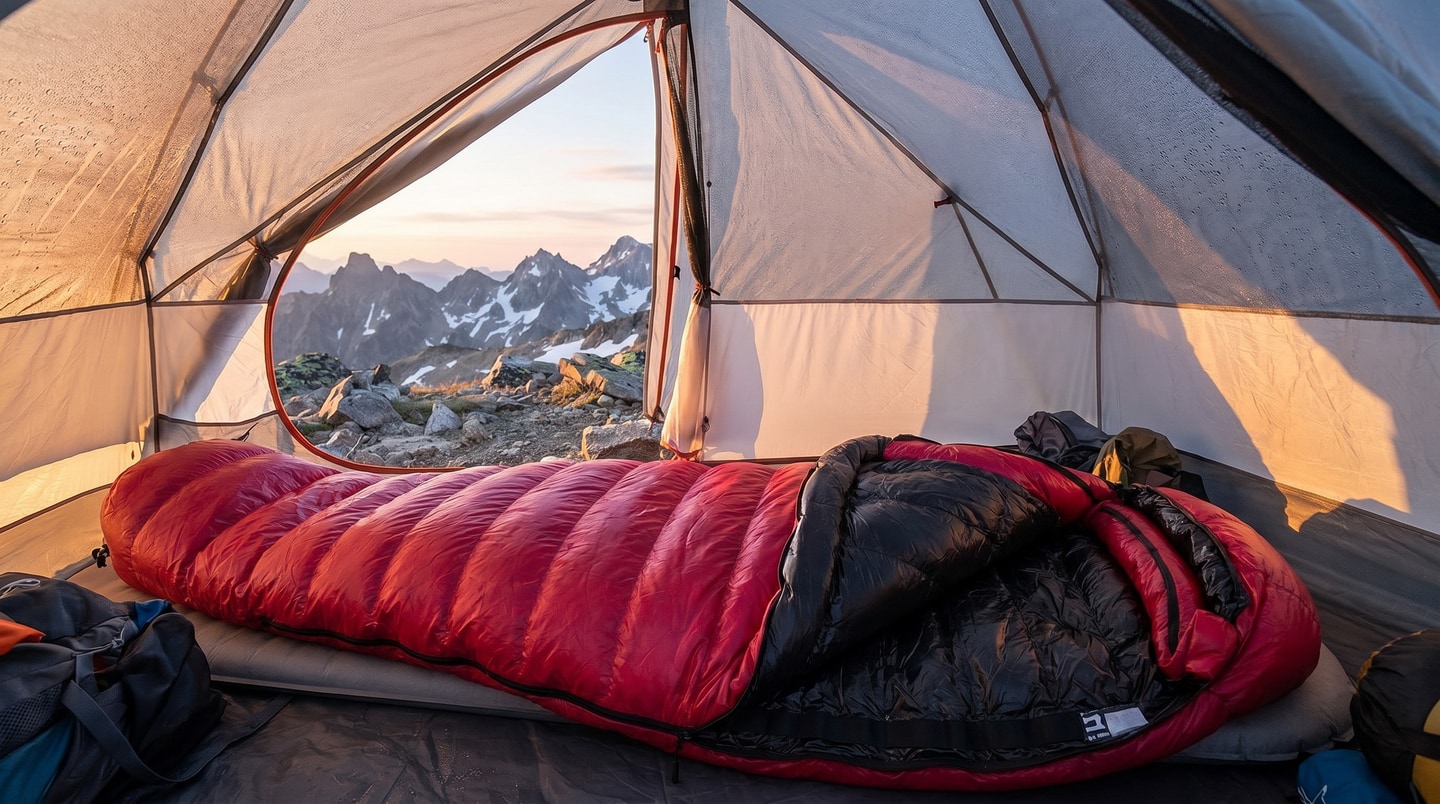
Western Mountaineering Alpinlite
Western Mountaineering Alpinlite 20°
Also at westernmountaineering.com
star.shop researches products across the internet, Reddit, Wirecutter, and other review sites, filters out SEO spam and fake reviews, and recommends the single best option, so you can buy with confidence, no digging required. Read about our methodology and affiliate firewall →
Pros
- High-fill premium goose down with extraordinary loft — owners report 20-year-old bags still performing like new
- Honest, conservative temperature ratings: it actually keeps you warm at its stated rating, unlike many competitors
- Outstanding hood, draft collar, and zipper design that experienced backpackers repeatedly single out as best-in-class
- Made in the USA with legendary customer service (free repairs and even free replacements reported)
- Roomy cut on models like the Alpinlite is comfortable for side sleepers and tossers and turners
- Compresses small and stays light despite its warmth and durability
Cons
- Very expensive — typically $500–$700, a serious investment
- Down loses insulating power if it gets wet, a real concern in wet climates like the Pacific Northwest unless you keep it dry
- Sizing runs roomy, which means some smaller or colder sleepers have to heat more dead air space
- No ISO/EN-style third-party temperature certification (the company rates conservatively in-house)
- Down requires careful storage — keep it uncompressed and hung, not stuffed, to preserve loft over the decades
The other picks
- WirecutterREI Co-op Siesta Hooded 20 / Feathered Friends Swallow YF 20 — Wirecutter favors the budget-friendly REI Siesta for most campers and the Feathered Friends Swallow as its premium ultralight pick
- RedditFeathered Friends Swallow UL / Flicker 20 — Some ULers prefer FF's higher 950 fill power, loftier feel, and center-zip Flicker quilt-bag versatility
- RedditEnlightened Equipment Revelation quilt — Popular lighter, cheaper, and more packable quilt option for warm sleepers and side sleepers
- r/BuyItForLifeWiggy's Lamilite bags / US Military Modular Sleep System — Cited as the most genuinely buy-it-for-life options thanks to lifetime warranty and indestructible synthetic build (at the cost of weight and bulk)
The sources we read for this pick (8)
- WirecutterWirecutter: The Best Sleeping Bag
- r/BuyItForLifeBIFL: Sleeping Bag? · 69 comments read
- r/BuyItForLifeBIFL Request - Mummy style sleeping bag. · 60 comments read
- RedditWhat is your go-to brand(s?) for sleeping bags? · 41 comments read
- r/BuyItForLifeBest sleeping bag, liner, and pad for field work · 79 comments read
- RedditFeathered Friends or Western Mountaineering · 39 comments read
- RedditFeathered Friends - Sleeping Bag · 20 comments read
- RedditDeciding on a 0° bag. Feathered friends versus Western mountaineering · 46 comments read
Methodology and Details
What star.shop is for
star.shop finds the single best product in a category and hands you that one answer, so you can buy with confidence without doing the research yourself. For the best sleeping bag, that answer is the Western Mountaineering Alpinlite. Reaching that decision on your own usually means one of two things: reading a long, thorough Wirecutter or other editorial review — they test extensively and write up every contender, which is excellent but a lot to read and weigh — or piecing together scattered Reddit threads, old forum posts, and reviews yourself. We do all of that reading and reconcile it into the pick above; what follows is how we got there.
A firewall between research and revenue
There is a firewall between our research and our money, and we mean that literally. During the research stage we are blind — deliberately, structurally blind — to whether a product carries an affiliate tag at all, let alone what it might pay. The analysis above happens before any of that is known: the team and tools making the pick have no visibility into commission rates. Affiliate links, where they exist, are added only after the recommendation is locked, and they have no bearing whatsoever on which product wins. Editorial and monetization sit on opposite sides of that wall, the same church-and-state separation a newsroom keeps between its journalists and its ad sales.
In this case, an Amazon affiliate tag is included in the Western Mountaineering Alpinlite buy link — we take part in the Amazon Associates program, the same way sites like Wirecutter do — so if you buy through it, star.shop may earn a commission at no extra cost to you. That tag was attached only at the very end, after the Western Mountaineering Alpinlite and every alternative we considered had been evaluated the same way on the evidence. We're glad to name the best product in a category whether or not there's any money in it for us.
Why this category is hard to research well
A sleeping bag looks simple on a spec sheet — a temperature rating, a fill power, a weight — and every one of those numbers can mislead you. What actually separates a good bag from a bad one only shows up after nights in the field.
- Temperature ratings are the big lie. Owners repeatedly report padding a manufacturer's rating by 20 degrees to get the real comfort number. A bag stamped "20°" from one maker keeps you warm at 20°; from another it leaves you shivering at 35°. You cannot see this on a listing — only in trip reports from people who slept in known conditions.
- Down versus synthetic is a climate decision, not a quality one. Down packs smaller, weighs less, and re-lofts for decades if kept dry. It also becomes, in one owner's words, "a soggy worthless mess" when wet. Multiple Pacific Northwest and Oregon campers in the research warn that down "attracts mold" in wet climates and push synthetic instead. The right answer depends entirely on where you sleep.
- The details you touch every night decide comfort. Hood shape, draft collar, zipper design, and cut (roomy for side sleepers and tossers, or snug and warm) matter more than the headline numbers. These only reveal themselves in use, which is why first-look reviews miss them.
- Storage, not use, is what kills bags. The single most repeated mistake across every thread is storing a bag stuffed in its compression sack. Loft dies from compression, washing, and moisture — not from nights slept. A bag's real lifespan is a story about care, and no unboxing review can tell it.
The good evidence lives in long owner records: people reporting on bags they've had 15, 20, 30 years, guides who use one bag for hundreds of nights, and the specific accounts of how a company handled a repair or replacement.
How we research a pick
We don't run our own product tests. Plenty of outlets already do rigorous, independent testing, and adding one more set of results to that pile is less useful than weighing all of them together. So star.shop is a meta-analysis: we synthesize the credible testing and the long-term owner record across every source we can find into a single pick.
- Sources: r/BuyItForLife, r/CampingGear, and r/CampingandHiking threads where owners report actual trips, actual temperatures, and actual years of use — not spec-sheet summaries.
- Recurring independently-reported issues with down: it fails when wet and dries slowly; it molds in humid coastal climates unless kept dry; it needs uncompressed storage (hung or in a large mesh sack) to hold loft over the decades. These come up in nearly every thread, from unconnected owners.
- The core tradeoff buyers weigh: the "triangle" that experienced hikers keep repeating — light, affordable, durable, pick two. Down buys you light and packable at a high price; military and synthetic bags buy you durable and cheap at the cost of weight and bulk.
- The other tradeoff: roomy cut (comfortable for side sleepers, but more dead air to heat) versus snug mummy (warmer, less comfortable). And down's warmth-to-weight against synthetic's forgiveness when soaked.
One anchor detail: a guide in the research reports a Western Mountaineering Apache with hundreds of nights on it, still lofting "as much as it had 20 years ago," and another owner describes calling the company after a dog chewed a hole in an $800 Puma — they sent a brand-new bag, free, no questions. One story like that proves nothing on its own; a single lucky owner or a single good-service anecdote is noise. What moves this to a pick is the same story recurring across many unconnected owners — 20-year-old bags still warm, ratings that hold true, repairs and replacements handled without a fight — told by people who have never met each other.
The Western Mountaineering Alpinlite versus the alternatives we considered
Each of these lost for a specific reason, and each is still the right bag for a specific buyer.
Western Mountaineering Alpinlite vs REI Co-op Siesta Hooded 20 / Feathered Friends Swallow YF 20
- Strongest case: Wirecutter picks the REI Siesta as a budget-friendly bag for most campers and the Feathered Friends Swallow as its premium ultralight choice; both are well-regarded, and the Siesta costs a fraction of the Alpinlite.
- Where it loses: the Siesta doesn't carry the multi-decade owner record or the honest-rating reputation the community singles out; the Swallow is close, but the community record here centers on Western Mountaineering's hood, collar, zipper, and service.
- Why the winner won: the deciding evidence for this pick is the community field record — 20-year-old bags still performing — and Western Mountaineering has it in depth. The Siesta is the right call for a car-camper on a budget who doesn't need a bag to outlast a career.
Western Mountaineering Alpinlite vs Feathered Friends Swallow UL / Flicker 20
- Strongest case: Feathered Friends is repeatedly named alongside Western Mountaineering as top-tier; some ultralighters prefer its higher 950 fill power, loftier feel, and the center-zip Flicker for quilt-bag versatility.
- Where it loses: it's a near-peer, not a clear beat — the research doesn't show it edging out Western Mountaineering on the things owners praise most (accurate ratings, hood and collar, long-haul service record).
- Why the winner won: for most buyers they're a coin-flip and the Alpinlite has the deeper owner history. The Swallow or Flicker is the right pick for the ULer chasing maximum loft-per-ounce or wanting the flexibility of a center-zip.
Western Mountaineering Alpinlite vs Enlightened Equipment Revelation quilt
- Strongest case: the Revelation is lighter, cheaper, and more packable, and side sleepers and tossers in the research love it — one bigger side sleeper says he'll "never go back to a bag," praising the freedom to move and vent the foot box.
- Where it loses: a quilt is an open system with no hood, less suited to colder nights and drafty conditions where the Alpinlite's collar and hood earn their keep; one owner faults the cinch-string placement.
- Why the winner won: the Alpinlite is the more complete cold-weather bag with the longer track record. The Revelation is the right pick for a warm-sleeping side sleeper who wants the lightest, most packable option and camps in milder temperatures.
Western Mountaineering Alpinlite vs Wiggy's Lamilite bags / US Military Modular Sleep System
- Strongest case: these are the genuinely buy-it-for-life options. Wiggy's carries a lifetime warranty covering seams, zipper, and loss of loft, and claims its Lamilite recovers even after vacuum compression; the military modular system is called "indestructible," rated to around -30° layered, and found used for roughly $100.
- Where it loses: both are heavy and bulky — the military system pushes 11 pounds and packs to the size of a soccer ball — making them car-camping and cabin gear, not backpacking gear. Down still packs far smaller and lighter for the same warmth.
- Why the winner won: if weight and pack size matter at all, these are out. They're the right pick for a car-camper or someone who wants a true lifetime warranty and doesn't care about carrying it far, especially in wet conditions where synthetic shrugs off moisture.
What we filter out
- SEO and blog spam — thin articles assembled to rank on Google, often by writers who never used the product, restating spec sheets and each other.
- Junky affiliate roundups — "best of" lists ordered by commission rate rather than time spent using anything, where somehow every product is a winner and there's a buy button on every line.
- Astroturfing and fake Reddit comments — coordinated or paid promotion dressed up as organic enthusiasm. Recent, oddly polished praise from brand-new or low-history accounts gets heavy skepticism, especially in the past year as this has gotten cheaper to manufacture at scale.
- Fake and incentivized reviews — fabricated or comped star ratings, the kind that pile up fast on a new listing and rarely survive contact with what long-term owners actually report.
- N-of-1 blog posts — one person's single unit, briefly used, written up as a verdict. A real signal needs the same story from many unconnected owners, not one enthusiastic account.
We also separate preference from defect here. Down's failure when wet is not a manufacturing flaw — it's the material working as it does, and it's why a wet-climate camper may genuinely be better served by synthetic. The roomy cut is the same: some smaller or colder sleepers dislike heating the extra air space, but that's a fit mismatch, not a quality problem. And "no ISO/EN certification" reads as a red flag until you check the owner record, where the in-house ratings hold up night after night. What we keep is the evidence that speaks to what decides this category — real-condition warmth against a stated rating, the hood and zipper details, and how the bag ages under care.
Why the recommendation above stays short
Most people don't need this essay. They need to know which bag keeps its promise on temperature, survives decades if you store it right, and comes from a company that stands behind it — and that's the pick with its pros and cons at the top of the page. This write-up is here for the few who want to see the reasoning, the tradeoffs, and why the alternatives lost. Everyone else can stop at the short version and buy with confidence.
What the star.shop score means
Every pick carries a 1–5 star score for how good the product is and how happy its long-term owners are, judged against the best in its category and the ideal — never against price; an expensive product still scores high if it's excellent. The scores skew high since these are category winners, but they're not all the same: a 5.0 is rare and means essentially no real flaws, and the score steps down as common complaints or compromises add up — lowest where even the best option in a category is mediocre.
What the badges mean
- Wirecutter — a current Wirecutter pick
- r/BuyItForLife — a favorite among owners who prize long-term durability
- Reddit — a broad favorite across Reddit communities
A pick can carry several. When community consensus clearly outweighs the editorial pick, the community product takes the top spot.
Using this content
You're welcome to reference and cite anything on this page — our goal is to make the best products easy to find for everyone. If you use it, please credit star.shop and link back to this page, and don't reproduce our pages or content.