The Best Sleep Mask
Adjustable eye cups vault over your eyes for true blackout with zero eyelash pressure — the mask owners keep for years. · Updated July 3, 2026
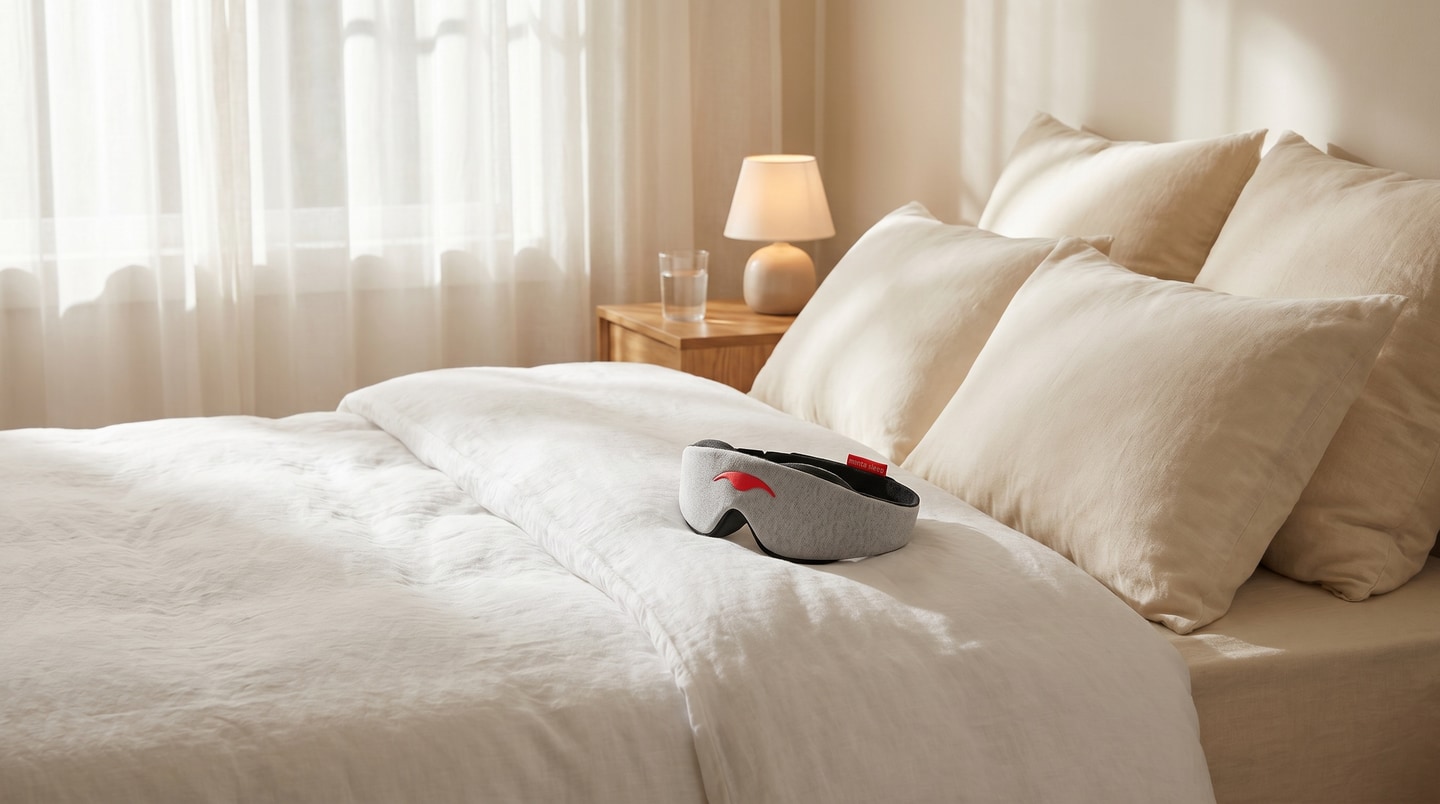
Manta Sleep Mask
Also at mantasleep.com
star.shop researches products across the internet, Reddit, Wirecutter, and other review sites, filters out SEO spam and fake reviews, and recommends the single best option, so you can buy with confidence, no digging required. Read about our methodology and affiliate firewall →
Pros
- Adjustable, removable eye cups sit over the bony orbit so there's zero pressure on your eyeballs or eyelashes — you can even open your eyes in the dark
- Consistently described as achieving true 100% blackout, including around the nose gap where cheaper masks leak light
- Combination velcro + elastic strap lets you set the fit once and slip it on, and doesn't snag hair like pure velcro bands
- Owners report using theirs nightly for 4+ years and still going strong; fully machine washable
- An optometrist in the threads specifically recommends the vaulted-cup design to avoid corneal pressure from side sleeping
Cons
- The eye cups can feel bulky/thick — several side and stomach sleepers find the standard cups shift or press when they jam their face into the pillow
- Noticeably pricier than the $10–15 Amazon masks that also block light well
- Some owners find they must sleep only on their back to keep the cups comfortably in place
- Glued eye-cup pads can come unstuck after roughly six months of heavy use and need replacing
- The back strap is fairly thick and can be felt when lying flat on your back
The other picks
- WirecutterMzoo Sleep Mask — a great sub-$20 contoured pick for people who want blackout on a budget and don't want to fuss with adjustable cups — but it works by sheer bulk of material and feels substantial rather than truly weightlessWhy the Manta Sleep Mask still wins: Manta's adjustable, removable cups give a custom fit and lower profile that stays put across sleep positions better than Mzoo's fixed one-piece build
- WirecutterAlaska Bear Natural Silk Sleep Mask — the pick for CPAP users and anyone who wants something thin, silky and cheap that fits under headgear — but it's a flat mask that rests on the eyes rather than vaulting over themWhy the Manta Sleep Mask still wins: Manta's eye cups eliminate the eyelash/eyeball pressure and nose-gap light leaks that a flat silk mask can't
- r/BuyItForLifeBucky Sleep Mask — the long-standing budget favorite for roomy eye cups and easy-to-spot bright colors — but multiple owners report it peels apart and the foam cracks within a yearWhy the Manta Sleep Mask still wins: Manta lasts years of nightly use where the Bucky's construction degrades fast
- r/BuyItForLifeTempur-Pedic Sleep Mask — beloved for plush memory-foam comfort with owners citing 13–14 years of use — but it's a velcro-strap contoured mask that runs less adjustable and isn't officially machine washableWhy the Manta Sleep Mask still wins: Manta matches the comfort and light-blocking while adding removable, position-tunable cups and worry-free washing
The sources we read for this pick (8)
- WirecutterThe Best Sleep Mask
- r/BuyItForLifeWhat are the best sleep masks these days? · 30 comments read
- r/BuyItForLifeWhat's the best, most durable sleep mask out there? · 30 comments read
- r/BuyItForLifeSleep mask recommendations for a fidgety sleeper? · 21 comments read
- r/BuyItForLifeLooking for a blackout eye mask for side sleepers that you can't really feel when it's on · 30 comments read
- r/BuyItForLifeSleep mask recommendations that will hold for years? · 21 comments read
- RedditBest sleep mask? · 30 comments read
- RedditManta Sleep Mask Reviews? · 11 comments read
Methodology and Details
What star.shop is for
star.shop finds the single best product in a category and hands you that one answer, so you can buy with confidence without doing the research yourself. For the best sleep mask, that answer is the Manta Sleep Mask. Reaching that decision on your own usually means one of two things: reading a long, thorough Wirecutter or other editorial review — they test extensively and write up every contender, which is excellent but a lot to read and weigh — or piecing together scattered Reddit threads, old forum posts, and reviews yourself. We do all of that reading and reconcile it into the pick above; what follows is how we got there.
A firewall between research and revenue
There is a firewall between our research and our money, and we mean that literally. During the research stage we are blind — deliberately, structurally blind — to whether a product carries an affiliate tag at all, let alone what it might pay. The analysis above happens before any of that is known: the team and tools making the pick have no visibility into commission rates. Affiliate links, where they exist, are added only after the recommendation is locked, and they have no bearing whatsoever on which product wins. Editorial and monetization sit on opposite sides of that wall, the same church-and-state separation a newsroom keeps between its journalists and its ad sales.
In this case, an Amazon affiliate tag is included in the Manta Sleep Mask buy link — we take part in the Amazon Associates program, the same way sites like Wirecutter do — so if you buy through it, star.shop may earn a commission at no extra cost to you. That tag was attached only at the very end, after the Manta Sleep Mask and every alternative we considered had been evaluated the same way on the evidence. We're glad to name the best product in a category whether or not there's any money in it for us.
Why this category is hard to research well
A sleep mask looks like a solved problem in the store — a strip of fabric that blocks light. What actually separates a good one from a bad one only shows up after you lie down and start moving.
- True blackout depends on the nose gap, not the eye patch. Cheap masks that look opaque leak light where the fabric meets the bridge of your nose. Owners describe seeing light "around the inside lower corner of the eyes" no matter how tight they cinch it. You can't see this failure until you're lying in a dark room with your eyes open.
- Eye pressure is the hidden dealbreaker. Flat masks rest directly on your lids and lashes. People who dislike them almost never say so in a first-look review — the discomfort registers over a full night, when the mask presses your eyeballs or you try to open your eyes and can't. Masks with cups that vault over the bony orbit avoid this; flat masks can't.
- Sleep position decides everything. A mask that's perfect on your back can shift, ride up, or jam against the pillow the moment you roll onto your side or push your face down. The recurring complaint against cupped designs is that they're "super thick pads" that move for side and stomach sleepers. This is invisible until you actually toss and turn in one.
- The strap is a slow-motion failure point. Pure velcro snags hair and stretches out; plain elastic degrades. Whether a mask still fits and stays put a year in comes down to how the strap is built, which nobody can judge from a photo.
The useful evidence lives in long, position-specific owner threads on r/BuyItForLife and r/sleep — people reporting years of nightly use, exactly which position they sleep in, and where the light still leaks.
How we research a pick
We don't run our own product tests. Plenty of outlets already do rigorous, independent testing, and adding one more set of results to that pile is less useful than weighing all of them together. So star.shop is a meta-analysis: we synthesize the credible testing and the long-term owner record across every source we can find into a single pick.
- Sources: multiple r/BuyItForLife threads specifically about durable and side-sleeper masks, r/sleep discussion and a dedicated Manta review thread, plus scattered optometrist and owner input in those threads.
- Recurring independently-reported strengths: owners repeatedly call the Manta the only mask that holds true blackout when they're on their side, credit the removable, adjustable eye cups with eliminating eyelash and eyeball pressure, and note the combination velcro + elastic strap — set the velcro once, slip it on like elastic, and it doesn't snag hair or stretch out.
- Recurring independently-reported problems: side and "jam-my-face-into-the-pillow" sleepers report the standard cups feel bulky and shift or press into the eyes; several owners say they can only sleep on their back to keep the cups in place; the glued eye-cup pads can come unstuck after roughly six months of heavy use (one owner is on their second set); the back strap is thick enough to feel when lying flat.
- Core tradeoffs buyers weigh: cup design (true blackout and zero lash pressure) versus bulk that fights side sleeping; and price, since the Manta runs noticeably more than the $10–15 Amazon masks that also block light.
The most telling single detail is an optometrist in the threads who says they've seen induced corneal astigmatism in side sleepers and specifically recommends the Manta because it "vaults over the eyeball" and puts pressure on the bony orbit instead. That's a strong anchor — but one professional's recommendation proves nothing on its own. What makes it credible is that unconnected owners keep describing the same thing in their own words: no eyelash pressure, blackout that survives rolling onto their side, and units still going nightly at four and five years.
The Manta Sleep Mask versus the alternatives we considered
Every mask below lost on a specific point — usually blackout, eye pressure, or how it holds up over years of washing.
Manta Sleep Mask vs Mzoo Sleep Mask (Wirecutter's pick)
- Strongest case for it: a genuinely good sub-$20 contoured mask; multiple owners report four-plus years of use, blackout in any position, and a band that doesn't snag hair.
- Where it loses: it achieves blackout by sheer bulk of material, especially at the nose, so the whole thing feels substantial rather than low-profile — one owner noted it "feels substantial not always in a good way."
- Why the Manta won: the removable, adjustable cups give a custom fit and a lower profile that stays put across sleep positions. The Mzoo is the right call for someone who wants budget blackout and doesn't want to fuss with adjusting cups.
Manta Sleep Mask vs Alaska Bear Natural Silk Sleep Mask (Wirecutter's pick)
- Strongest case for it: thin, silky, and cheap (around $10), it fits under CPAP headgear, and owners report five-plus years of nightly use through many washes.
- Where it loses: it's a flat mask that rests on the eyes rather than vaulting over them, so it can't solve lash/eyeball pressure or the nose-gap light leak that flat masks are prone to.
- Why the Manta won: the cups eliminate the exact pressure and light-leak problems a flat silk mask leaves on the table. The Alaska Bear is the pick for CPAP users and anyone who wants something thin and silky under $15.
Manta Sleep Mask vs Bucky Sleep Mask (a BuyItForLife pick)
- Strongest case for it: the long-standing budget favorite, with the roomiest eye cups in these threads and bright colors so you can find it in the covers.
- Where it loses: multiple owners report it peels apart and the foam underneath cracks within a year — one posted photos of a Bucky falling apart at the one-year mark.
- Why the Manta won: owners run the Manta nightly for years where the Bucky degrades fast. The Bucky suits someone who wants roomy cups cheaply and doesn't mind replacing it.
Manta Sleep Mask vs Tempur-Pedic Sleep Mask (a BuyItForLife pick)
- Strongest case for it: plush memory foam that owners call the most comfortable they've used, with some citing 13–14 years of service from a single mask.
- Where it loses: it's a velcro-strap contoured mask that runs less adjustable, and it's officially not machine washable (owners wash it anyway, at their own risk), plus the strap tends to be the part that eventually needs replacing.
- Why the Manta won: it matches the comfort and light-blocking while adding removable, position-tunable cups and worry-free machine washing. The Tempur-Pedic is right for someone who wants set-and-forget memory-foam comfort and doesn't care about swappable cups.
What we filter out
- SEO and blog spam — thin articles assembled to rank on Google, often by writers who never used the product, restating spec sheets and each other.
- Junky affiliate roundups — "best of" lists ordered by commission rate rather than time spent using anything, where somehow every product is a winner and there's a buy button on every line.
- Astroturfing and fake Reddit comments — coordinated or paid promotion dressed up as organic enthusiasm. Recent, oddly polished praise from brand-new or low-history accounts gets heavy skepticism, especially in the past year as this has gotten cheaper to manufacture at scale.
- Fake and incentivized reviews — fabricated or comped star ratings, the kind that pile up fast on a new listing and rarely survive contact with what long-term owners actually report.
- N-of-1 blog posts — one person's single unit, briefly used, written up as a verdict. A real signal needs the same story from many unconnected owners, not one enthusiastic account.
This category attracts a lot of it. Several threads contain the exact pattern — glossy, out-of-nowhere praise for a "game-changer" mask with a tracking link, and in one r/sleep thread an owner calls out accounts replying to each other about the same single-product brand. We also treat sleep-position fit as preference, not defect: the loudest complaints about the Manta come from side and stomach sleepers, and those are real, but a back sleeper reading them as a flaw would be misreading their own use case. The things that actually decide this pick — true blackout at the nose, no eye pressure, and a strap that survives years of washing — are the things that hold up when you read past the incentivized noise.
Why the recommendation above stays short
Most people just want to know which mask to buy and what the catch is. The pick and the pros and cons at the top are the compressed answer — blackout, no lash pressure, years of nightly use, with an honest flag that it fights side sleeping. This longer write-up is here for the few who want to see the reasoning and the alternatives we ruled out before trusting it.
What the star.shop score means
Every pick carries a 1–5 star score for how good the product is and how happy its long-term owners are, judged against the best in its category and the ideal — never against price; an expensive product still scores high if it's excellent. The scores skew high since these are category winners, but they're not all the same: a 5.0 is rare and means essentially no real flaws, and the score steps down as common complaints or compromises add up — lowest where even the best option in a category is mediocre.
What the badges mean
- Wirecutter — a current Wirecutter pick
- r/BuyItForLife — a favorite among owners who prize long-term durability
- Reddit — a broad favorite across Reddit communities
A pick can carry several. When community consensus clearly outweighs the editorial pick, the community product takes the top spot.
Using this content
You're welcome to reference and cite anything on this page — our goal is to make the best products easy to find for everyone. If you use it, please credit star.shop and link back to this page, and don't reproduce our pages or content.