The Best Satellite Messenger
A pocketable two-way satellite communicator that pairs with your phone for reliable off-grid messaging and SOS — for the price of a single Mini 2. · Updated June 25, 2026
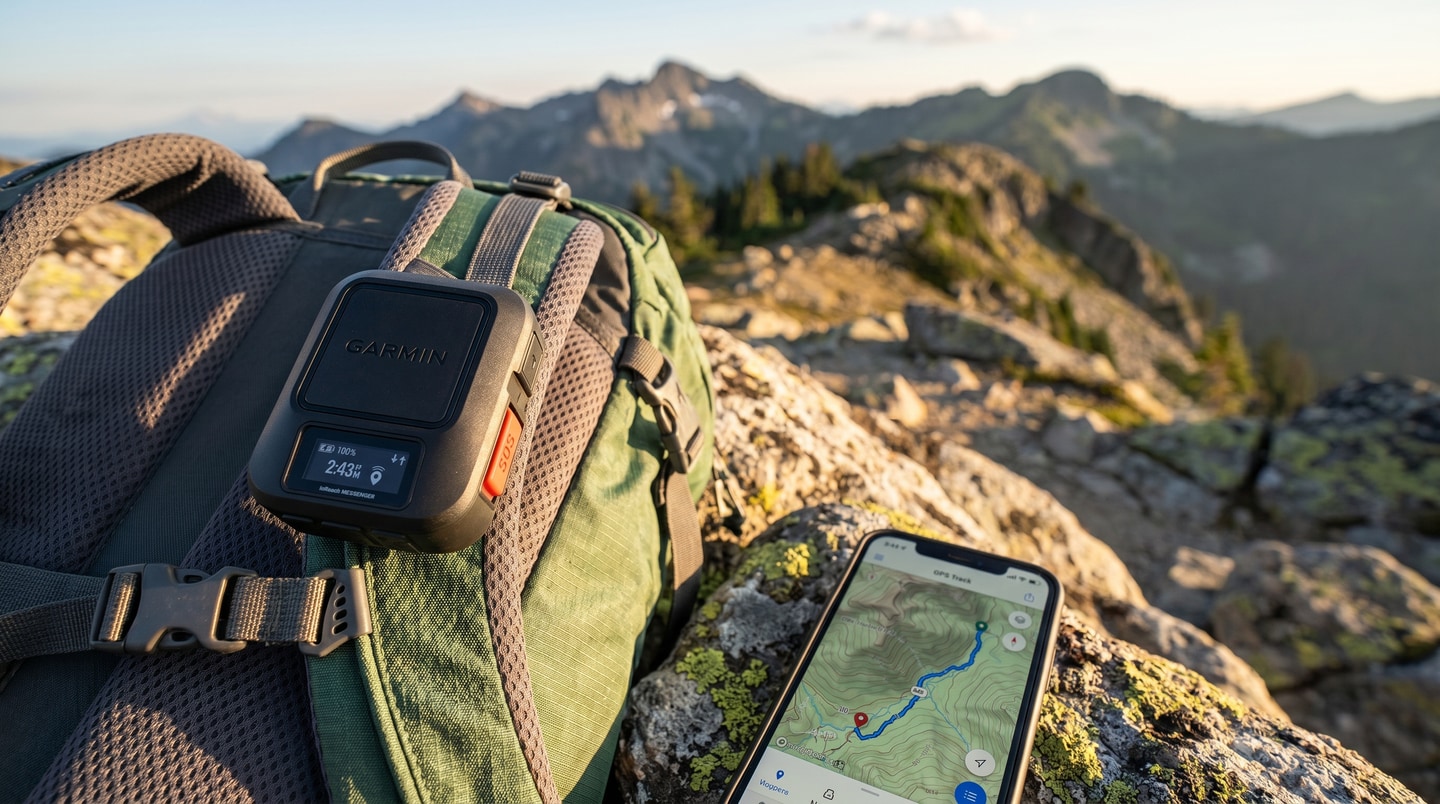
Garmin inReach Messenger
Also at garmin.com
star.shop researches products across the internet, Reddit, Wirecutter, and other review sites, filters out SEO spam and fake reviews, and recommends the single best option, so you can buy with confidence, no digging required. Read about our methodology and affiliate firewall →
Pros
- Small and light enough to clip to a pack strap and forget about
- Best-in-class companion app (Garmin Messenger) makes texting and tripping painless
- Faster antenna and reliable 100% message-success reputation on the Iridium network
- Cheaper than the inReach Mini 2 while keeping two-way messaging and SOS
- Long battery life, and it can even top up your phone in a pinch
- Improved month-to-month subscription plans with 50 messages on the Essential tier
Cons
- Frustrating to operate standalone — it really wants to be paired with a phone
- No built-in GPS navigation or topo maps like the pricier Mini 2
- Requires an ongoing subscription to do anything useful
- r/BuyItForLife crowds lean toward the Mini 2 for a true standalone device, and toward subscription-free PLBs like the ACR ResQLink for pure no-maintenance SOS longevity
- No screen-based messaging composition without the app
The other picks
- r/BuyItForLifeGarmin inReach Mini 2 — for those who want a true standalone device with built-in GPS navigation and TracBackWhy the Garmin inReach Messenger still wins: The Messenger is cheaper, has a faster antenna and longer battery, and can reverse-charge your phone
- RedditZOLEO — for users who want a real cell number so contacts can text them from the startWhy the Garmin inReach Messenger still wins: The Messenger keeps Garmin's affordable SAR insurance, which Garmin dropped for ZOLEO devices
- RedditSPOT X — for someone who prefers a larger display and physical keyboard over phone pairingWhy the Garmin inReach Messenger still wins: The Messenger rides Iridium rather than SPOT's sparser Globalstar network, favored for reliability under trees and mountains
- RedditBivystick — for those wanting free check-ins and no cancellation or reactivation feesWhy the Garmin inReach Messenger still wins: The Messenger's better antenna and reverse-charging edge out the Bivystick's fee savings
The sources we read for this pick (7)
- WirecutterWirecutter: The Best Satellite Messenger
- RedditSatellite communication yea or nay? · 14 comments read
- RedditNeed Help Deciding on a Satellite Communicator · 14 comments read
- RedditZoleo and Garmin Inreach Comparison · 14 comments read
- RedditGarmin inReach Mini2, Garmin Messenger, Zoleo? · 14 comments read
- RedditWhat satellite communicator to get? · 14 comments read
- RedditHaving difficulty choosing Garmin inreach mini 2 vs messenger · 14 comments read
Methodology and Details
What star.shop is for
star.shop finds the single best product in a category and hands you that one answer, so you can buy with confidence without doing the research yourself. For the best satellite messenger, that answer is the Garmin inReach Messenger. Reaching that decision on your own usually means one of two things: reading a long, thorough Wirecutter or other editorial review — they test extensively and write up every contender, which is excellent but a lot to read and weigh — or piecing together scattered Reddit threads, old forum posts, and reviews yourself. We do all of that reading and reconcile it into the pick above; what follows is how we got there.
A firewall between research and revenue
There is a firewall between our research and our money, and we mean that literally. During the research stage we are blind — deliberately, structurally blind — to whether a product carries an affiliate tag at all, let alone what it might pay. The analysis above happens before any of that is known: the team and tools making the pick have no visibility into commission rates. Affiliate links, where they exist, are added only after the recommendation is locked, and they have no bearing whatsoever on which product wins. Editorial and monetization sit on opposite sides of that wall, the same church-and-state separation a newsroom keeps between its journalists and its ad sales.
In this case, an Amazon affiliate tag is included in the Garmin inReach Messenger buy link — we take part in the Amazon Associates program, the same way sites like Wirecutter do — so if you buy through it, star.shop may earn a commission at no extra cost to you. That tag was attached only at the very end, after the Garmin inReach Messenger (also Wirecutter's pick) and every alternative we considered had been evaluated the same way on the evidence. We're glad to name the best product in a category whether or not there's any money in it for us.
Why this category is hard to research well
A satellite messenger is safety gear you mostly hope to never use in anger, which makes it uniquely hard to evaluate from a spec sheet. The things that actually decide it only show up in the field:
- Network reliability under real cover. Every specific in the research points here. Owners report the messages that fail are the ones sent under heavy tree cover and in mountains — "which all sat comms suffer from." The Messenger, Mini 2, and newer ZOLEO all ride the Iridium network; SPOT rides Globalstar, which had "about 1/3rd the amount of satellites as Iridium" and drew "pretty bad reviews for activities in the woods." One owner on a group hike watched the Garmin Minis "have trouble getting messages out" on a couple nights while the ZOLEOs sent fine — so device and antenna matter even on the same network.
- The interface, which for the Messenger means phone pairing. The Messenger is designed to be run through the Garmin Messenger app on a phone or watch. Owners who pair it barely think about it; owners who try to run it standalone find it frustrating, and separately Garmin's own UI got called "the worst of any device I've ever owned."
- The subscription and plan structure. No satellite messenger works without an ongoing fee, and how the plans, hold fees, and SAR insurance are structured changes which device is actually cheaper for how you travel.
None of this is visible in a first-look review. A reviewer who sends a few messages from an open field will get 100% success on any of these devices. The signal lives in threads where the same owners report the same behavior over multiple trips and seasons — r/Ultralight, r/backpacking, and the device-comparison threads where people who own two units side by side write it up.
How we research a pick
We don't run our own product tests. Plenty of outlets already do rigorous, independent testing, and adding one more set of results to that pile is less useful than weighing all of them together. So star.shop is a meta-analysis: we synthesize the credible testing and the long-term owner record across every source we can find into a single pick.
- Sources: long-running comparison threads on r/Ultralight, r/UltralightCanada, r/backpacking, and r/flyfishing, including several owners who carry both a ZOLEO and an inReach and report head-to-head; plus one detailed community comparison spreadsheet.
- Recurring independently-reported issues: all satellite messengers struggle under heavy tree cover and queue messages until they get signal; Garmin's on-device UI is widely disliked, which is why the Messenger leans so hard on the phone app; no device does anything useful without a paid plan, and the hold/reactivation fees are where "they really get you."
- The core tradeoffs buyers weigh: phone-paired simplicity vs. a true standalone device with its own screen and keyboard; a cheaper, lighter messaging-and-SOS unit vs. a pricier unit with built-in GPS navigation; and network choice (Iridium reliability vs. Globalstar's sparser coverage).
- What owners actually do: the careful ones test the device before every trip, because a second-hand story about a failed message is often "user error or improper/incomplete initial setup."
The single most telling detail: multiple owners specifically chose the Messenger over the Mini 2 for the same reasons — "better antenna, longer battery life, and reverse charging" — with one noting he carries a lighter backup charger on long trips because the Messenger can top up his phone and adds "emergency redundancy" if his phone dies mid-SOS. One person's setup proves nothing; the reason we trust it is that the same three reasons come back independently from Epix Pro users, GPSMAP owners, and flyfishing backpackers who have never met.
The Garmin inReach Messenger versus the alternatives we considered
Each of these lost to the Messenger for a specific reason, but each is the right call for a specific buyer.
Garmin inReach Messenger vs Garmin inReach Mini 2
- Strongest case: the Mini 2 is a true standalone device with built-in GPS navigation and TracBack, which several owners use "every trip" and cite as the whole reason they chose it; it's also half an ounce lighter.
- Where it loses: it's pricier, its antenna sends and receives more slowly, and it can't reverse-charge your phone or run a shorter battery.
- Why the Messenger won: cheaper, faster antenna, longer battery, and reverse-charging make it the better pick for people who already navigate with a watch or phone. Get the Mini 2 if you want one device that does its own mapping and TracBack with no phone in the loop.
Garmin inReach Messenger vs ZOLEO
- Strongest case: ZOLEO registration gives you a real cell number from the start, so contacts can text you like they'd text anyone — a genuine advantage if you need people to reach you first. Owners find it easy to use and reliable on the same Iridium network.
- Where it loses: Garmin dropped its affordable SAR insurance for ZOLEO devices, and ZOLEO's $5/month hold fee to keep your number is a recurring turnoff.
- Why the Messenger won: it keeps Garmin's affordable SAR insurance (around $30/year) on the same network. Get the ZOLEO if a persistent, textable cell number matters more to you than the SAR coverage.
Garmin inReach Messenger vs SPOT X
- Strongest case: the SPOT X has a larger display, bigger battery, and a physical keyboard, so you can compose messages without pairing a phone — "It is a mistake to depend on a cell phone," as one returning SPOT owner put it.
- Where it loses: it rides Globalstar, which had roughly a third of Iridium's satellites and drew poor reviews for use under trees.
- Why the Messenger won: Iridium is the more reliable network under exactly the cover backpackers care about. Get the SPOT X if you want a self-contained keyboard device and travel in open terrain where Globalstar coverage is fine.
Garmin inReach Messenger vs Bivystick
- Strongest case: the Bivystick offers free check-in messages, no cancellation or reactivation fees, and is slightly lighter and cheaper than the Garmin or ZOLEO.
- Where it loses: activation forces a 4-month sign-up at $30/month, which eats into the savings, and it doesn't match the Messenger's antenna.
- Why the Messenger won: the better antenna and reverse-charging outweigh the fee savings for most buyers. Get the Bivystick if you take few trips a year and the no-cancellation-fee structure genuinely fits your schedule.
What we filter out
- SEO and blog spam — thin articles assembled to rank on Google, often by writers who never used the product, restating spec sheets and each other.
- Junky affiliate roundups — "best of" lists ordered by commission rate rather than time spent using anything, where somehow every product is a winner and there's a buy button on every line.
- Astroturfing and fake Reddit comments — coordinated or paid promotion dressed up as organic enthusiasm. Recent, oddly polished praise from brand-new or low-history accounts gets heavy skepticism, especially in the past year as this has gotten cheaper to manufacture at scale.
- Fake and incentivized reviews — fabricated or comped star ratings, the kind that pile up fast on a new listing and rarely survive contact with what long-term owners actually report.
- N-of-1 blog posts — one person's single unit, briefly used, written up as a verdict. A real signal needs the same story from many unconnected owners, not one enthusiastic account.
With safety gear, the loudest filtering call is separating a device defect from a setup problem or a preference. When someone reports a Garmin failing to send under tree cover, the useful question is whether they tested it beforehand and whether any device would have done better in that spot — often the answer is no. We also keep two real preferences out of the defect column: wanting a standalone keyboard instead of phone pairing, and wanting subscription-free SOS. Those point you toward a SPOT X or a PLB, not away from a working Messenger. And the r/BuyItForLife lean toward the Mini 2 or an ACR ResQLink is about a different job — maintenance-free longevity and standalone operation — not a knock on how the Messenger handles two-way messaging.
Why the recommendation above stays short
Most people buying a satellite messenger want to know one thing: which one sends reliably and calls for help when it matters, without overpaying. The pick and the pros and cons up top are the compressed answer. This longer write-up is here for the few who want to see the reasoning — the network differences, the phone-pairing tradeoff, and why each alternative lost — before they commit.
What the star.shop score means
Every pick carries a 1–5 star score for how good the product is and how happy its long-term owners are, judged against the best in its category and the ideal — never against price; an expensive product still scores high if it's excellent. The scores skew high since these are category winners, but they're not all the same: a 5.0 is rare and means essentially no real flaws, and the score steps down as common complaints or compromises add up — lowest where even the best option in a category is mediocre.
What the badges mean
- Wirecutter — a current Wirecutter pick
- r/BuyItForLife — a favorite among owners who prize long-term durability
- Reddit — a broad favorite across Reddit communities
A pick can carry several. When community consensus clearly outweighs the editorial pick, the community product takes the top spot.
Using this content
You're welcome to reference and cite anything on this page — our goal is to make the best products easy to find for everyone. If you use it, please credit star.shop and link back to this page, and don't reproduce our pages or content.