The Best Rice Cooker
A made-in-Japan micom cooker that turns out perfect rice for a decade-plus — the community's near-unanimous default. · Updated June 27, 2026
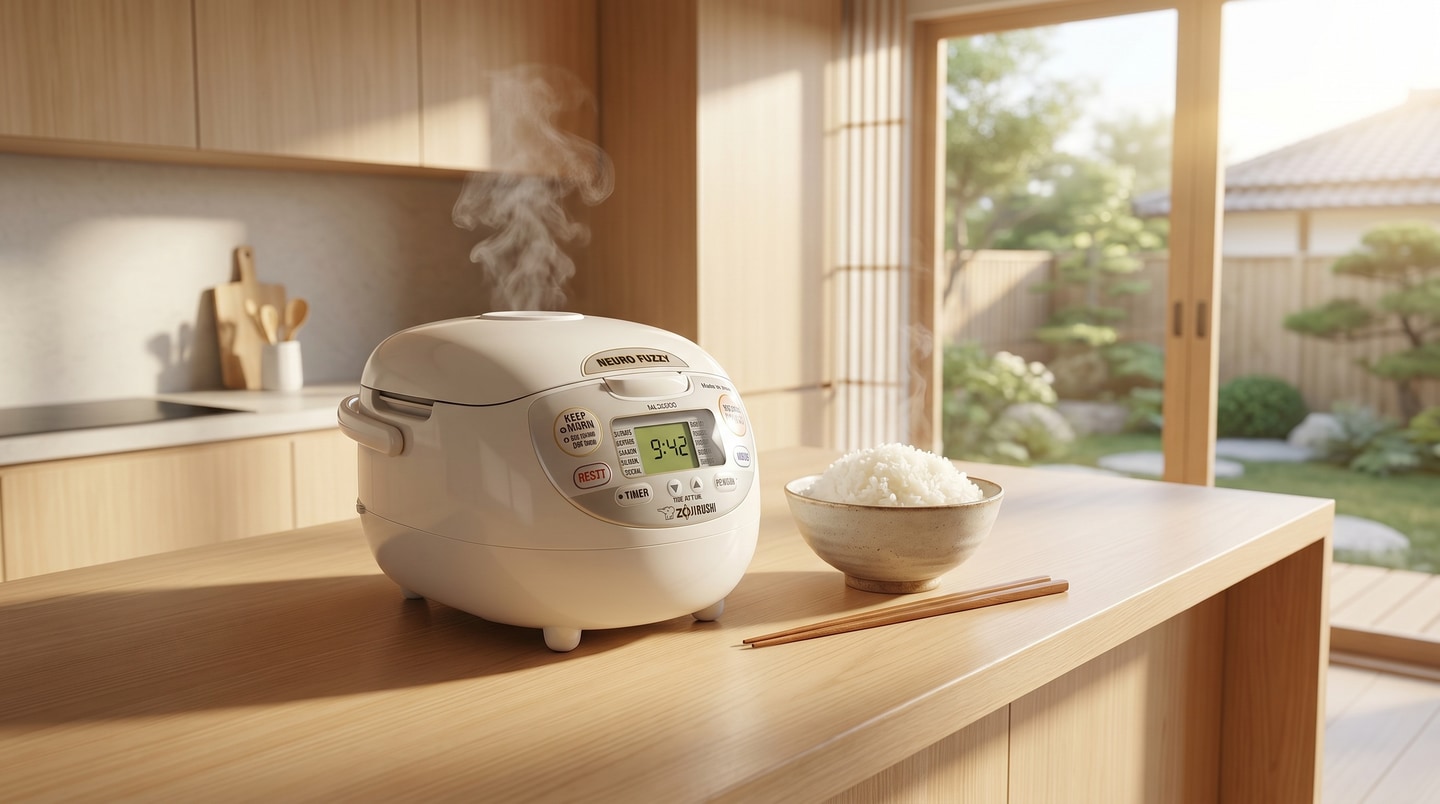
Zojirushi Neuro Fuzzy
Zojirushi NS-ZCC10 Neuro Fuzzy
Also at zojirushi.com
star.shop researches products across the internet, Reddit, Wirecutter, and other review sites, filters out SEO spam and fake reviews, and recommends the single best option, so you can buy with confidence, no digging required. Read about our methodology and affiliate firewall →
Pros
- Consistently turns out excellent white, brown, sushi and sticky rice with set-and-forget reliability
- Astonishing longevity — owners routinely report 10, 15, even 20+ years of daily use
- Neuro Fuzzy logic adjusts cooking automatically for forgiving, repeatable results
- The made-in-Japan model has noticeably better build quality than budget cookers
- Replacement inner pots, lids and parts are available through Zojirushi's US site
- Versatile: handles congee, brown rice, and mixed grains, plus a keep-warm that stays gentle
Cons
- Expensive (~$200) versus a $25 Aroma that many admit also makes fine rice
- Non-stick inner pot coating can wear out over years and replacement pots aren't cheap
- Customer support experiences are hit-or-miss; a few owners report frustrating warranty fights
- Built-in clock battery isn't easily replaceable (though there are DIY fixes)
- Lower-priced Zojirushi models are made in China rather than Japan
- Uses Teflon-style non-stick rather than stainless or ceramic, which some BiFL buyers avoid
- Cheerful jingles/songs aren't to everyone's taste
- Slower than pressure cookers — ~35-40 min vs ~20 min on a Cuckoo pressure model
The other picks
- WirecutterCuckoo CRP-P1009 Pressure Rice Cooker — Wirecutter and pressure-rice fans like it for fluffier, faster sticky rice
- WirecutterAroma Rice & Grain Cooker — Wirecutter's budget pick; several owners report a cheap Aroma lasting 8-20 years
- r/BuyItForLifeTatung stainless steel rice cooker — Simple all-mechanical design that owners run for 20-50 years
- r/BuyItForLifeTiger made-in-Japan rice cooker — Many find it indistinguishable from Zojirushi in blind use
The sources we read for this pick (4)
- WirecutterWirecutter: The Best Rice Cooker
- r/BuyItForLifeHigher end Cuckoo vs. Zojirushi · 61 comments read
- r/BuyItForLifeZojirushi v.s. Tiger Made in Japan rice cookers · 80 comments read
- r/BuyItForLifeRice Cooker Recommendations · 25 comments read
Methodology and Details
What star.shop is for
star.shop finds the single best product in a category and hands you that one answer, so you can buy with confidence without doing the research yourself. For the best rice cooker, that answer is the Zojirushi Neuro Fuzzy. Reaching that decision on your own usually means one of two things: reading a long, thorough Wirecutter or other editorial review — they test extensively and write up every contender, which is excellent but a lot to read and weigh — or piecing together scattered Reddit threads, old forum posts, and reviews yourself. We do all of that reading and reconcile it into the pick above; what follows is how we got there.
A firewall between research and revenue
There is a firewall between our research and our money, and we mean that literally. During the research stage we are blind — deliberately, structurally blind — to whether a product carries an affiliate tag at all, let alone what it might pay. The analysis above happens before any of that is known: the team and tools making the pick have no visibility into commission rates. Affiliate links, where they exist, are added only after the recommendation is locked, and they have no bearing whatsoever on which product wins. Editorial and monetization sit on opposite sides of that wall, the same church-and-state separation a newsroom keeps between its journalists and its ad sales.
In this case, an Amazon affiliate tag is included in the Zojirushi Neuro Fuzzy buy link — we take part in the Amazon Associates program, the same way sites like Wirecutter do — so if you buy through it, star.shop may earn a commission at no extra cost to you. That tag was attached only at the very end, after the Zojirushi Neuro Fuzzy and every alternative we considered had been evaluated the same way on the evidence. We're glad to name the best product in a category whether or not there's any money in it for us.
Why this category is hard to research well
A rice cooker's real job is narrow and repetitive: make good rice, over and over, for years, without you thinking about it. What separates a good one from a bad one shows up in exactly two places that a first-look review can't reach.
- Consistency across rice types over time. Anyone can post a photo of one good pot of rice on day one. What matters is whether white, brown, sushi, and sticky rice all come out right on the 500th cook, and whether the keep-warm holds rice without drying it out. That only surfaces after months of daily use.
- Longevity and parts availability. This is one category where the durability story is real, because the owner record is unusually deep. People run these machines daily for a decade or more, and the deciding question becomes whether a worn inner pot, lid, or hera can actually be replaced when it goes.
Both of these are invisible at purchase. The good evidence lives in long-running owner threads on r/BuyItForLife, where people report how their unit held up after 8, 10, 15, 20+ years and whether they could get replacement parts. Spec sheets and short reviews tell you almost nothing here.
How we research a pick
We don't run our own product tests. Plenty of outlets already do rigorous, independent testing, and adding one more set of results to that pile is less useful than weighing all of them together. So star.shop is a meta-analysis: we synthesize the credible testing and the long-term owner record across every source we can find into a single pick.
- Sources: long-running r/BuyItForLife threads comparing Zojirushi, Tiger, Cuckoo, Tatung, Aroma, and Panasonic; owner reports spanning years of daily use; the recurring "my rice cooker died, what next" recommendation threads.
- Recurring independently-reported issues: the non-stick inner pot coating wearing out over years (replacement pots aren't cheap); the built-in clock battery being difficult to replace; hit-or-miss customer support, including at least one owner who described a frustrating warranty fight over an alleged foreign object; and the lower-priced Zojirushi models being made in China rather than Japan.
- Core tradeoffs buyers weigh: price (~$200 versus a $25 Aroma that many admit also makes fine rice); speed (~35–40 min versus ~20 min on a Cuckoo pressure model); features versus simplicity; and Teflon-style non-stick versus stainless or ceramic for buyers who avoid it.
One owner summed up the pattern well: they replaced a dead 2008 Zoji's hera, inner upper lid, and pan straight from the US website, "all pretty cheap," and the machine worked like new again. Another got a replacement bowl for a scratched-up 3-cup from 1993. One account like that proves nothing on its own. What makes it a signal is how many unconnected owners tell the same story — parents' units still running at 20 years, a second-generation Zoji after a first lasted 10, daily-use machines going strong at 12 and 14 years — from people who have no reason to agree except that it happened to them.
The Zojirushi Neuro Fuzzy versus the alternatives we considered
The Neuro Fuzzy wins on the community's field record, but each alternative is genuinely right for a specific buyer.
Zojirushi Neuro Fuzzy vs Cuckoo CRP-P1009 Pressure Rice Cooker
- Strongest case: Pressure cooking makes rice fluffier and faster — roughly 20 minutes versus 35–40 — and sticky-rice eaters swear by it; one owner called their Cuckoo's jasmine and sushi rice the best they've ever tasted.
- Where it loses: Multiple owners report it's a nightmare to get fixed, gaskets need replacing (some every two years with daily use), and the extra pressure parts are more things to go wrong; two owners had Cuckoos break within a year.
- Why the winner won: Cuckoo is a newer brand with a thinner long-term track record, and the Zoji's owner history runs deeper. Get the Cuckoo if you eat sticky rice daily and want speed and fluff over decades-long durability.
Zojirushi Neuro Fuzzy vs Aroma Rice & Grain Cooker
- Strongest case: It's around $25, and several owners report a cheap Aroma lasting 8 to nearly 20 years of regular use, making "great rice over and over once you know the ratios."
- Where it loses: Stuff sticks to it, it lacks the Neuro Fuzzy logic that adjusts automatically, and owners who upgraded describe a noticeable step up ("makes garbage compared to these higher end ones, you don't know the difference till you try it").
- Why the winner won: The Aroma is the honest budget answer, and we don't pretend otherwise — but the Zoji's set-and-forget consistency across rice types is the difference. Get the Aroma if you want cheap, simple rice and are fine dialing in ratios yourself.
Zojirushi Neuro Fuzzy vs Tatung stainless steel rice cooker
- Strongest case: A fully mechanical, all-stainless design with no non-stick and no built-in clock battery — owners run them 15, 20, even 30–50 years, based on a Toshiba design from 1955.
- Where it loses: It's old-school with fewer functions, has a bit of a learning curve, and lacks the micom logic that fine-tunes cooking automatically.
- Why the winner won: The Zoji handles more rice types with less thought and no ratio guesswork. Get the Tatung if you specifically want a Teflon-free, no-electronics machine you can run essentially forever.
Zojirushi Neuro Fuzzy vs Tiger made-in-Japan rice cooker
- Strongest case: Many owners find Tiger indistinguishable from Zojirushi in blind use — "basically identical," "no discernible differences" — and it's a genuine industry leader in Japan; some have run theirs daily since the early '90s.
- Where it loses: One owner found the Tiger's keep-warm too hot, drying out rice left in the pot all day, where the Zoji's keep-warm stays gentle; another switched away after the interior coating peeled.
- Why the winner won: Both are excellent, and the gap is narrow — but the deepest owner record and parts availability sit with Zojirushi. Get the Tiger if you find a made-in-Japan model at a better price and take rice out after cooking.
What we filter out
- SEO and blog spam — thin articles assembled to rank on Google, often by writers who never used the product, restating spec sheets and each other.
- Junky affiliate roundups — "best of" lists ordered by commission rate rather than time spent using anything, where somehow every product is a winner and there's a buy button on every line.
- Astroturfing and fake Reddit comments — coordinated or paid promotion dressed up as organic enthusiasm. Recent, oddly polished praise from brand-new or low-history accounts gets heavy skepticism, especially in the past year as this has gotten cheaper to manufacture at scale.
- Fake and incentivized reviews — fabricated or comped star ratings, the kind that pile up fast on a new listing and rarely survive contact with what long-term owners actually report.
- N-of-1 blog posts — one person's single unit, briefly used, written up as a verdict. A real signal needs the same story from many unconnected owners, not one enthusiastic account.
Two distinctions matter for this category. The non-stick coating and the non-replaceable clock battery are real limitations, and some BiFL buyers avoid Teflon-style surfaces on principle — that's a genuine preference, and it's why we point those buyers to Tatung or a stainless/ceramic option rather than treating the Zoji's non-stick as a defect. And the cheerful jingles are a taste thing, not a fault; some owners actively want the songs. We also set aside the "just use an Instant Pot or a saucepan" argument — those cook rice, but they're answering a different question than a dedicated cooker that runs twice a day for years.
Why the recommendation above stays short
Most people just want to know which rice cooker to buy and what they're trading off. The pick, the pros, and the cons at the top are the compressed version of everything here. This write-up is for the few who want to see the reasoning — the owner threads, the tradeoffs against Cuckoo and Tiger and the cheap Aroma, and why the deep field record kept pointing back to the same machine.
What the star.shop score means
Every pick carries a 1–5 star score for how good the product is and how happy its long-term owners are, judged against the best in its category and the ideal — never against price; an expensive product still scores high if it's excellent. The scores skew high since these are category winners, but they're not all the same: a 5.0 is rare and means essentially no real flaws, and the score steps down as common complaints or compromises add up — lowest where even the best option in a category is mediocre.
What the badges mean
- Wirecutter — a current Wirecutter pick
- r/BuyItForLife — a favorite among owners who prize long-term durability
- Reddit — a broad favorite across Reddit communities
A pick can carry several. When community consensus clearly outweighs the editorial pick, the community product takes the top spot.
Using this content
You're welcome to reference and cite anything on this page — our goal is to make the best products easy to find for everyone. If you use it, please credit star.shop and link back to this page, and don't reproduce our pages or content.