The Best Power Bank
The Anker 10K is the safe, reliable default — proven over years of real-world abuse while flashier brands fail. · Updated June 27, 2026
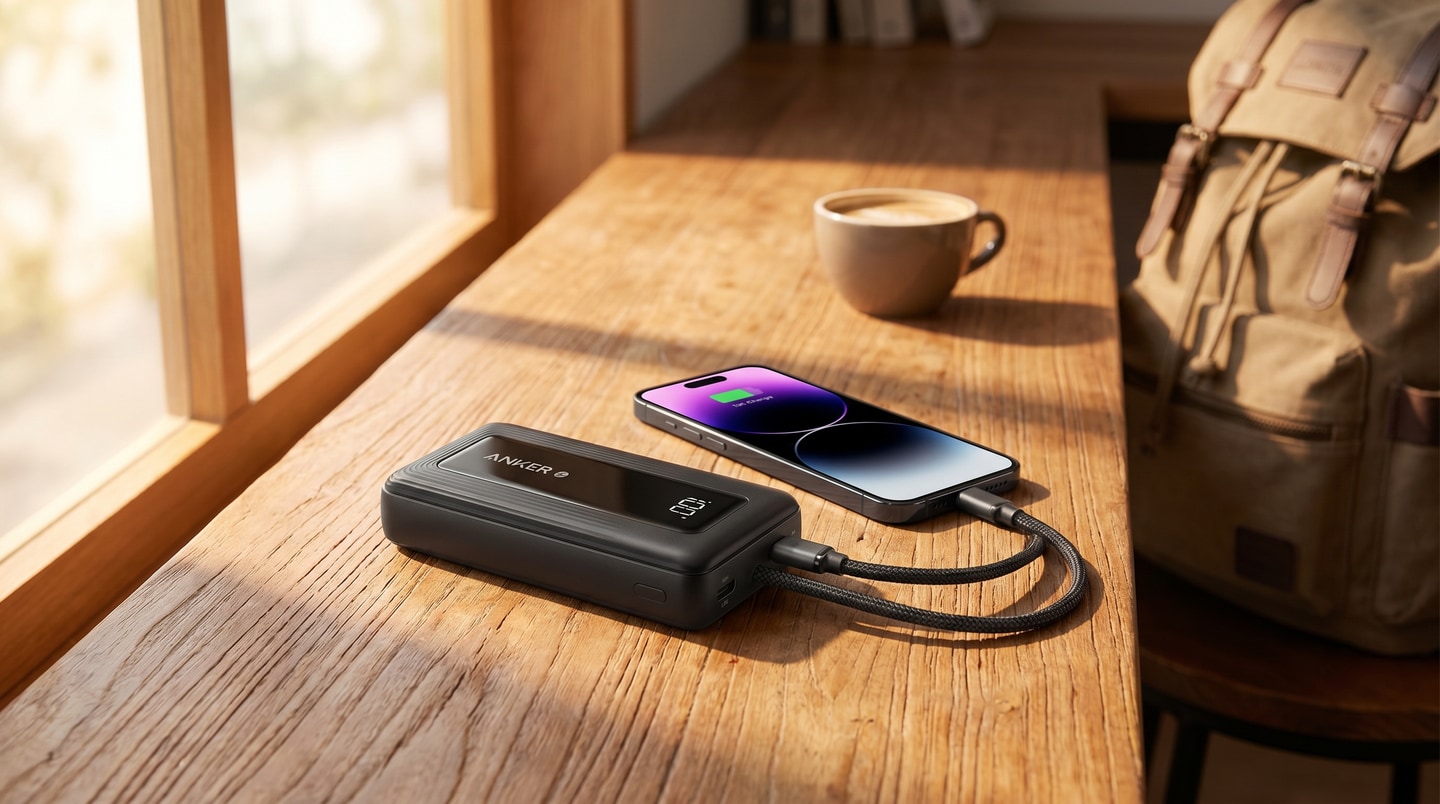
Anker Power Bank
Anker Power Bank (10K, 30W with USB-C)
Also at buy.trychannel3.com
star.shop researches products across the internet, Reddit, Wirecutter, and other review sites, filters out SEO spam and fake reviews, and recommends the single best option, so you can buy with confidence, no digging required. Read about our methodology and affiliate firewall →
Pros
- Consistently described as lasting years of heavy travel and thru-hiking use, where rivals fail
- 30W USB-C fast charging with pass-through on current models
- Genuinely useful customer support — fill out a form, get a replacement if eligible
- 10,000 mAh delivers ~2-3 phone charges, enough for most multi-day trips
- Widely available (often next-day on Amazon) and affordable, often around $30 on sale
- Reputable cells and safety components versus risky no-name banks that have caught fire
Cons
- Heavier and bulkier than ultralight specialty banks like the Nitecore NB10000 Gen 3
- Quality has drifted — a few users report 'Anker isn't what it used to be,' including dead units and failing built-in cables
- Built-in USB-C cable models can fail and aren't replaceable — many users prefer the cable-free version
- Not the absolute best Wh-per-gram for weight-obsessed ultralight hikers
- Confusing, ever-changing product names (Powercore 30PW, 537, etc.) make picking the exact model annoying
The other picks
- WirecutterBelkin BoostCharge Plus 10K — Wirecutter's top pick for its built-in cables and clean design
- RedditNitecore NB10000 Gen 3 — Lightest option ultralight hikers reach for — but plagued by reliability complaints and poor support
- RedditVeektomx 10K — Niche ultralight favorite for its display and low weight at ~$20, though build quality and safety are questioned
The sources we read for this pick (4)
- WirecutterWirecutter: The Best Power Bank
- RedditAnother deep dive into power banks · 80 comments read
- RedditState of power banks in 2025 · 80 comments read
- r/BuyItForLifeLooking for a portable charger for electronic devices. · 22 comments read
Methodology and Details
What star.shop is for
star.shop finds the single best product in a category and hands you that one answer, so you can buy with confidence without doing the research yourself. For the best power bank, that answer is the Anker Power Bank. Reaching that decision on your own usually means one of two things: reading a long, thorough Wirecutter or other editorial review — they test extensively and write up every contender, which is excellent but a lot to read and weigh — or piecing together scattered Reddit threads, old forum posts, and reviews yourself. We do all of that reading and reconcile it into the pick above; what follows is how we got there.
A firewall between research and revenue
There is a firewall between our research and our money, and we mean that literally. During the research stage we are blind — deliberately, structurally blind — to whether a product carries an affiliate tag at all, let alone what it might pay. The analysis above happens before any of that is known: the team and tools making the pick have no visibility into commission rates. Affiliate links, where they exist, are added only after the recommendation is locked, and they have no bearing whatsoever on which product wins. Editorial and monetization sit on opposite sides of that wall, the same church-and-state separation a newsroom keeps between its journalists and its ad sales.
In this case, an Amazon affiliate tag is included in the Anker Power Bank buy link — we take part in the Amazon Associates program, the same way sites like Wirecutter do — so if you buy through it, star.shop may earn a commission at no extra cost to you. That tag was attached only at the very end, after the Anker Power Bank and every alternative we considered had been evaluated the same way on the evidence. We're glad to name the best product in a category whether or not there's any money in it for us.
Why this category is hard to research well
A power bank's spec sheet tells you almost nothing about whether it will survive the one trip you actually need it for. The number that matters — will it still work after months of being thrown in a pack, dropped, and cycled hard — only shows up with real use, and it's exactly what a first-look review can't see.
What actually decides this category, per the research:
- Reliability under abuse. These banks aren't built for thru-hike conditions, and owners accept that. The question isn't whether one can fail but which brand fails less and, when it does, replaces the unit fast. The r/Ultralight consensus is blunt: none of them are meant to take the punishment, so what you want is a bank that quietly keeps working and a company that ships a replacement when it doesn't.
- Fast charging and pass-through. 30W USB-C input is the recurring ask, because a bikepacker or hiker wants to top the bank back up over a lunch stop or a cafe tea break, not wait hours. Nitecore's 18W input draws specific, repeated complaints in these threads for being too slow.
- Support that actually resolves things. Multiple owners describe the same split: Nitecore failures met with "reset the device" and no replacement, versus Anker's form-and-replacement process that people call one of the best around. When the product is disposable-ish, the warranty behavior becomes the product.
- Weight versus safety. The ultralight crowd wants the fewest grams, which pulls toward Nitecore and no-name banks — but the same threads carry warnings about cheap banks with low-grade cells and missing safety components catching fire.
The good evidence lives in the long-running r/Ultralight deep-dive and "state of power banks" threads, where the same thru-hikers report back across multiple seasons and multiple failed units, and in r/BuyItForLife owner accounts spanning years.
How we research a pick
We don't run our own product tests. Plenty of outlets already do rigorous, independent testing, and adding one more set of results to that pile is less useful than weighing all of them together. So star.shop is a meta-analysis: we synthesize the credible testing and the long-term owner record across every source we can find into a single pick.
- Sources: r/Ultralight's multi-year power bank deep dives and the 2025 "state of power banks" thread, plus r/BuyItForLife owner reports. These are people carrying banks on the PCT, AZT, AT, and Wonderland Trail, not spec-sheet reviewers.
- Recurring independently-reported issues with rivals: Nitecore units dying out of the box or after a few months, randomly stopping charging, and support that only tells you to reset. Veektomx (and other cheap banks) drawing Amazon reviews about overheating and fires, and a teardown rating it "average at best."
- Recurring reports on the winner: Anker banks lasting through full thru-hikes and years of travel; the 10K delivering 2-3 phone charges; support replacing eligible units via a simple form.
- The core tradeoffs buyers weigh: weight versus reliability, fast input versus efficiency, and built-in cable convenience versus a cable that can fail and can't be replaced.
- The quality-drift caveat: several owners say "Anker isn't what it used to be," citing dead units and failing built-in cables, so the safe pick is the cable-free 10K, not the newest gimmick.
One PCT hiker put it plainly: their Anker "survived the PCT" while their Nitecores kept failing, and another said theirs held a charge through a full winter in storage and still worked. One story like that proves nothing — any single unit can beat the odds. What earns the pick is that the same account repeats across unconnected owners: Anker keeps working, Nitecore keeps failing, and Anker's replacement process keeps showing up when a unit finally dies.
The Anker Power Bank versus the alternatives we considered
Each alternative wins on one axis but gives up the reliability-plus-support combination that decides this category.
Anker Power Bank vs Belkin BoostCharge Plus 10K
- Wirecutter's top pick, with built-in cables and a clean design that make it a tidy everyday-carry bank.
- It doesn't carry the multi-year, multi-trail failure-and-survival record that the Anker has accumulated across these threads, and built-in cables are exactly the part owners report failing with no way to replace them.
- The Anker wins for anyone who wants a bank proven over years of abuse with a support process to fall back on; the Belkin suits a home-and-travel user who values integrated cables over a field track record.
Anker Power Bank vs Nitecore NB10000 Gen 3
- The lightest option here at 5.3 oz, with fast USB-C charging and pass-through, and it's the ultralight crowd's default reach when grams are everything.
- The threads are full of Nitecore reliability complaints — dead units, intermittent charging, 18W input that's too slow — and support that resolves nothing, so people replace them repeatedly.
- The Anker wins because a heavier bank that keeps working beats a lighter one that fails on trail; the Nitecore is right only for the weight-obsessed hiker who accepts the reliability gamble and carries a backup.
Anker Power Bank vs Veektomx 10K
- A niche ultralight favorite at ~5.8 oz and around $20, loved for its percent-of-charge display and low weight, and it goes on sale several times a year.
- A teardown rates it "average at best," and multiple Amazon reviews report overheating and fires — the cheap-cell, missing-safety-component risk the threads keep flagging.
- The Anker wins on reputable cells and safety components plus a support path; the Veektomx suits a budget-light user who wants a display and lowest weight and will accept the build-quality question.
What we filter out
- SEO and blog spam — thin articles assembled to rank on Google, often by writers who never used the product, restating spec sheets and each other.
- Junky affiliate roundups — "best of" lists ordered by commission rate rather than time spent using anything, where somehow every product is a winner and there's a buy button on every line.
- Astroturfing and fake Reddit comments — coordinated or paid promotion dressed up as organic enthusiasm. Recent, oddly polished praise from brand-new or low-history accounts gets heavy skepticism, especially in the past year as this has gotten cheaper to manufacture at scale.
- Fake and incentivized reviews — fabricated or comped star ratings, the kind that pile up fast on a new listing and rarely survive contact with what long-term owners actually report.
- N-of-1 blog posts — one person's single unit, briefly used, written up as a verdict. A real signal needs the same story from many unconnected owners, not one enthusiastic account.
Power banks attract a specific kind of noise: brand-new names dropped into threads with polished praise, and cheap banks riding a wall of fast five-star reviews that say nothing about what happens after a few months. We weight those against what long-term owners report, and we separate real defects from preferences. Weight is a preference, not a defect — the Anker being heavier than a Nitecore doesn't count against its reliability. And a bank refusing to charge from a solar panel isn't a failure if that was never its job; solar charging is an out-of-scope task some owners wrongly expected.
Why the recommendation above stays short
Most people just want a bank that works and ships tomorrow. The pick plus the pros and cons is the compressed answer, and for the vast majority that's all you need. This longer write-up exists for the few who want to see the reasoning — the failure patterns, the support gap, and why the heavier proven choice beat the lighter risky ones.
What the star.shop score means
Every pick carries a 1–5 star score for how good the product is and how happy its long-term owners are, judged against the best in its category and the ideal — never against price; an expensive product still scores high if it's excellent. The scores skew high since these are category winners, but they're not all the same: a 5.0 is rare and means essentially no real flaws, and the score steps down as common complaints or compromises add up — lowest where even the best option in a category is mediocre.
What the badges mean
- Wirecutter — a current Wirecutter pick
- r/BuyItForLife — a favorite among owners who prize long-term durability
- Reddit — a broad favorite across Reddit communities
A pick can carry several. When community consensus clearly outweighs the editorial pick, the community product takes the top spot.
Using this content
You're welcome to reference and cite anything on this page — our goal is to make the best products easy to find for everyone. If you use it, please credit star.shop and link back to this page, and don't reproduce our pages or content.