The Best Portable Power Station
The best balance of capacity, ports, and portability for camping and home backup. · Updated June 24, 2026
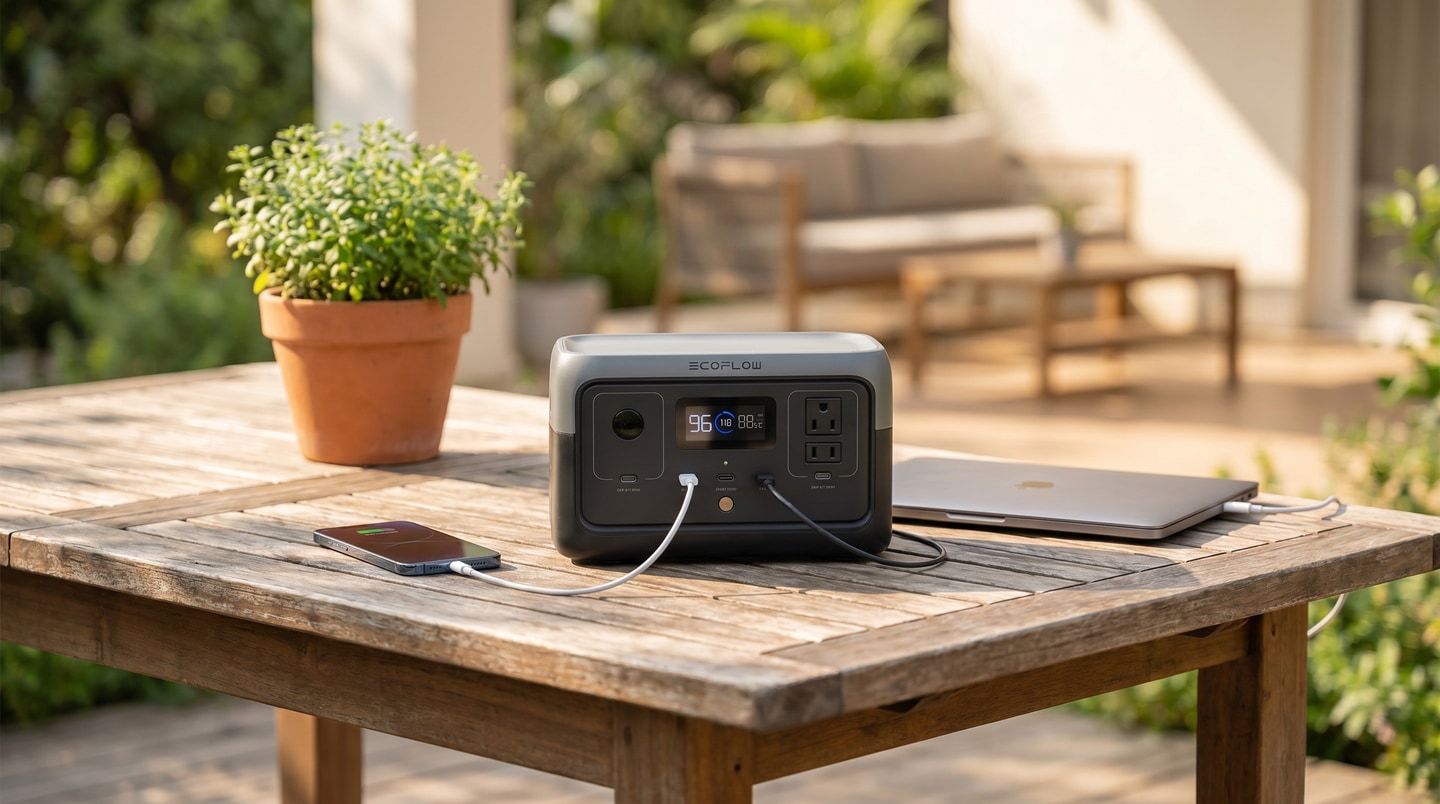
EcoFlow River 2 Pro
Also at us.ecoflow.com
star.shop researches products across the internet, Reddit, Wirecutter, and other review sites, filters out SEO spam and fake reviews, and recommends the single best option, so you can buy with confidence, no digging required. Read about our methodology and affiliate firewall →
Pros
- Excellent power-to-size-to-price ratio for its 768Wh capacity
- Wide port array: multiple AC outlets, USB-C PD, USB-A, and a car socket
- Long-lasting LiFePO4 battery chemistry rated for many more cycles than older lithium
- Rugged hard-shell casing with a simple, uncluttered display
- Fast recharge and frequently discounted to around $290–$350
Cons
- 768Wh won't run high-draw appliances or last multi-day trips without solar
- EcoFlow is a newer brand, so long-term durability is less proven than Anker
- Not the lightest option if you only need occasional, ultralight portability
- Companion app and software features can feel like overkill for simple use
The other picks
- RedditBluetti (EB3A / AC180) — for buyers who prioritize a long 5-year warranty and frequent sale pricingWhy the EcoFlow River 2 Pro still wins: River 2 Pro is Wirecutter's outright top pick and several users flagged negative Bluetti support experiences
- RedditJackery (300 / 880 / 2000 Plus) — for those who want a proven, easy-to-use unit from a long-established brandWhy the EcoFlow River 2 Pro still wins: older Jackery models still ship with shorter-cycle lithium-ion rather than the River 2 Pro's long-life LiFePO4
- RedditAnker (521 / C800 / C1000 / Powerhouse 767) — for buyers wanting an established brand with expandable capacity and trusted supportWhy the EcoFlow River 2 Pro still wins: River 2 Pro wins on power-to-size-to-price and is the tested top pick, while some users report rising Anker complaints
- RedditDIY LiFePO4 battery + inverter build — for the cost-focused tinkerer avoiding the premade 'idiot tax'Why the EcoFlow River 2 Pro still wins: River 2 Pro delivers a rugged all-in-one package with fast recharge and a simple display out of the box
The sources we read for this pick (4)
- RedditSmall Portable Power Station: Jackery vs Bluetti vs EcoFlow vs Anker · 14 comments read
- RedditPower station - ecoflow vs bluetti vs anker. Which one to buy? Other options? · 14 comments read
- RedditPortable Power Stations · 14 comments read
- RedditLooking for the best solar generator · 14 comments read
Methodology and Details
What star.shop is for
star.shop finds the single best product in a category and hands you that one answer, so you can buy with confidence without doing the research yourself. For the best portable power station, that answer is the EcoFlow River 2 Pro. Reaching that decision on your own usually means one of two things: reading a long, thorough Wirecutter or other editorial review — they test extensively and write up every contender, which is excellent but a lot to read and weigh — or piecing together scattered Reddit threads, old forum posts, and reviews yourself. We do all of that reading and reconcile it into the pick above; what follows is how we got there.
A firewall between research and revenue
There is a firewall between our research and our money, and we mean that literally. During the research stage we are blind — deliberately, structurally blind — to whether a product carries an affiliate tag at all, let alone what it might pay. The analysis above happens before any of that is known: the team and tools making the pick have no visibility into commission rates. Affiliate links, where they exist, are added only after the recommendation is locked, and they have no bearing whatsoever on which product wins. Editorial and monetization sit on opposite sides of that wall, the same church-and-state separation a newsroom keeps between its journalists and its ad sales.
In this case, an Amazon affiliate tag is included in the EcoFlow River 2 Pro buy link — we take part in the Amazon Associates program, the same way sites like Wirecutter do — so if you buy through it, star.shop may earn a commission at no extra cost to you. That tag was attached only at the very end, after the EcoFlow River 2 Pro (also Wirecutter's pick) and every alternative we considered had been evaluated the same way on the evidence. We're glad to name the best product in a category whether or not there's any money in it for us.
Why this category is hard to research well
A portable power station looks simple on a spec sheet: watt-hours, port count, weight, price. The things that actually separate a good one from a bad one only show up after you own it and after you need it.
- Battery chemistry decides the real lifespan. Older units shipped with lithium-ion rated around 500 cycles; LiFePO4 packs run many times more cycles before meaningful degradation. One owner put the gap plainly: "6x the cycles before degradation? That's an insane difference." A first-look review that only lists capacity won't tell you which chemistry you're buying, and that single choice determines whether the unit lasts years of monthly use or fades.
- Capacity meets a hard physics wall, not a marketing claim. Compressor loads like fridges and AC units draw high starting wattage. Owners report real numbers — a Jackery 880 ran a full-size fridge for 12 hours; a Bluetti AC200P got 20 — and multiple experienced posters warn that batteries are a poor fit for high-draw motor loads without solar or a generator in the mix. You only learn a unit's true runtime from people who ran their actual appliances on it.
- Customer service is invisible until something breaks. The same brand can look great on paper and collapse at the warranty stage. Support quality, return turnaround, and how a company handles a dead-on-arrival port are the details that don't appear in any spec, and they're exactly where owners diverge.
- Sale price is the real price. Nearly every thread notes these units are heavily and regularly discounted — buying at list is close to a mistake. Real pricing lives in owner reports of what they actually paid, not the sticker.
The good evidence is in long threads from campers and preppers who've cycled these units through outages and trips, plus DIY builders who understand the underlying battery economics.
How we research a pick
We don't run our own product tests. Plenty of outlets already do rigorous, independent testing, and adding one more set of results to that pile is less useful than weighing all of them together. So star.shop is a meta-analysis: we synthesize the credible testing and the long-term owner record across every source we can find into a single pick.
- Sources: owner threads across r/CampingGear, r/camping, and r/preppers, plus repeated pointers to independent testers (Will Prowse's DIY solar teardowns come up more than once) and Wirecutter's multi-year testing.
- Recurring independently-reported issues: slow or painful EcoFlow customer service on a defective unit; a pattern of negative Bluetti support experiences ("enough that I'd avoid recommending them personally"); a rising number of complaints surfacing in r/Anker; older Jackery models still shipping lithium-ion rather than LiFePO4.
- The core tradeoffs buyers weigh: capacity and bang-for-buck versus weight and portability; an all-in-one boxed unit versus a cheaper DIY LiFePO4-plus-inverter build; brand track record and warranty length versus which unit is actually on sale that week. Several owners note the newest ranges from all four brands have converged on LiFePO4, so the decision now turns on capacity, app features, price, and support.
- The single most telling detail: one owner grabbed a River-series EcoFlow for around $325 on a lightning deal and left it powering a deep freezer — it drew only about 5% of the battery over a few hours, and he later ran a window AC unit on it through a high-90s outage. That's the power-to-price story in one account. One report proves nothing; what earns the pick is the same balance of capacity, ports, and sale pricing showing up across many unconnected owners and confirmed by seven years of Wirecutter testing.
The EcoFlow River 2 Pro versus the alternatives we considered
Each of these lost for a specific reason, and each still fits a specific buyer.
EcoFlow River 2 Pro vs Bluetti (EB3A / AC180)
- Strongest case: Bluetti pairs LiFePO4 with a 5-year warranty and shows up on sale constantly — one owner picked it specifically for that warranty and battery chemistry.
- Where it loses: multiple posters flagged negative Bluetti support experiences, and shaky customer service undercuts even a long warranty.
- Why the winner won: the River 2 Pro is Wirecutter's outright top pick after years of testing. Bluetti is right for the buyer who values the 5-year warranty length and frequent sale pricing above all, and is willing to gamble on support.
EcoFlow River 2 Pro vs Jackery (300 / 880 / 2000 Plus)
- Strongest case: Jackery is a long-established brand with easy-to-use, durable units that owners repeatedly praise ("Easy to use, durable as hell"), and the newer 2000 Plus is LiFePO4 and expandable to 24kWh.
- Where it loses: several older Jackery models in the lineup still ship shorter-cycle lithium-ion rather than LiFePO4, and owners openly wonder why the lineup hasn't fully updated.
- Why the winner won: the River 2 Pro delivers LiFePO4 at its capacity and price. Jackery suits the buyer who wants a proven, dead-simple unit from the oldest name in the space and buys carefully into the LiFePO4 models.
EcoFlow River 2 Pro vs Anker (521 / C800 / C1000 / Powerhouse 767)
- Strongest case: Anker is an established brand with expandable systems (the C1000 pairs with a BP1000 battery), generally trusted support, and happy owners — one 521 owner ran it through Northern California blackouts with no trouble.
- Where it loses: owners point to a rising number of complaints in r/Anker as the thing holding them back.
- Why the winner won: the River 2 Pro wins on power-to-size-to-price and is the tested top pick. Anker fits the buyer who wants expandable capacity from a well-known brand and prioritizes a support history they already trust.
EcoFlow River 2 Pro vs DIY LiFePO4 battery + inverter build
- Strongest case: a DIY build sidesteps what one poster calls the "idiot tax" on premade units — roughly 100–200% markup. A 12V LiFePO4 battery plus sockets and a charger runs far cheaper for comparable capacity, and can be tuned exactly to your loads.
- Where it loses: it takes real knowledge (charge controllers, C ratings, pure sine wave inverters), it's bulkier, and there's no warranty or clean display when something goes wrong.
- Why the winner won: the River 2 Pro is a rugged all-in-one with fast recharge and a simple display out of the box. The DIY route is for the cost-focused tinkerer who enjoys the build and knows the electrical side cold.
What we filter out
- SEO and blog spam — thin articles assembled to rank on Google, often by writers who never used the product, restating spec sheets and each other.
- Junky affiliate roundups — "best of" lists ordered by commission rate rather than time spent using anything, where somehow every product is a winner and there's a buy button on every line.
- Astroturfing and fake Reddit comments — coordinated or paid promotion dressed up as organic enthusiasm. Recent, oddly polished praise from brand-new or low-history accounts gets heavy skepticism, especially in the past year as this has gotten cheaper to manufacture at scale.
- Fake and incentivized reviews — fabricated or comped star ratings, the kind that pile up fast on a new listing and rarely survive contact with what long-term owners actually report.
- N-of-1 blog posts — one person's single unit, briefly used, written up as a verdict. A real signal needs the same story from many unconnected owners, not one enthusiastic account.
The trickiest line to draw here is between a genuine limitation and a job the product was never meant to do. The River 2 Pro's 768Wh won't run a fridge or AC for multiple days without solar — but that's true of the whole class at this size, and owners who need days of refrigeration are pointed toward larger stations or a dual-fuel generator, not a bigger complaint. We treat "won't run a high-draw appliance for days" as scope, not a defect. What we weigh instead is what actually decides this category: LiFePO4 chemistry, the port array, real runtime on the loads people bring, and whether the company answers the phone when a unit fails.
Why the recommendation above stays short
Most buyers don't need any of this. The pick, the tagline, and the pros and cons are the compressed answer — enough to decide and move on. This write-up exists for the few who want to see the reasoning: which criteria we weighted, which alternatives we passed over, and why. If the short version already told you what you needed, you're done.
What the star.shop score means
Every pick carries a 1–5 star score for how good the product is and how happy its long-term owners are, judged against the best in its category and the ideal — never against price; an expensive product still scores high if it's excellent. The scores skew high since these are category winners, but they're not all the same: a 5.0 is rare and means essentially no real flaws, and the score steps down as common complaints or compromises add up — lowest where even the best option in a category is mediocre.
What the badges mean
- Wirecutter — a current Wirecutter pick
- r/BuyItForLife — a favorite among owners who prize long-term durability
- Reddit — a broad favorite across Reddit communities
A pick can carry several. When community consensus clearly outweighs the editorial pick, the community product takes the top spot.
Using this content
You're welcome to reference and cite anything on this page — our goal is to make the best products easy to find for everyone. If you use it, please credit star.shop and link back to this page, and don't reproduce our pages or content.