The Best Hiking Daypack
A cheap, light, surprisingly tough 22L pack that handles day hikes — and even the occasional ultralight overnight — better than packs costing twice as much. · Updated June 29, 2026
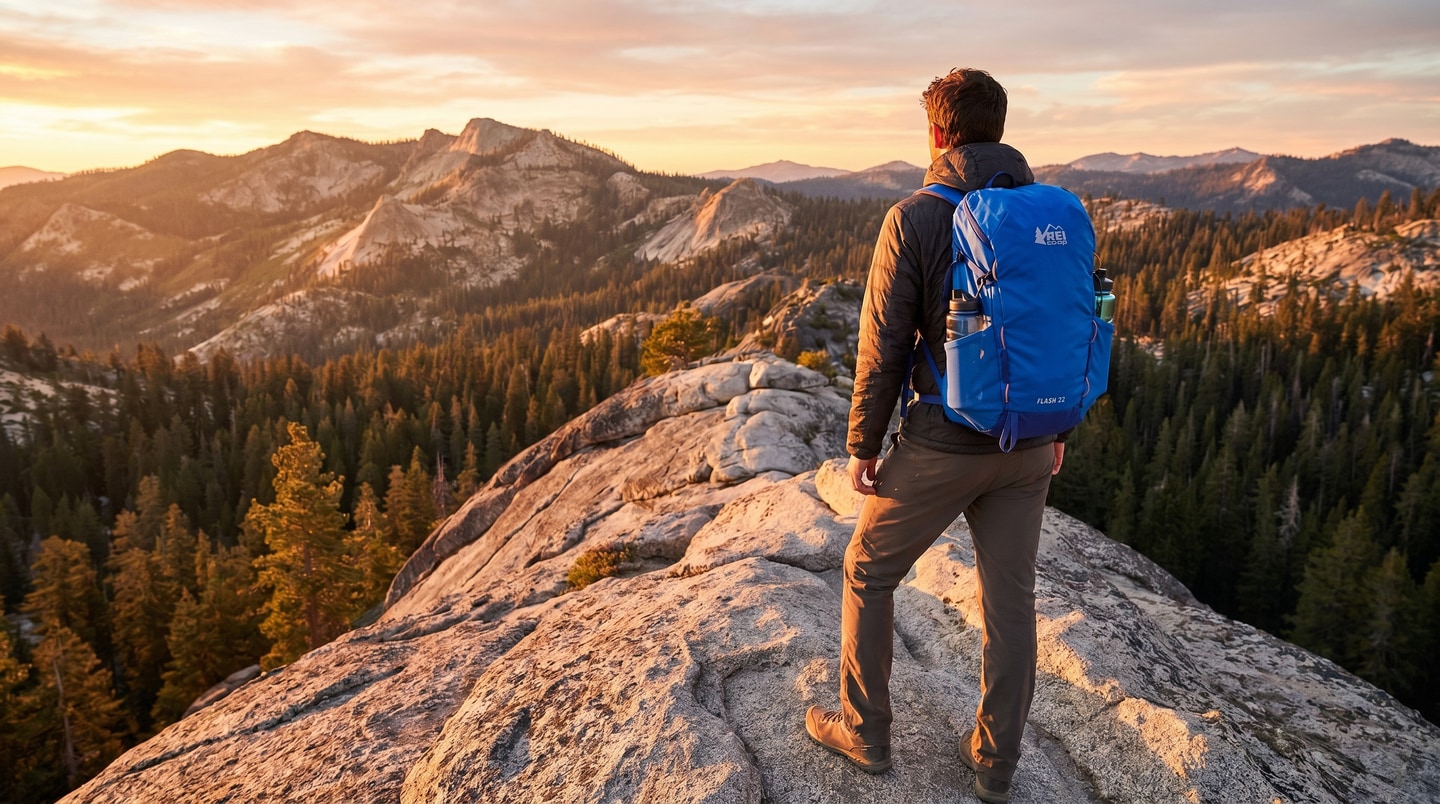
REI Co-op Flash 22
Also at buy.trychannel3.com
star.shop researches products across the internet, Reddit, Wirecutter, and other review sites, filters out SEO spam and fake reviews, and recommends the single best option, so you can buy with confidence, no digging required. Read about our methodology and affiliate firewall →
Pros
- Repeatedly described as holding up to 'serious abuse' despite weighing very little
- Cheap — frequently on sale for $30-35, often the value pick of the thread
- Side pockets reliably hold 1L Smartwater/Nalgene bottles for easy hydration
- Versatile enough for day hikes, climbing, field work, travel, and even short UL overnights
- Genuinely multi-use: many owners use it several times a week for everything
Cons
- No real frame, so it can feel floppy and lacks structure under heavier or bulky loads
- Minimal hip belt and ventilation compared to a framed pack — not ideal for heavy day loads
- Not a buy-it-for-life heirloom pack — it's a value workhorse, not a heritage piece
- Brain/top pocket is small (just big enough for a phone and map)
- Not a true running/vest setup, so no on-the-move shoulder-strap bottle access
The other picks
- RedditBlack Diamond Distance 15 / 22 — Preferred by trail runners/fastpackers for its vest-style fit, front shoulder pockets, and low-bounce ride
- RedditSalomon ADV Skin 12 / running vest — Recommended for those who want quick on-the-move hydration and never having to take the pack off on a day out
- r/BuyItForLifeMLD Hellpack — Four-plus years of hard crag and summit use with only tiny holes in durable Dyneema; rig-able hip belt for heavier loads
The sources we read for this pick (1)
- Reddit'Day' pack choice · 55 comments read
Methodology and Details
What star.shop is for
star.shop finds the single best product in a category and hands you that one answer, so you can buy with confidence without doing the research yourself. For the best hiking daypack, that answer is the REI Co-op Flash 22. Reaching that decision on your own usually means one of two things: reading a long, thorough Wirecutter or other editorial review — they test extensively and write up every contender, which is excellent but a lot to read and weigh — or piecing together scattered Reddit threads, old forum posts, and reviews yourself. We do all of that reading and reconcile it into the pick above; what follows is how we got there.
A firewall between research and revenue
There is a firewall between our research and our money, and we mean that literally. During the research stage we are blind — deliberately, structurally blind — to whether a product carries an affiliate tag at all, let alone what it might pay. The analysis above happens before any of that is known: the team and tools making the pick have no visibility into commission rates. Affiliate links, where they exist, are added only after the recommendation is locked, and they have no bearing whatsoever on which product wins. Editorial and monetization sit on opposite sides of that wall, the same church-and-state separation a newsroom keeps between its journalists and its ad sales.
In this case, an Amazon affiliate tag is included in the REI Co-op Flash 22 buy link — we take part in the Amazon Associates program, the same way sites like Wirecutter do — so if you buy through it, star.shop may earn a commission at no extra cost to you. That tag was attached only at the very end, after the REI Co-op Flash 22 and every alternative we considered had been evaluated the same way on the evidence. We're glad to name the best product in a category whether or not there's any money in it for us.
Why this category is hard to research well
A daypack looks simple on a spec sheet — liters, weight, pocket count — and none of that tells you what actually matters on the trail. For a hiking daypack, the deciding factors are narrow and specific:
- Water access that works for how you move. The whole thread turns on it: one poster ruled out Osprey packs entirely because he couldn't reach the side pockets. Whether a pack holds a 1L Smartwater or Nalgene in its side pockets, and whether you can reach it, decides more day-to-day satisfaction than total capacity does.
- Structure under load. A frameless pack is light but can feel floppy. One owner said he ended up "bringing puffy clothes just to take up volume" — a real complaint that only shows up once you carry the thing half-empty on a real hike.
- Whether it's genuinely multi-use. The people who love these packs use them several times a week — hiking, climbing, field work, travel, emergency car bag. A pack that only does one job well loses to one that quietly does five.
- Fit style: backpack versus running vest. These are two different tools. A vest lets you drink on the move and rarely comes off; a small backpack lets you carry a puffy and a rain shell for cold, wet days. The right answer depends on your climate and pace, not on which pack is "better."
None of this is visible in a first-look review. It shows up after months of throwing the bag onto rock, cinching it down on a light day, or reaching for a bottle at a trot. The good evidence lives in long-running Reddit threads (r/Ultralight, r/BuyItForLife) where owners describe the exact use that broke or vindicated a pack.
How we research a pick
We don't run our own product tests. Plenty of outlets already do rigorous, independent testing, and adding one more set of results to that pile is less useful than weighing all of them together. So star.shop is a meta-analysis: we synthesize the credible testing and the long-term owner record across every source we can find into a single pick.
- Sources: r/Ultralight and r/BuyItForLife day-pack threads, where owners argue over specific packs and cite their own multi-year use.
- Recurring independently-reported issues: frameless packs feeling floppy under bulky loads; side pockets that can't reach or hold a 1L bottle; the tradeoff between running-vest hydration access and the ability to carry cold-weather layers.
- Core tradeoffs buyers weigh: light and cheap versus structured and comfortable under weight; vest-style on-the-move hydration versus a real main compartment for a puffy and rain shell; a value workhorse versus a customized cottage-brand pack with lead times and a much higher price.
The single most telling detail: one owner said his Flash 22 "has stood up to some serious abuse for how light it is," bought a sale color for under $30, and still uses it multiple times a week for hiking, everyday use, climbing, and field work. Another said the pack "always seems to be a sale" and grabbed one around $35. One account like that proves nothing on its own — a single unit, one person's luck. What moves it is the same story landing again and again from unconnected owners: multiple people running three of them for separate jobs, others using them for travel, overnights, and peak bagging, all describing the same cheap-and-tough experience.
The REI Co-op Flash 22 versus the alternatives we considered
The Flash 22 won as the value workhorse; the alternatives each win a narrower job.
REI Co-op Flash 22 vs Black Diamond Distance 15 / 22
- Trail runners and fastpackers repeatedly praise the Distance for its vest-style fit, front shoulder pockets, and low-bounce ride — one owner called the Distance 22 a "banger pack" with added climbing features like ice axe attachments.
- It's built around running, so it doesn't match the Flash's cheap price or its easy do-everything role as a travel, field-work, and emergency-car-bag pack.
- The Flash won on versatility and value for general hikers. The Distance is the pick if you actually run your trails and want a vest layout with front bottle pockets.
REI Co-op Flash 22 vs Salomon ADV Skin 12 / running vest
- For quick on-the-move hydration, a running vest is hard to beat — you can drink without taking softflasks off, it's very comfortable, and "you almost never have to take it off."
- A vest tops out around 5–15L and struggles when you want to bring a puffy and a rain shell for cold, wet conditions, which one poster flagged as specific to where he hikes.
- The Flash won for people who carry more than snacks and want a real main compartment. The ADV Skin is the pick for runners and fast-and-light day hikers who value never removing the pack.
REI Co-op Flash 22 vs MLD Hellpack
- One owner has run a Hellpack hard for four-plus years — crag, summit, day hikes — with only tiny punctures in the Dyneema that don't rip, plus the option to rig a hip belt and chest strap for heavier loads.
- It's a cottage-brand pack at cottage-brand price and lead time; the Flash costs a fraction of it and is available on sale off the shelf.
- The Flash won on price and immediate availability. The Hellpack is the pick for someone who wants Dyneema toughness and a rig-able belt for loading up on summit days, and will pay for it.
What we filter out
- SEO and blog spam — thin articles assembled to rank on Google, often by writers who never used the product, restating spec sheets and each other.
- Junky affiliate roundups — "best of" lists ordered by commission rate rather than time spent using anything, where somehow every product is a winner and there's a buy button on every line.
- Astroturfing and fake Reddit comments — coordinated or paid promotion dressed up as organic enthusiasm. Recent, oddly polished praise from brand-new or low-history accounts gets heavy skepticism, especially in the past year as this has gotten cheaper to manufacture at scale.
- Fake and incentivized reviews — fabricated or comped star ratings, the kind that pile up fast on a new listing and rarely survive contact with what long-term owners actually report.
- N-of-1 blog posts — one person's single unit, briefly used, written up as a verdict. A real signal needs the same story from many unconnected owners, not one enthusiastic account.
A lot of what looks like a Flash 22 "con" is really a preference about your pace and climate. Owners noting it's floppy under bulky loads, or that it lacks the ventilation and hip belt of a framed pack, aren't describing a defect — they're describing a frameless value pack doing exactly what it is. If you want on-the-move shoulder-strap hydration or a structured heavy-load carrier, that's a different tool, not a broken one. We filter for the things that actually decide this category: bottle access, real-world toughness for the money, and whether the pack quietly does several jobs.
Why the recommendation above stays short
Most people don't need the essay. The pick plus the pros and cons is the compressed output — a cheap, light, tough 22L pack that carries a 1L bottle you can reach and handles day hikes, travel, and the odd short overnight. This fuller write-up is here for the few who want to see the reasoning and the packs we passed over on the way.
What the star.shop score means
Every pick carries a 1–5 star score for how good the product is and how happy its long-term owners are, judged against the best in its category and the ideal — never against price; an expensive product still scores high if it's excellent. The scores skew high since these are category winners, but they're not all the same: a 5.0 is rare and means essentially no real flaws, and the score steps down as common complaints or compromises add up — lowest where even the best option in a category is mediocre.
What the badges mean
- Wirecutter — a current Wirecutter pick
- r/BuyItForLife — a favorite among owners who prize long-term durability
- Reddit — a broad favorite across Reddit communities
A pick can carry several. When community consensus clearly outweighs the editorial pick, the community product takes the top spot.
Using this content
You're welcome to reference and cite anything on this page — our goal is to make the best products easy to find for everyone. If you use it, please credit star.shop and link back to this page, and don't reproduce our pages or content.