The Best Hiking Boots
The comfort-out-of-the-box, lasts-for-years boot the hiking community keeps coming back to. · Updated June 26, 2026
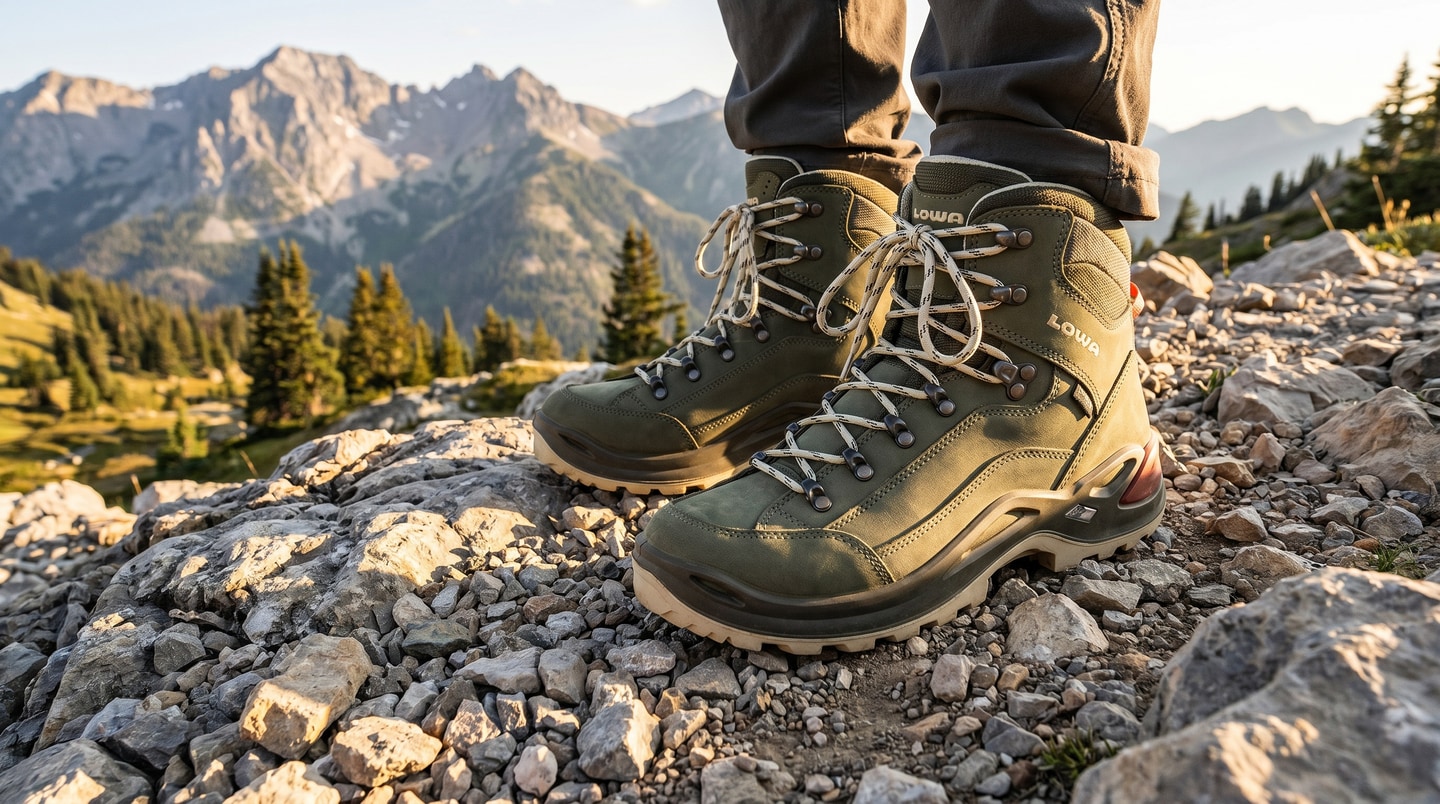
Lowa Renegade GTX
Lowa Renegade GTX Mid
Also at lowa.com
star.shop researches products across the internet, Reddit, Wirecutter, and other review sites, filters out SEO spam and fake reviews, and recommends the single best option, so you can buy with confidence, no digging required. Read about our methodology and affiliate firewall →
Pros
- Repeatedly cited as the most comfortable boot owners have worn, often with little to no break-in
- Genuinely durable — many report 1,000+ miles, 6-15 years of use, and even daily work wear
- Excellent ankle support and stability for rocky terrain and loaded backpacking
- Reliable Gore-Tex waterproofing that holds up better than many competitors
- Versatile enough for hiking, backpacking, winter commuting, and outdoor work
- Made in Europe with a fit and build quality reviewers trust
Cons
- Premium price (often $250+) versus budget picks like the Merrell Moab
- Aggressive arch support and stiffness don't suit every foot — some find it too much
- Feet can run hot in warmer months and on long hard-surface stretches
- Not truly resoleable/rebuildable like a Goodyear-welted leather work boot
- No hiking boot is genuinely buy-it-for-life; even the best wear out with heavy mileage
- Takes some lacing tweaks to dial in the fit for a few users
- Like all Gore-Tex boots, the waterproof membrane will eventually degrade with heavy use
The other picks
- WirecutterSalomon Quest 4 Gore-Tex — Wirecutter's top pick for support and waterproofing, but the community widely reports recent quality decline (sole separation, leaks, narrow toe box)
- WirecutterMerrell Moab 3 Mid Waterproof — Wirecutter's budget pick and a popular comfortable starter boot, though many report soles separating within a year or two
- r/BuyItForLifeDanner / Zamberlan / Meindl leather boots — Favored by BiFL for resoleable, full-grain-leather longevity if you prioritize repairability over light weight
- RedditTrail runners (Altra Lone Peak, Hoka Speedgoat, Salomon) — Many experienced hikers argue lighter, faster-drying trail runners beat boots for most non-technical hiking
The sources we read for this pick (9)
- WirecutterWirecutter: The Best Hiking Boots
- RedditThe Definitive, "WHAT BOOTS SHOULD I GET?!" Thread · 47 comments read
- RedditBest Hiking Boots 2024? · 16 comments read
- r/BuyItForLifeBIFL Backpacking/hiking boots? · 80 comments read
- r/BuyItForLifeHiking boot recommendations? · 80 comments read
- r/BuyItForLifeRequest: Hiking Boots · 30 comments read
- r/BuyItForLifeRecommendation for First Hiking Boots? · 28 comments read
- RedditSalomon Quest 4 GTX. Why so many negatives review and what is your opinion on them · 41 comments read
- RedditWhat’s your favorite brand of hiking boots? and why? · 80 comments read
Methodology and Details
What star.shop is for
star.shop finds the single best product in a category and hands you that one answer, so you can buy with confidence without doing the research yourself. For the best hiking boots, that answer is the Lowa Renegade GTX. Reaching that decision on your own usually means one of two things: reading a long, thorough Wirecutter or other editorial review — they test extensively and write up every contender, which is excellent but a lot to read and weigh — or piecing together scattered Reddit threads, old forum posts, and reviews yourself. We do all of that reading and reconcile it into the pick above; what follows is how we got there.
A firewall between research and revenue
There is a firewall between our research and our money, and we mean that literally. During the research stage we are blind — deliberately, structurally blind — to whether a product carries an affiliate tag at all, let alone what it might pay. The analysis above happens before any of that is known: the team and tools making the pick have no visibility into commission rates. Affiliate links, where they exist, are added only after the recommendation is locked, and they have no bearing whatsoever on which product wins. Editorial and monetization sit on opposite sides of that wall, the same church-and-state separation a newsroom keeps between its journalists and its ad sales.
In this case, an Amazon affiliate tag is included in the Lowa Renegade GTX buy link — we take part in the Amazon Associates program, the same way sites like Wirecutter do — so if you buy through it, star.shop may earn a commission at no extra cost to you. That tag was attached only at the very end, after the Lowa Renegade GTX and every alternative we considered had been evaluated the same way on the evidence. We're glad to name the best product in a category whether or not there's any money in it for us.
Why this category is hard to research well
The thing that decides a hiking boot is fit, and fit is invisible on a spec sheet. The community says this over and over: "mostly comes down to personal preference and fit," "whatever shoe is most comfortable on your foot," "no two boots fit exactly alike, and the perfect fit is priceless." A boot that is a revelation on one person's foot is a blister factory on another's. That makes any single review, including a glowing one, only half useful — it tells you how the boot fit that reviewer.
What separates a good boot from a bad one shows up in three places, none of which a store try-on or a first-week write-up captures:
- Break-in and long-mile comfort. Some boots hurt for a hundred miles then feel great; some feel great in the aisle and betray you at mile 8. The Renegade's whole reputation is built on owners reporting comfort with little to no break-in — but the same design's aggressive arch and stiffness are exactly why other owners bounce off it. One buyer bought the Renegade Evo "after reading all the internet hype" and found "the arch support is just too aggressive for my feet."
- How the sole and waterproofing hold up in real use. The failure mode owners actually report is soles separating and Gore-Tex membranes creasing and leaking after a season or two. You cannot see this until miles accumulate, which is why owner records over years matter more than lab impressions.
- Whether a boot is even the right tool. A large share of experienced hikers argue trail runners beat boots for most non-technical hiking on weight and drying speed. Boots earn their place with ankle support on rocky terrain and under a loaded pack — the deciding factor is your terrain and pack weight, not the boot's star rating.
Good evidence lives in owner histories with mileage and years attached, in threads where the same brand keeps surfacing across unconnected people, and in reports of specific failures (sole-off at mile 60, membrane leaking after a year) rather than aisle impressions.
How we research a pick
We don't run our own product tests. Plenty of outlets already do rigorous, independent testing, and adding one more set of results to that pile is less useful than weighing all of them together. So star.shop is a meta-analysis: we synthesize the credible testing and the long-term owner record across every source we can find into a single pick.
- Sources: long-running r/hiking boot threads, r/BuyItForLife backpacking-boot discussions, and repeat owner reports that name mileage, years, and use case (backpacking, work, winter commuting).
- Recurring independently-reported issues we weighed: Salomon Quest quality decline (soles shedding tread, leaks, narrow toe box) reported by multiple owners; Merrell soles separating within a year or two, reported again and again ("three pairs of Merrells where the sole separated," "need a can of spray adhesive after 6 months"); Gore-Tex membranes creasing and losing waterproofing over a season or two across brands.
- The core tradeoff: fit and out-of-box comfort versus support and stiffness. Aggressive arch support and a stiff sole help under load and on rock, but they are exactly what makes a boot wrong for feet that don't want them.
- A second tradeoff: performance versus repairability. Cemented hiking boots run lighter and more cushioned but cannot be resoled; Goodyear-welted leather boots (Danner, Zamberlan, Meindl) can, at the cost of weight.
- The consensus everyone repeats: no hiking boot is truly buy-it-for-life if you hike a lot; even the best wear out and get replaced.
The most telling single account: one owner has "pretty close to 1,000 miles" on Lowa Renegades over three years, beats them "almost daily," worked a 10-hour construction shift in them the same day he posted, and expects "several more years easily." That is exactly the profile the Renegade's reputation is built on — comfort plus real durability across mixed use. But one story proves nothing on its own. What earned the pick is that the same story keeps recurring from unconnected owners: "best I've ever owned," "most comfortable boots I've ever owned," Austrians and Swedes recommending the Renegade specifically, people on their second pair in twenty years. One enthusiastic report is a coincidence; dozens of independent ones from people who don't know each other is a signal.
The Lowa Renegade GTX versus the alternatives we considered
Each of these lost for a specific reason, and each is still the right boot for a specific person.
Lowa Renegade GTX vs Salomon Quest 4 Gore-Tex
- The strongest case: it is Wirecutter's top pick for support and waterproofing, and big-and-tall owners praise its comfort and stability ("extremely comfy and stability offered for a bigger guy").
- Where it loses: the community reports recent quality decline directly — one owner had a tread block fall off at mile 60 on a not-that-rough 14er; another went through three pairs in four months; the toe box runs narrow.
- Why the Renegade won: Lowa owners report the durability the Quest used to have without the current defect stories. The Quest still suits a heavier hiker who tries it on, finds the fit right, and values Salomon's responsive warranty.
Lowa Renegade GTX vs Merrell Moab 3 Mid Waterproof
- The strongest case: it is the budget pick and a genuinely comfortable starter boot at roughly a third of the Renegade's price — a sensible way to find out whether you like the sport before spending $250+.
- Where it loses: sole separation is the single most-repeated complaint in the research, often within a year or two ("both failed within 2 years," "need a can of spray adhesive after 6 months," "good luck trying to get any repair").
- Why the Renegade won: it holds together across years and hard use where the Moab tends not to. The Moab is right for a first-time or occasional hiker who wants to spend the least while trying the sport.
Lowa Renegade GTX vs Danner / Zamberlan / Meindl leather boots
- The strongest case: full-grain leather that molds to your foot and, crucially, can be resoled — the closest thing to buy-it-for-life the category offers (Danner Mountain Lights going almost 30 years with one resole; Meindls lasting seven Colorado winters of daily use).
- Where it loses: they are heavier and stiffer, and the community is blunt that stiff leather soles are "great for rough rocky terrain, not so much for dirt or other smooth surfaces."
- Why the Renegade won: for most hikers it's lighter, comfortable sooner, and needs less upkeep. These leather boots are right for the buyer who prioritizes repairability and longevity over weight and is willing to maintain the leather.
Lowa Renegade GTX vs trail runners (Altra Lone Peak, Hoka Speedgoat, Salomon)
- The strongest case: many experienced hikers argue lighter, faster-drying shoes beat boots for most non-technical hiking — "what do I pick up and put down the most? your feet, every step" — and thru-hikers happily replace them every 500 miles.
- Where it loses: they offer little ankle support and less protection on pointy rock, and they wear out fast (Altra owners replacing them "every season").
- Why the Renegade won: it's a boot pick for people who want ankle support on rocky terrain and under a loaded pack. Trail runners are the better choice for a fast-and-light hiker on non-technical trails, especially in warm weather where boots run hot.
What we filter out
- SEO and blog spam — thin articles assembled to rank on Google, often by writers who never used the product, restating spec sheets and each other.
- Junky affiliate roundups — "best of" lists ordered by commission rate rather than time spent using anything, where somehow every product is a winner and there's a buy button on every line.
- Astroturfing and fake Reddit comments — coordinated or paid promotion dressed up as organic enthusiasm. Recent, oddly polished praise from brand-new or low-history accounts gets heavy skepticism, especially in the past year as this has gotten cheaper to manufacture at scale.
- Fake and incentivized reviews — fabricated or comped star ratings, the kind that pile up fast on a new listing and rarely survive contact with what long-term owners actually report.
- N-of-1 blog posts — one person's single unit, briefly used, written up as a verdict. A real signal needs the same story from many unconnected owners, not one enthusiastic account.
Because fit decides this category, we also separate a preference from a defect. The Renegade's aggressive arch support and stiffness are a genuine mismatch for some feet — that is a fit issue, not a quality failure, and the honest move is to say the boot won't work for everyone rather than pretend it does. We also keep the job in scope: this is a boot pick. If your terrain is non-technical and your pack is light, the right answer may be a trail runner instead, and no amount of boot enthusiasm changes that. A separating sole reported by many unconnected owners is a defect; a hot foot on a hard-surface summer stretch is a known tradeoff of a waterproof boot, not a fault.
Why the recommendation above stays short
Most buyers don't need the essay. The pick and its pros and cons are the compressed version — the answer, plus the honest caveats about arch support, price, and warm-weather heat. This write-up is here for the few who want to see the reasoning: which sources we read, what keeps failing in the alternatives, and why the fit-and-comfort record on the Renegade held up across dozens of unconnected owners rather than one loud review.
What the star.shop score means
Every pick carries a 1–5 star score for how good the product is and how happy its long-term owners are, judged against the best in its category and the ideal — never against price; an expensive product still scores high if it's excellent. The scores skew high since these are category winners, but they're not all the same: a 5.0 is rare and means essentially no real flaws, and the score steps down as common complaints or compromises add up — lowest where even the best option in a category is mediocre.
What the badges mean
- Wirecutter — a current Wirecutter pick
- r/BuyItForLife — a favorite among owners who prize long-term durability
- Reddit — a broad favorite across Reddit communities
A pick can carry several. When community consensus clearly outweighs the editorial pick, the community product takes the top spot.
Using this content
You're welcome to reference and cite anything on this page — our goal is to make the best products easy to find for everyone. If you use it, please credit star.shop and link back to this page, and don't reproduce our pages or content.