The Best Heating Pad
A big, genuinely hot far-infrared pad that covers your whole back and holds up to daily use. · Updated July 3, 2026
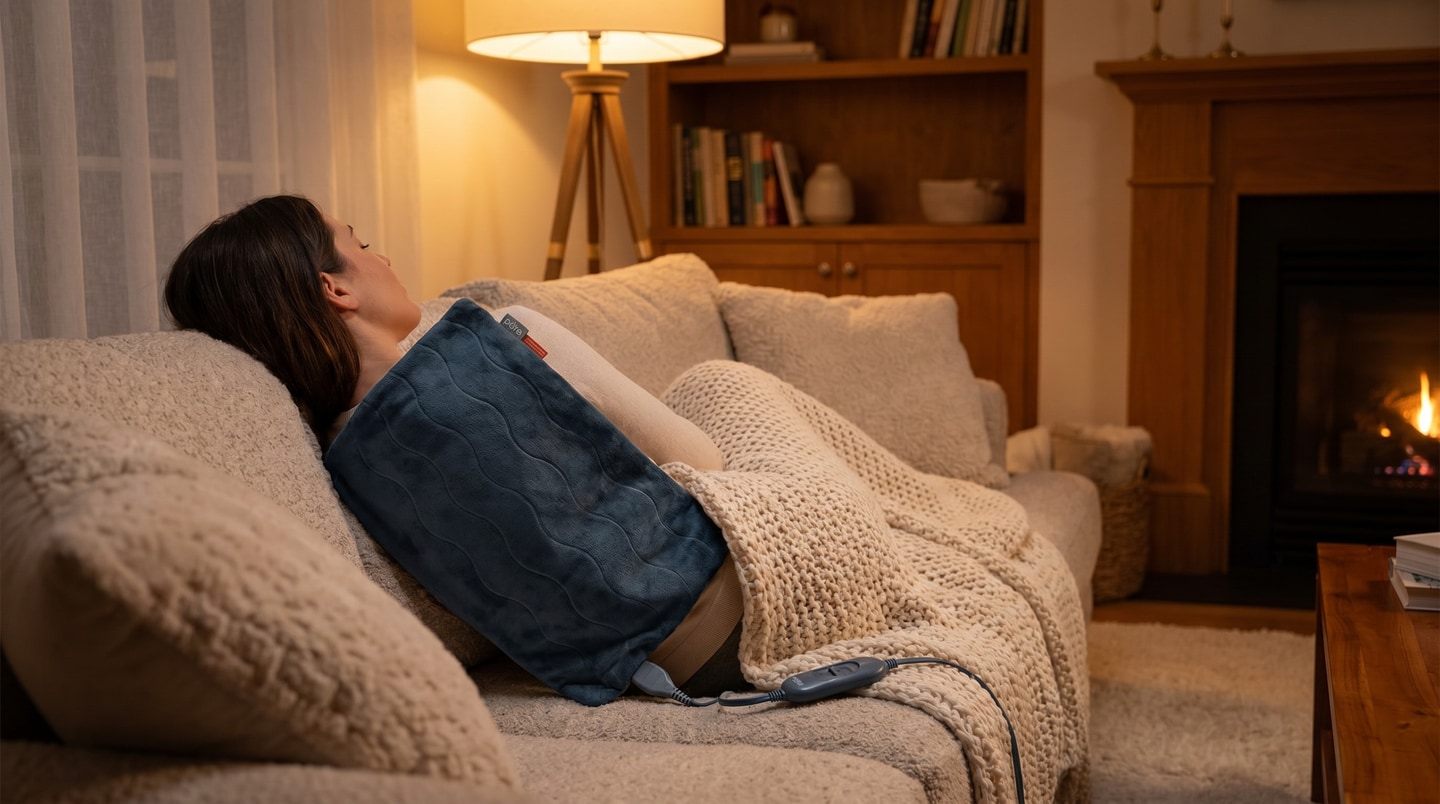
PureRelief Pro
Pure Enrichment PureRelief Pro Far Infrared XL Heating Pad
Also at pureenrichment.com
star.shop researches products across the internet, Reddit, Wirecutter, and other review sites, filters out SEO spam and fake reviews, and recommends the single best option, so you can buy with confidence, no digging required. Read about our methodology and affiliate firewall →
Pros
- Far-infrared heat penetrates deep and warms muscles quickly, better than the surface warmth of cheap pads
- Extra-large size covers the entire lower back, or drapes over shoulders and neck
- Gets genuinely hot — owners report it's plenty warm even on lower settings
- Selectable auto-shutoff (including longer/off options) instead of a forced short timer
- Machine washable, with a soft comfortable fabric owners lie on nightly
- Backed by a responsive warranty that reliably replaces failed units
Cons
- Electric heating pads in general have a finite lifespan and can fail after a few years of heavy daily use
- Some owners report individual units dying or arriving faulty (the warranty covers replacement, but it's an inconvenience)
- Large flat shape doesn't curve around the body as snugly as a smaller pad
- Not a true buy-it-for-life item — no user-replaceable heating element
- Auto-shutoff is legally required, so it can't run indefinitely unattended
The other picks
- r/BuyItForLifeThermophore MaxHeat Classic Plus (Moist Heat) Model 155 — For chronic-pain users who want deep moist heat and a pad that lasts decades — it's huge, heavy, and runs very hot, but has no soft everyday fabric feel and costs more.Why the PureRelief Pro still wins: The PureRelief is far more comfortable to lie on daily, machine washable, and much cheaper while still delivering deep infrared heat.
- RedditSunbeam XL Heating Pad — A cheap, very hot old-school favorite for people who just want maximum heat for the money — but owners repeatedly report newer units aren't as hot and die within a year.Why the PureRelief Pro still wins: The PureRelief runs reliably hot without the recent quality-control decline and lasts longer under daily use.
The sources we read for this pick (6)
- WirecutterThe Best Heating Pad
- r/BuyItForLifeNeed a good heating pad · 19 comments read
- r/BuyItForLife[Request] A heating pad on which user can lay · 20 comments read
- r/BuyItForLifeHeating pad recommendations? · 30 comments read
- Redditheating pad recommendations? · 22 comments read
- RedditI keep buying terrible heating pads? · 30 comments read
Methodology and Details
What star.shop is for
star.shop finds the single best product in a category and hands you that one answer, so you can buy with confidence without doing the research yourself. For the best heating pad, that answer is the PureRelief Pro. Reaching that decision on your own usually means one of two things: reading a long, thorough Wirecutter or other editorial review — they test extensively and write up every contender, which is excellent but a lot to read and weigh — or piecing together scattered Reddit threads, old forum posts, and reviews yourself. We do all of that reading and reconcile it into the pick above; what follows is how we got there.
A firewall between research and revenue
There is a firewall between our research and our money, and we mean that literally. During the research stage we are blind — deliberately, structurally blind — to whether a product carries an affiliate tag at all, let alone what it might pay. The analysis above happens before any of that is known: the team and tools making the pick have no visibility into commission rates. Affiliate links, where they exist, are added only after the recommendation is locked, and they have no bearing whatsoever on which product wins. Editorial and monetization sit on opposite sides of that wall, the same church-and-state separation a newsroom keeps between its journalists and its ad sales.
In this case, an Amazon affiliate tag is included in the PureRelief Pro buy link — we take part in the Amazon Associates program, the same way sites like Wirecutter do — so if you buy through it, star.shop may earn a commission at no extra cost to you. That tag was attached only at the very end, after the PureRelief Pro (also Wirecutter's pick) and every alternative we considered had been evaluated the same way on the evidence. We're glad to name the best product in a category whether or not there's any money in it for us.
Why this category is hard to research well
A heating pad looks like a solved problem until you actually rely on one. The specs that matter are not printed on the box, and they show up only after weeks of daily use. Reading the research, three things separate a good pad from a bad one:
- How hot it actually gets, and how fast. Chronic-pain users are blunt about this. Many report buying "big, soft, feature-loaded" pads that never get past lukewarm — one owner described a pad that "says it's on but 15 mins in it's giving lukewarm disappointment." People who need heat for pain relief want it hot enough to sink in, and most pads underdeliver.
- Whether the auto-shutoff behavior fits how you use it. Shutoff is now a legal safety requirement — pads have caused burns and scorched bedding, and owners in these threads describe real burn scars from continuous-on models. The question isn't whether a pad shuts off, but whether you can *choose* a long run or leave-on option instead of a forced short timer that kicks off while you're still using it.
- Whether the unit survives daily use — and what happens when it doesn't. Electric pads are consumables. The recurring failure story in the research is not "it wore out slowly" but "it died fast" or "the replacement wasn't as hot as the original." So the real durability question splits into two: does *this* brand fail less often, and does the warranty actually make a dead unit painless to replace.
None of this is visible in a first-look review. A pad feels warm in the store and gets hot in a five-minute test. The gap between a keeper and a return only appears across months of nightly use, and the good evidence for that lives in chronic-pain and BuyItForLife threads where the same owners post one-year and multi-year updates.
How we research a pick
We don't run our own product tests. Plenty of outlets already do rigorous, independent testing, and adding one more set of results to that pile is less useful than weighing all of them together. So star.shop is a meta-analysis: we synthesize the credible testing and the long-term owner record across every source we can find into a single pick.
- Sources: r/ChronicPain and r/BuyItForLife heating-pad threads, where daily users report back over months and years, plus Wirecutter's heating pad review.
- Recurring independently-reported issues: Sunbeam pads getting "not as hot as they used to be" — multiple unconnected owners bought the *exact same model* to replace a dead one and found the replacement barely warm. UTK infrared "stone" pads that don't get hot, weigh a ton, and cost a fortune to return. Cheap off-brand pads with press-and-hold controllers that won't stay on. And the general truth that all electric pads eventually fail.
- The core tradeoff buyers weigh: maximum heat and lowest price (old-school Sunbeam-style pads) versus comfort, size, and a warranty that backs up daily use. Push heat too far and owners report "Toasted Skin Syndrome" — real skin burns from running a pad on high for hours daily.
- The other axis: electric convenience versus buy-it-for-life longevity. The people who want something that outlives them reach for Thermophore or a microwaved rice/buckwheat bag; the people who want to plug in, lie down, and machine-wash it later reach for something like the PureRelief.
The most telling report: one chronic-pain owner who was laying on a Pure Enrichment pad every night "for over 5 years without issues" noted that yes, these do eventually stop working — "but the warranty has been good and they just send a replacement." Another owner had a Pure Enrichment unit fail and confirmed the company simply replaced it. One account like that proves nothing; a single owner can get a good unit and a responsive rep by luck. What moves it from anecdote to signal is that the *same* story — hot enough on low, comfortable to lie on nightly, machine washable, and a warranty that reliably ships a new one — recurs across separate people in separate threads who don't know each other.
The PureRelief Pro versus the alternatives we considered
The pads we weighed each win on one axis, and lose on the ones that decide daily use.
PureRelief Pro vs Thermophore MaxHeat Classic Plus Model 155 (a BuyItForLife pick)
- Strongest case for it: It genuinely lasts decades — owners report units running 17 to nearly 30 years, and it delivers deep *moist* heat that sinks in fast, which is why physical therapists hand it to chronic-pain patients.
- Where it loses: It's huge, heavy, and has no soft everyday fabric to lie on; it also costs more, and its shutoff timer is short.
- Why the PureRelief won overall: It's far more comfortable to lie on nightly, it's machine washable, and it's much cheaper while still delivering deep infrared heat. The Thermophore is the right pick for a chronic-pain user who wants maximum longevity and moist heat and doesn't care about lying on it comfortably.
PureRelief Pro vs Sunbeam XL Heating Pad (a Reddit favorite)
- Strongest case for it: For years it was the cheap, very hot old-school standby — several owners report Sunbeams that ran hot and lasted a decade or more.
- Where it loses: The research is full of recent quality-control complaints — owners repeatedly buying the same model to replace a dead one and finding it "barely warm," and multiple reports of newer Sunbeams dying inside a year.
- Why the PureRelief won overall: It runs reliably hot without the recent decline and holds up better under daily use, backed by a warranty that replaces failures. The Sunbeam still suits someone chasing the most heat per dollar who's willing to gamble on unit-to-unit consistency.
What we filter out
- SEO and blog spam — thin articles assembled to rank on Google, often by writers who never used the product, restating spec sheets and each other.
- Junky affiliate roundups — "best of" lists ordered by commission rate rather than time spent using anything, where somehow every product is a winner and there's a buy button on every line.
- Astroturfing and fake Reddit comments — coordinated or paid promotion dressed up as organic enthusiasm. Recent, oddly polished praise from brand-new or low-history accounts gets heavy skepticism, especially in the past year as this has gotten cheaper to manufacture at scale.
- Fake and incentivized reviews — fabricated or comped star ratings, the kind that pile up fast on a new listing and rarely survive contact with what long-term owners actually report.
- N-of-1 blog posts — one person's single unit, briefly used, written up as a verdict. A real signal needs the same story from many unconnected owners, not one enthusiastic account.
Two distinctions matter for this category. First, a pad dying after a few years of heavy daily use is not a defect — every electric pad is a consumable, and the honest question is whether the brand fails *less* than average and stands behind a replacement. What we filter out is the pattern of units arriving faulty or running lukewarm out of the box, which is a quality problem, not normal wear. Second, "not hot enough" is sometimes preference and sometimes a real fault: the person who wants to be "cooked" on high every day is describing a use that will burn skin (Toasted Skin Syndrome is real and appears in these threads), so we weight reports of consistent, controllable heat over reports chasing the single hottest pad regardless of safety.
Why the recommendation above stays short
Most people don't need this whole write-up. They need a pad that gets hot, covers the back, is comfortable to lie on, and gets replaced if it quits — and the pick plus its pros and cons say that in a few lines. This section is the reasoning underneath, for the few readers who want to see how we got there.
What the star.shop score means
Every pick carries a 1–5 star score for how good the product is and how happy its long-term owners are, judged against the best in its category and the ideal — never against price; an expensive product still scores high if it's excellent. The scores skew high since these are category winners, but they're not all the same: a 5.0 is rare and means essentially no real flaws, and the score steps down as common complaints or compromises add up — lowest where even the best option in a category is mediocre.
What the badges mean
- Wirecutter — a current Wirecutter pick
- r/BuyItForLife — a favorite among owners who prize long-term durability
- Reddit — a broad favorite across Reddit communities
A pick can carry several. When community consensus clearly outweighs the editorial pick, the community product takes the top spot.
Using this content
You're welcome to reference and cite anything on this page — our goal is to make the best products easy to find for everyone. If you use it, please credit star.shop and link back to this page, and don't reproduce our pages or content.