The Best Headlamp for Backpacking
The default ultralight backpacking headlamp: ~1.6 oz, USB-C, genuinely bright, and it does everything a backpacker needs. · Updated June 26, 2026
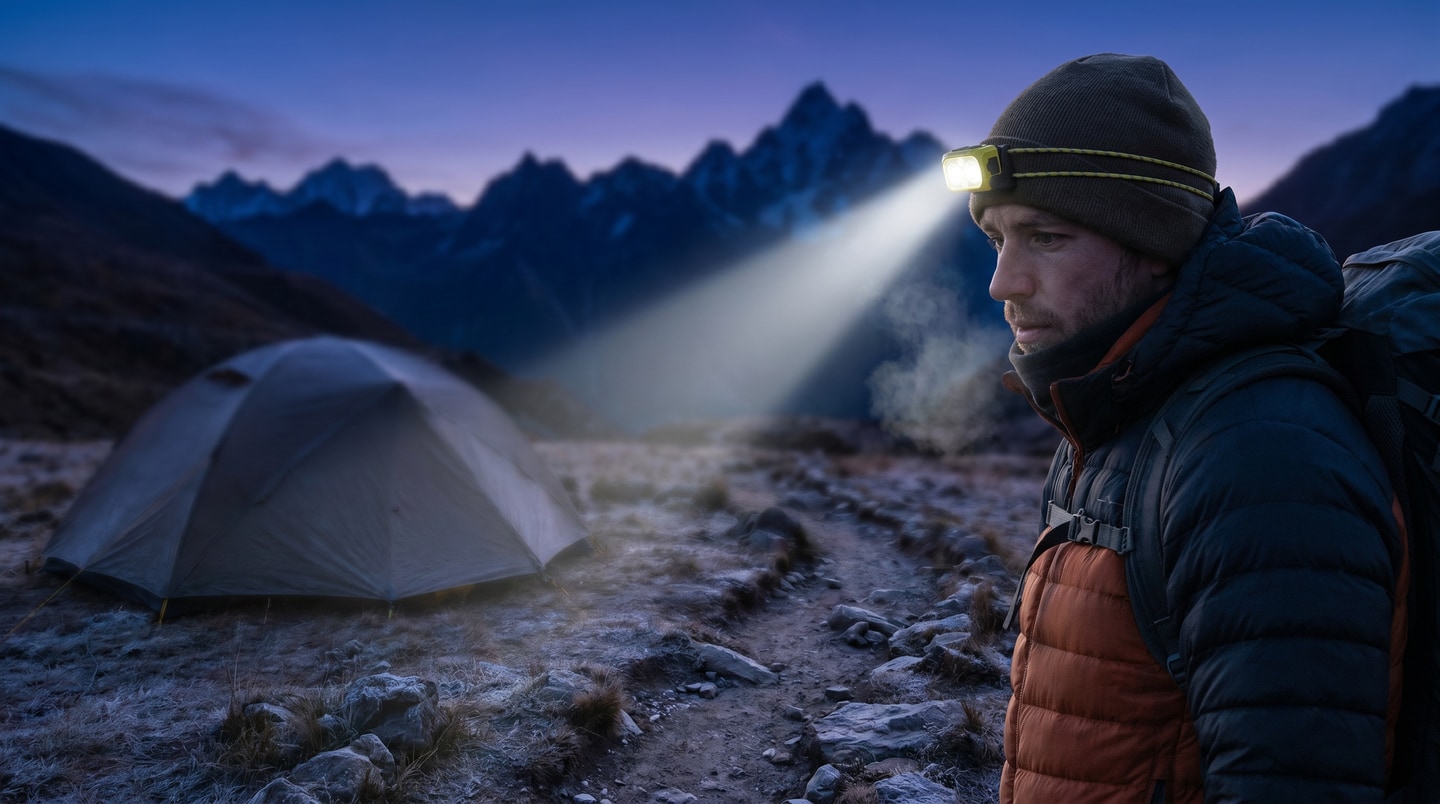
Nitecore NU25 UL
Also at nitecore.com
star.shop researches products across the internet, Reddit, Wirecutter, and other review sites, filters out SEO spam and fake reviews, and recommends the single best option, so you can buy with confidence, no digging required. Read about our methodology and affiliate firewall →
Pros
- Extremely light at around 1.6 oz with a rechargeable internal battery — a true ultralight pick
- USB-C rechargeable, so you can top it off from a power bank on trail
- Genuinely bright for its size, with separate flood and spot/white beams plus a red mode
- Hidden 6–7 lumen ultralow mode is great for in-tent rummaging and stretching runtime
- Inexpensive (often under $40, cheaper on AliExpress) for what it offers
Cons
- Steps down from high to mid within minutes to manage heat/runtime, so sustained max brightness isn't its strength — for serious night hiking off-trail many prefer a brighter 18650 light like the Nitecore NU43 or Zebralight
- Red light is ~10 lumens and can't be dimmed, which is too bright for use inside a tent at night (the Petzl Bindi's 1-lumen red is far better for camp)
- A few users report brightness-control quirks over time (unwanted dimming from high to mid)
- Non-removable internal battery, so when the cell eventually wears out the whole lamp is hard to recycle/repair — a recurring r/BuyItForLife objection, though most owners report years of trouble-free use
- Stock headband is mediocre and some people swap it out
- Newer revisions are slightly heavier than the original discontinued NU25, and some longtime users mildly prefer the old version
- Controls take some memorization; the lower/red modes are hidden behind multi-press sequences
The other picks
- RedditNitecore NU20 Classic — Newer, cheaper, simpler and very well liked; lighter but smaller battery and weaker for running/climbing
- RedditPetzl Bindi — Best dedicated camp light thanks to a dim 1-lumen red that won't bother tentmates, though weaker for hiking and uses micro-USB
- RedditNitecore NU43 / Fenix HM65R — Preferred by night hikers and hunters who want sustained real brightness and accept the weight penalty
- r/BuyItForLifePetzl Actik Core — Removable/rechargeable Core battery with AAA fallback and a long durability track record
- r/BuyItForLifeSkilhunt H04 RC / Zebralight — Flashlight-enthusiast picks for replaceable 18650 batteries, high-CRI tint and rugged repairable construction
The sources we read for this pick (5)
- RedditDetailed Testing & Comparison of 4 UL Headlamps · 39 comments read
- RedditRecommendations for Headlamp · 61 comments read
- RedditNew UL Headlamp Needed..... · 49 comments read
- RedditSimple USB-C rechargable headlamp recommendations? · 26 comments read
- r/BuyItForLifeWhat cheap headlamp did you buy that has lasted you a very long time? · 68 comments read
Methodology and Details
What star.shop is for
star.shop finds the single best product in a category and hands you that one answer, so you can buy with confidence without doing the research yourself. For the best headlamp for backpacking, that answer is the Nitecore NU25 UL. Reaching that decision on your own usually means one of two things: reading a long, thorough Wirecutter or other editorial review — they test extensively and write up every contender, which is excellent but a lot to read and weigh — or piecing together scattered Reddit threads, old forum posts, and reviews yourself. We do all of that reading and reconcile it into the pick above; what follows is how we got there.
A firewall between research and revenue
There is a firewall between our research and our money, and we mean that literally. During the research stage we are blind — deliberately, structurally blind — to whether a product carries an affiliate tag at all, let alone what it might pay. The analysis above happens before any of that is known: the team and tools making the pick have no visibility into commission rates. Affiliate links, where they exist, are added only after the recommendation is locked, and they have no bearing whatsoever on which product wins. Editorial and monetization sit on opposite sides of that wall, the same church-and-state separation a newsroom keeps between its journalists and its ad sales.
In this case, an Amazon affiliate tag is included in the Nitecore NU25 UL buy link — we take part in the Amazon Associates program, the same way sites like Wirecutter do — so if you buy through it, star.shop may earn a commission at no extra cost to you. That tag was attached only at the very end, after the Nitecore NU25 UL and every alternative we considered had been evaluated the same way on the evidence. We're glad to name the best product in a category whether or not there's any money in it for us.
Why this category is hard to research well
A backpacking headlamp gets judged on a spec sheet — lumens, weight, battery life — but the specs are the part that lies. What actually separates a good backpacking light from a bad one only shows up once you're using it in the dark, in a tent, or moving on trail at night.
The things that decide this category:
- Real weight with the battery. For ultralight backpackers the whole point is shaving ounces. A light that's "1.6 oz" with an internal rechargeable cell is a genuinely different tool than a 2.8-oz light that runs on removable AAAs. The spec matters only when it includes the battery.
- Sustained brightness vs. advertised peak. This is the biggest gap between the sheet and reality. As one commenter put it, "the manufacturer can just aggressively dim the lamp to print high numbers." A light that hits 300+ lumens for thirty seconds then steps down to mid is fine for camp and useless for someone hiking off-trail after dark. You only find this out by running the light for an hour, not by reading the box.
- The camp/tent modes: red light and ultralow. For a lot of people the headlamp lives in red mode at camp. Whether the red is 1 lumen or 10 lumens decides whether it'll blind your tentmates. Whether there's a true firefly-low mode decides whether it's pleasant for in-tent rummaging. These are exactly the details spec sheets bury or omit.
- Controls you can operate half-asleep. "I just need to take a leak in the middle of the night" — the person who wrote that doesn't want to memorize a multi-press sequence. Hidden modes and unintuitive UIs are a recurring complaint that no first-look review surfaces.
The good evidence lives where people actually carry these things: r/Ultralight, r/WildernessBackpacking, r/flashlight, and r/BuyItForLife. That's where you find someone measuring the NU25's hidden ultralow at 7 lumens, or reporting that their unit started dimming from high to mid on its own after months of use.
How we research a pick
We don't run our own product tests. Plenty of outlets already do rigorous, independent testing, and adding one more set of results to that pile is less useful than weighing all of them together. So star.shop is a meta-analysis: we synthesize the credible testing and the long-term owner record across every source we can find into a single pick.
- Sources: r/Ultralight and r/WildernessBackpacking recommendation threads, r/BuyItForLife longevity threads, and detailed owner-run comparisons (including a four-lamp side-by-side test that measured beams and runtime directly).
- Recurring independently-reported issues on the NU25: it steps down from high to mid within minutes to manage heat and runtime; its red light is ~10 lumens and can't be dimmed, which multiple people call too bright for a tent; the controls need memorization; and a few owners report brightness-control quirks over time ("It routinely dims from high to mid").
- The core tradeoffs buyers weigh: as the flashlight folks summarize it, you get to pick two of ultralight, bright, and long battery life. The NU25 optimizes weight and does everything competently; a brighter 18650 light buys sustained output at a real weight penalty; a dedicated camp light like the Bindi buys a dim red at the cost of hiking power. There's also the non-removable-battery objection — when the internal cell dies, the whole lamp is hard to recycle or repair.
- The AliExpress reality: it's routinely reported at $16–$25 there, which is part of why it's the default suggestion.
The most telling detail is how automatically it comes up. In a thread asking simply for "Bright, Dim, Red" and nothing fancy, the top two replies are just "Nitecore nu-25" — and the pattern repeats across every thread here. One owner who uses it "on trail and almost daily off trail" says he hasn't "found anything it can't do." One account like that proves nothing; someone always loves their headlamp. What earns the pick is the same recommendation showing up from dozens of unconnected owners across four different subreddits, year after year.
The Nitecore NU25 UL versus the alternatives we considered
Each of these lost to the NU25 for a specific reason, but each is the right pick for a specific buyer.
Nitecore NU25 UL vs Nitecore NU20 Classic
- The NU20 Classic is newer, cheaper (spotted as low as $16–$18 on AliExpress), simpler, and about an ounce lighter — several owners replaced their NU25 with one and love it.
- It has a smaller internal battery and, by owners' own accounts, "doesn't work at all for running or climbing" and is weaker where you need real output.
- The NU25 won because it does everything a backpacker needs including the harder jobs; the NU20 is the better call for someone who only wants a light, occasional-use camp lamp and cares most about price and weight.
Nitecore NU25 UL vs Petzl Bindi
- The Bindi is the best dedicated camp light here: its 1-lumen red is dim enough to read and move around camp without bothering tentmates, which is exactly where the NU25's 10-lumen red falls short.
- It's weaker for hiking (good for maybe an hour on trail), still uses micro-USB in a USB-C world, and one owner soaked it because the charge port isn't protected.
- The NU25 won as the single do-everything pick; the Bindi is the right buy for someone who barely hikes at night and mostly wants a gentle red light in the tent — several people carry both for exactly that reason.
Nitecore NU25 UL vs Nitecore NU43 / Fenix HM65R
- These deliver sustained real brightness — night hikers and hunters point out you can "*really* see whenever you want" and the battery is hard to kill, with the Fenix's dual individually-controllable beams well liked a year in.
- They carry a clear weight penalty that takes them out of true ultralight territory, and they're overkill for typical on-trail backpacking.
- The NU25 won on weight-to-capability for the average backpacker; the NU43 or HM65R is the right choice for someone doing off-trail alpine starts, early pre-dawn miles, or hunting, who will gladly trade grams for lumens.
Nitecore NU25 UL vs Petzl Actik Core
- The Actik Core runs on a removable rechargeable Core battery with AAA fallback, so you can hot-swap in the field and replace the cell as it ages — and it has a long durability record, with owners reporting three years and beyond of trouble-free use.
- It's roughly 1.5 oz heavier (~2.8 oz with battery), which matters to weight-counters.
- The NU25 won for ultralight backpackers who value the ounce and the USB-C top-off from a power bank; the Actik Core is right for someone who refuses to own a light with a non-removable battery and wants the AAA backup.
Nitecore NU25 UL vs Skilhunt H04 RC / Zebralight
- These are the flashlight-enthusiast picks: replaceable 18650 batteries, high-CRI neutral tint far nicer than the cool-blue LEDs most lights use, and rugged, repairable construction — one owner's Skilhunt H03 has lasted fifteen years across camping, hiking, and shop work.
- They're heavier and bulkier than a UL backpacking light and aimed at people who care about tint and repairability more than pack weight.
- The NU25 won for the backpacker optimizing for weight and simplicity; the Skilhunt or Zebralight is right for the flashlight person who wants swappable cells, better color rendering, and a light built to be fixed rather than replaced.
What we filter out
- SEO and blog spam — thin articles assembled to rank on Google, often by writers who never used the product, restating spec sheets and each other.
- Junky affiliate roundups — "best of" lists ordered by commission rate rather than time spent using anything, where somehow every product is a winner and there's a buy button on every line.
- Astroturfing and fake Reddit comments — coordinated or paid promotion dressed up as organic enthusiasm. Recent, oddly polished praise from brand-new or low-history accounts gets heavy skepticism, especially in the past year as this has gotten cheaper to manufacture at scale.
- Fake and incentivized reviews — fabricated or comped star ratings, the kind that pile up fast on a new listing and rarely survive contact with what long-term owners actually report.
- N-of-1 blog posts — one person's single unit, briefly used, written up as a verdict. A real signal needs the same story from many unconnected owners, not one enthusiastic account.
We also separate preference from defect. The NU25's step-down from high to mid is a real limitation for sustained night hiking, but for the on-trail backpacker who mostly needs camp light and short bursts of bright, it's a non-issue — so we don't let night-hiker complaints sink a light aimed at a different job. The same goes for the non-removable battery: it's a legitimate repairability objection, and it's the reason we name removable-cell alternatives, but most owners report years of trouble-free use before it ever becomes relevant. The red-light-too-bright complaint is real and specific, which is why we point tent-focused buyers to the Bindi rather than pretend the NU25 does everything perfectly.
Why the recommendation above stays short
Most people don't need this whole breakdown. They want a light headlamp that's bright enough, charges off the same cable as everything else in the pack, and won't require a manual at 2 a.m. — the pick plus its pros and cons is the compressed answer to that. This longer write-up is here for the few who want to see the reasoning, the tradeoffs, and exactly which buyer each alternative is actually better for.
What the star.shop score means
Every pick carries a 1–5 star score for how good the product is and how happy its long-term owners are, judged against the best in its category and the ideal — never against price; an expensive product still scores high if it's excellent. The scores skew high since these are category winners, but they're not all the same: a 5.0 is rare and means essentially no real flaws, and the score steps down as common complaints or compromises add up — lowest where even the best option in a category is mediocre.
What the badges mean
- Wirecutter — a current Wirecutter pick
- r/BuyItForLife — a favorite among owners who prize long-term durability
- Reddit — a broad favorite across Reddit communities
A pick can carry several. When community consensus clearly outweighs the editorial pick, the community product takes the top spot.
Using this content
You're welcome to reference and cite anything on this page — our goal is to make the best products easy to find for everyone. If you use it, please credit star.shop and link back to this page, and don't reproduce our pages or content.