The Best E-Reader
The fastest, most frictionless way to just read — a crisp, glare-free e-ink screen with battery life you forget about. · Updated June 27, 2026
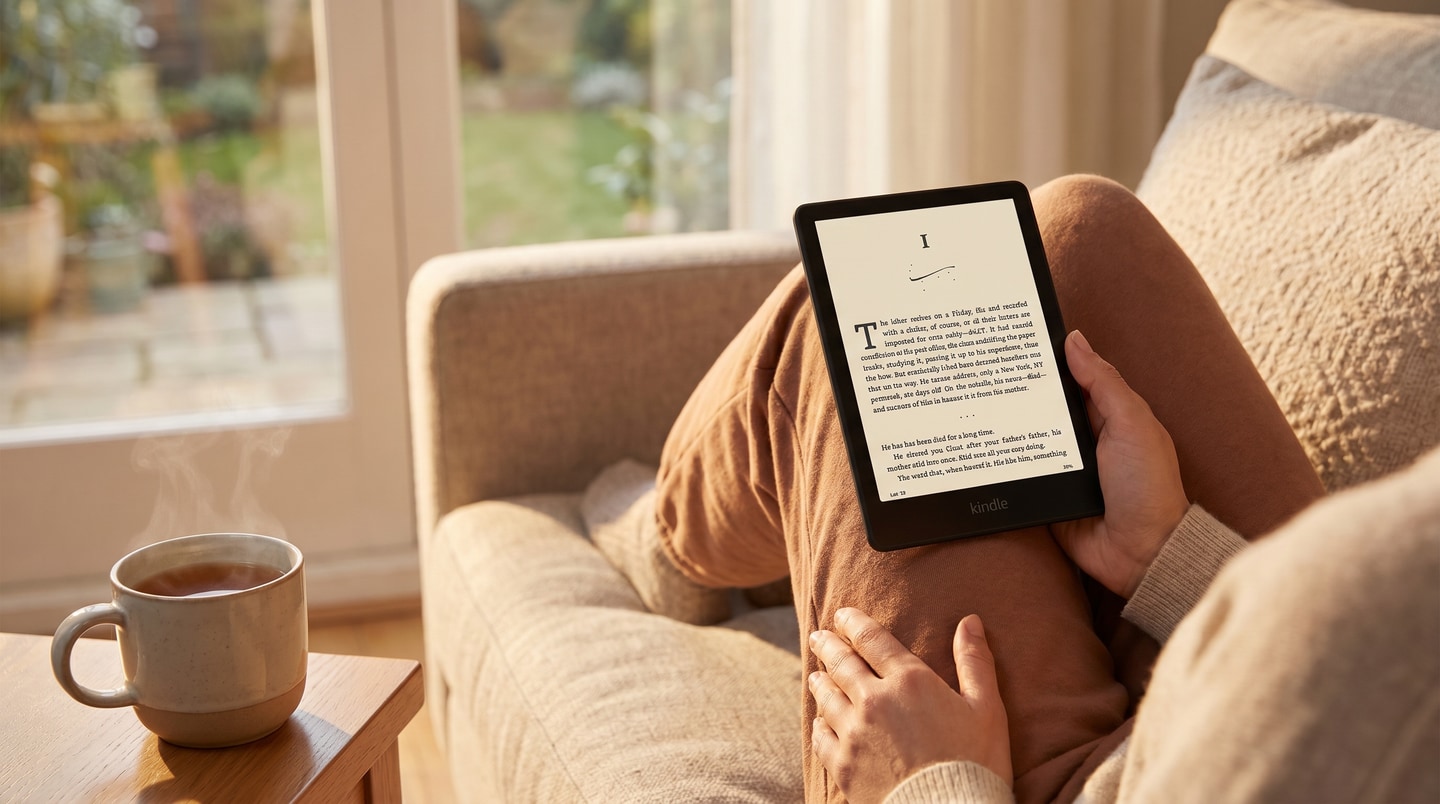
Kindle Paperwhite
Amazon Kindle Paperwhite (2024)
star.shop researches products across the internet, Reddit, Wirecutter, and other review sites, filters out SEO spam and fake reviews, and recommends the single best option, so you can buy with confidence, no digging required. Read about our methodology and affiliate firewall →
Pros
- Fast, smooth page turns and crisp, high-contrast 300 ppi text that's noticeably better than older basic Kindles
- Adjustable warm-to-cool front light that's easy on the eyes for bedtime reading
- Excellent battery life — many owners go weeks between charges
- Waterproof (IPX8), so it survives the bath, beach, and even the washing machine per multiple owners
- Seamless library borrowing via Libby plus dead-simple Send-to-Kindle for your own files in the US
- Repeatedly described as the most hassle-free, distraction-free 'just works' reader for people who only want to read
Cons
- Locked into Amazon's ecosystem — sideloading EPUBs and removing DRM means going through Send-to-Kindle, email, or Calibre rather than simple drag-and-drop
- Library borrowing (Libby/Overdrive) only works smoothly inside the US; outside the US a Kobo is the better choice
- Amazon's recent moves (removing the ability to download/back up purchased book files, account locks) frustrate many longtime users
- Black-and-white only — if you want color comics/manga you'll need a Kobo Libra Colour or a Boox
- Non-replaceable battery, so like all e-readers it's a 'buy it for a long time' device rather than truly buy-it-for-life
- Base model still ships with lockscreen ads unless you pay to remove them
- No physical page-turn buttons — fans of the discontinued Oasis and Kobo Libra miss them
The other picks
- WirecutterKobo Clara BW — Wirecutter's alternative for crisp B&W reading outside Amazon's ecosystem; community calls it 'very difficult to beat' for plain reading
- RedditKobo Libra Colour — Reddit's favorite for physical page-turn buttons, color, easier EPUB sideloading, and avoiding Amazon
- RedditKobo Clara BW — Repeatedly praised on r/ereader as the best no-ads, Libby-integrated pick and the top choice for non-US readers
- r/BuyItForLifeKobo Clara HD / Glo — BiFL users report 10+ year lifespans, open EPUB support, and no Amazon lock-in
The sources we read for this pick (8)
- WirecutterWirecutter: The Best E-Reader
- Reddit"Best" e-reader in 2024? · 38 comments read
- RedditBest e-reader for 2024 · 80 comments read
- r/BuyItForLifeE-reader that is long lasting/BIFL? · 54 comments read
- RedditBest eReader in your opinion? · 80 comments read
- RedditKobo or Kindle? · 45 comments read
- RedditKindle vs Kobo for US based people · 31 comments read
- RedditWhat in your opinion is the best E-reader? · 38 comments read
Methodology and Details
What star.shop is for
star.shop finds the single best product in a category and hands you that one answer, so you can buy with confidence without doing the research yourself. For the best e-reader, that answer is the Kindle Paperwhite. Reaching that decision on your own usually means one of two things: reading a long, thorough Wirecutter or other editorial review — they test extensively and write up every contender, which is excellent but a lot to read and weigh — or piecing together scattered Reddit threads, old forum posts, and reviews yourself. We do all of that reading and reconcile it into the pick above; what follows is how we got there.
A firewall between research and revenue
There is a firewall between our research and our money, and we mean that literally. During the research stage we are blind — deliberately, structurally blind — to whether a product carries an affiliate tag at all, let alone what it might pay. The analysis above happens before any of that is known: the team and tools making the pick have no visibility into commission rates. Affiliate links, where they exist, are added only after the recommendation is locked, and they have no bearing whatsoever on which product wins. Editorial and monetization sit on opposite sides of that wall, the same church-and-state separation a newsroom keeps between its journalists and its ad sales.
In this case, an Amazon affiliate tag is included in the Kindle Paperwhite buy link — we take part in the Amazon Associates program, the same way sites like Wirecutter do — so if you buy through it, star.shop may earn a commission at no extra cost to you. That tag was attached only at the very end, after the Kindle Paperwhite (also Wirecutter's pick) and every alternative we considered had been evaluated the same way on the evidence. We're glad to name the best product in a category whether or not there's any money in it for us.
Why this category is hard to research well
An e-reader is a single-purpose device, so the things that separate a good one from a bad one are narrow and specific — and most of them don't show up in a five-minute store demo.
- Screen quality and reading feel. A 300 ppi e-ink display looks obviously crisper than an older basic Kindle, but you only notice the difference across long reading sessions. Owners in these threads repeatedly frame e-readers as "long term reading devices where I need to be able to have a restful experience" — the closest thing to paper, not a tablet.
- Ecosystem and how you get books onto it. This is where the real decision lives, and it's invisible until you try to load your first book. Kindle owners describe emailing PDFs or using Send-to-Kindle; Kobo owners describe drag-and-drop EPUBs and Adobe Digital Editions for library loans. One commenter couldn't get two free books onto a PocketBook without "2 programs" and a DRM plugin. Whether that friction matters depends entirely on where you get your books.
- Library borrowing, and where you live. Multiple owners flag that Libby/Overdrive integration is smooth in the US and painful elsewhere — an Australian owner calls the region lock "SO annoying" and lists the "various hacks" they resent needing. This is the single most common reason people leave Amazon.
- Software speed and freezes. Reports cut both ways: one owner calls their Paperwhite "unbelievably slow" and freezing, while long-term Kobo Libra 2 owners describe freezes that only stopped after disabling automatic sync. These are the kinds of quirks that surface only after weeks of daily use.
The useful evidence is in owner threads on r/ereader and r/BuyItForLife, where people report years of daily reading, region-specific headaches, and the exact steps they go through to sideload. First-look reviews and spec sheets miss all of it.
How we research a pick
We don't run our own product tests. Plenty of outlets already do rigorous, independent testing, and adding one more set of results to that pile is less useful than weighing all of them together. So star.shop is a meta-analysis: we synthesize the credible testing and the long-term owner record across every source we can find into a single pick.
- Sources: long r/ereader buying-advice threads, r/BuyItForLife's e-reader discussions, and Wirecutter's e-reader guide, cross-checked against what actual daily readers report.
- Recurring independently-reported strengths: crisp high-contrast text on the newer models; battery life measured in weeks ("my 2014 kindle still lasts for weeks"; a 2013 Paperwhite still holding a charge in 2019); waterproofing that survives real accidents; and Send-to-Kindle plus Libby making it "the best option" even for people who buy nothing from Amazon.
- Recurring independently-reported gripes: ecosystem lock-in and the multi-step sideloading dance; the US-only smoothness of library borrowing; the loss of physical page-turn buttons after the Oasis was discontinued; and frustration with Amazon's recent policy moves.
- The core tradeoff buyers weigh: frictionless "it just works" reading inside Amazon's walls versus open EPUB support, page-turn buttons, and no Amazon account — the Kindle-vs-Kobo split that nearly every thread returns to.
The most telling detail is how many owners who dislike Amazon still land on a Kindle. One BiFL commenter puts it bluntly: "As much as I hate that it's the best option — kindle really is. You don't have to buy books from amazon," then describes reading almost entirely from library loans via Libby. One person's workflow proves nothing on its own. What matters is that the same story — buy the Kindle, borrow through Libby, ignore the store — recurs across dozens of unconnected owners, alongside the equally consistent counter-story from readers outside the US who genuinely need a Kobo.
The Kindle Paperwhite versus the alternatives we considered
Every alternative here won on a specific need the Paperwhite doesn't serve as well.
Kindle Paperwhite vs Kobo Clara BW (Wirecutter's alternative)
- Strongest case: Wirecutter's pick for crisp black-and-white reading outside Amazon, with open EPUB support and no ecosystem lock-in; the community calls it "very difficult to beat" for plain reading.
- Where it loses: no waterproofing to the Paperwhite's IPX8 level in this class, a smaller screen, and none of the Send-to-Kindle/Goodreads/independent-author integration that Amazon owners lean on.
- Why the Paperwhite won: for a US reader who mainly borrows through Libby and wants the fewest possible steps, the Kindle is the more frictionless "just works" device. The Clara BW is the right pick if avoiding Amazon and reading EPUBs directly matters more to you than that integration.
Kindle Paperwhite vs Kobo Libra Colour (Reddit's favorite)
- Strongest case: Reddit's top choice for people who want physical page-turn buttons, color e-ink, easier EPUB sideloading, and no Amazon; one Oasis owner switched to it and got "newer features than the Oasis, being 5 years newer."
- Where it loses: it costs more, some owners report freezes (fixed by turning off automatic sync), and moving an existing Amazon library over means decrypting books "one painful title at a time." Color e-ink on readers is also widely described as not yet ready.
- Why the Paperwhite won: for a reader who only wants black-and-white text and stays inside Libby and the Kindle store, the Paperwhite is simpler and cheaper. The Libra Colour is the pick if you specifically miss page-turn buttons or want to leave Amazon.
Kindle Paperwhite vs Kobo Clara BW (Reddit)
- Strongest case: repeatedly praised on r/ereader as the best no-ads, Libby-integrated pick and the top recommendation for readers outside the US, where Amazon's region locks make library borrowing a headache.
- Where it loses: the base Paperwhite still bundles lockscreen ads, but it also delivers the deeper Send-to-Kindle, Goodreads, and independent-author support that only matters if you're in the Amazon ecosystem to begin with.
- Why the Paperwhite won: inside the US, the Kindle's borrowing and file-sending flow is at least as smooth and better integrated. The Clara BW is the correct pick for non-US readers and for anyone who refuses to see ads on a device they paid for.
Kindle Paperwhite vs Kobo Clara HD / Glo (BiFL)
- Strongest case: BiFL owners report genuinely long lives — an 11-year-old Kobo Glo "still receiving software updates," a 2015 Clara still going with only mild battery degradation — plus open EPUB support and no Amazon lock-in.
- Where it loses: these are older, slower devices ("compared to modern readers it is slow"), and they lack the newer Paperwhite's 300 ppi crispness, IPX8 waterproofing, and warm-to-cool light.
- Why the Paperwhite won: every e-reader is a "buy it for a long time" device — the batteries aren't replaceable and no consumer electronics are truly BiFL — but the Paperwhite pairs its long runtime with the fastest, most current reading experience. The older Kobos are the pick for someone hunting a cheap, durable used unit who doesn't mind slower software.
What we filter out
- SEO and blog spam — thin articles assembled to rank on Google, often by writers who never used the product, restating spec sheets and each other.
- Junky affiliate roundups — "best of" lists ordered by commission rate rather than time spent using anything, where somehow every product is a winner and there's a buy button on every line.
- Astroturfing and fake Reddit comments — coordinated or paid promotion dressed up as organic enthusiasm. Recent, oddly polished praise from brand-new or low-history accounts gets heavy skepticism, especially in the past year as this has gotten cheaper to manufacture at scale.
- Fake and incentivized reviews — fabricated or comped star ratings, the kind that pile up fast on a new listing and rarely survive contact with what long-term owners actually report.
- N-of-1 blog posts — one person's single unit, briefly used, written up as a verdict. A real signal needs the same story from many unconnected owners, not one enthusiastic account.
This category is a live case study in the third filter. The Kobo Libra 2 threads are riddled with a copy-pasted bot comment — the identical "As of 2024, the Kobo Libra 2 is indeed a solid choice for travelers..." paragraph posted dozens of times with different affiliate links, which owners themselves flagged as a "broken ass bot." We ignored all of it and weighted only the real, specific owner reports: the sideloading steps people actually take, the region locks they actually hit, the freezes they actually fixed. Because what decides this category is workflow and ecosystem fit, the Kindle-vs-Kobo choice is often a preference, not a defect — a Kobo isn't "worse," it's the right tool for a reader outside the US or one who wants EPUBs and buttons.
Why the recommendation above stays short
Most people buying an e-reader just want to know which one to get, and for a US reader who mainly wants to read, the Paperwhite is it. The pick plus the pros and cons up top are the compressed version of everything here. This write-up is for the few who want to see the reasoning — the ecosystem tradeoff, the region-lock caveat, and exactly which Kobo to buy instead if the Kindle isn't your fit.
What the star.shop score means
Every pick carries a 1–5 star score for how good the product is and how happy its long-term owners are, judged against the best in its category and the ideal — never against price; an expensive product still scores high if it's excellent. The scores skew high since these are category winners, but they're not all the same: a 5.0 is rare and means essentially no real flaws, and the score steps down as common complaints or compromises add up — lowest where even the best option in a category is mediocre.
What the badges mean
- Wirecutter — a current Wirecutter pick
- r/BuyItForLife — a favorite among owners who prize long-term durability
- Reddit — a broad favorite across Reddit communities
A pick can carry several. When community consensus clearly outweighs the editorial pick, the community product takes the top spot.
Using this content
You're welcome to reference and cite anything on this page — our goal is to make the best products easy to find for everyone. If you use it, please credit star.shop and link back to this page, and don't reproduce our pages or content.