The Best Cutting Board
A thick, end-grain maple board that's gentle on knives, easy to maintain, and will outlast almost anything else in your kitchen. · Updated June 30, 2026
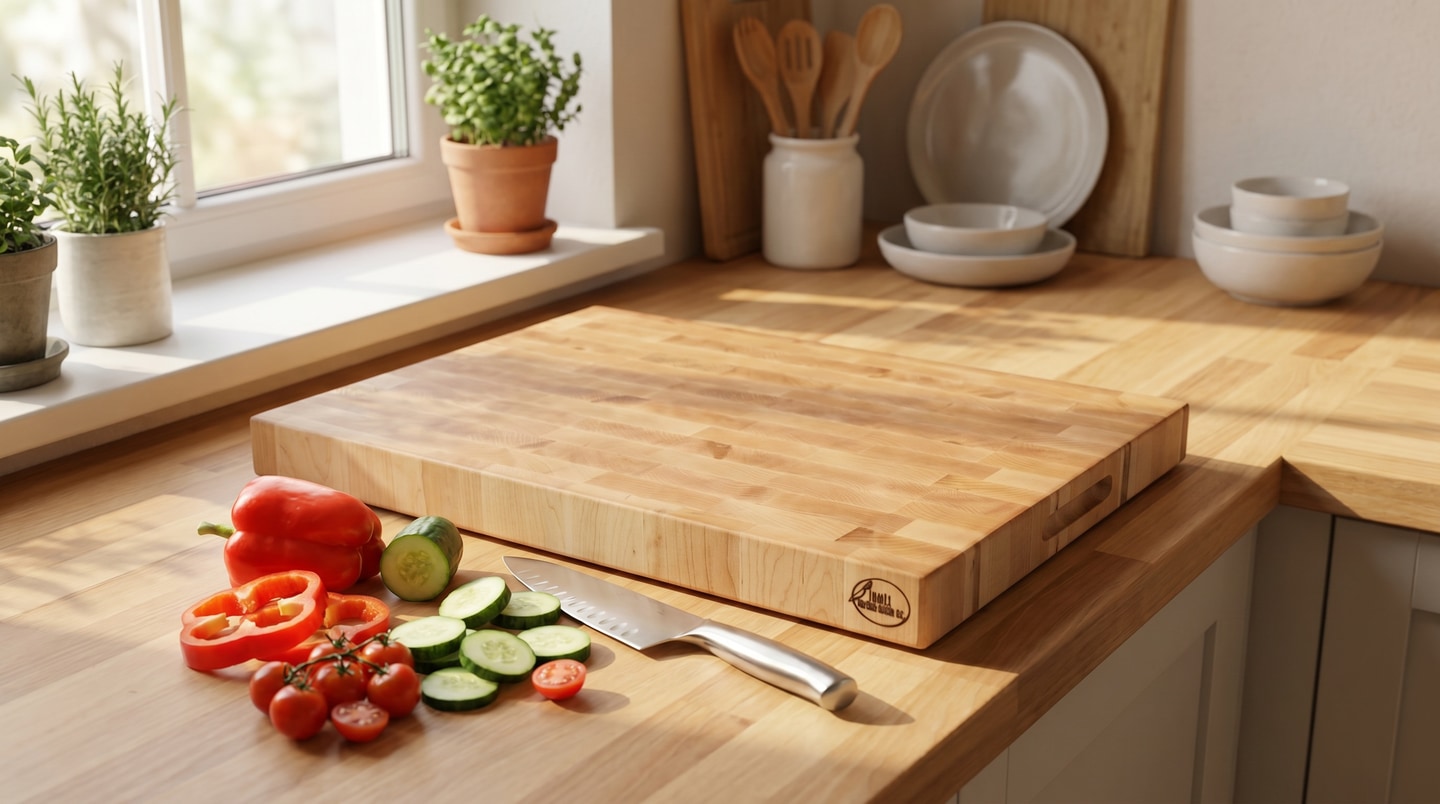
Jones Maple End Grain
Jones Cutting Board 20 x 14 x 1.5 Inch Maple End Grain
star.shop researches products across the internet, Reddit, Wirecutter, and other review sites, filters out SEO spam and fake reviews, and recommends the single best option, so you can buy with confidence, no digging required. Read about our methodology and affiliate firewall →
Pros
- End-grain maple is self-healing and the gentlest hardwood surface for keeping knife edges sharp
- Thick, heavy construction stays put while chopping and strongly resists warping
- Naturally antimicrobial — wood actually tests as clean or cleaner than plastic
- Can be sanded and re-oiled for decades, making it a genuine buy-it-for-life board
- Beautiful enough to leave out on the counter or use for serving
Cons
- Heavy and bulky to move, store, and clean
- Requires regular oiling and hand-washing — never goes in the dishwasher
- Expensive compared to plastic or composite boards
- Some users report thinner (1.5") end-grain boards can split if neglected; the upgrade is going thicker
- Not ideal for heavy cleaver work or bread knives
- Vegetable oil will go rancid — use food-grade mineral oil or a beeswax blend
The other picks
- RedditTenryo Hi-Soft / Hasegawa rubber boards — Knife enthusiasts and restaurant crowd say synthetic rubber gives the best edge retention and hygiene with zero maintenance
- r/BuyItForLifeJohn Boos / thicker end-grain butcher block (or local Etsy woodcrafter) — BiFL favors a thick hardwood block that can be resanded for life; thin boards warp or split
- RedditEpicurean / Richlite composite boards — Dishwasher-safe wood-fiber resin preferred by people who hate hand-washing
The sources we read for this pick (7)
- WirecutterWirecutter: The Best Cutting Board
- r/BuyItForLifeAre john boos cutting board still worth it? · 14 comments read
- r/BuyItForLifeBest Cutting Board Material? · 14 comments read
- RedditWhat cutting board should you actually use? · 14 comments read
- r/BuyItForLifeBuy it for life chopping board? · 14 comments read
- r/BuyItForLifeRecommend a cutting board? · 14 comments read
- RedditBest cutting boards? There's a lot of talk about which blade is best, but what is the best material, or brand that will keep them functioning the best for longest? · 14 comments read
Methodology and Details
What star.shop is for
star.shop finds the single best product in a category and hands you that one answer, so you can buy with confidence without doing the research yourself. For the best cutting board, that answer is the Jones Maple End Grain. Reaching that decision on your own usually means one of two things: reading a long, thorough Wirecutter or other editorial review — they test extensively and write up every contender, which is excellent but a lot to read and weigh — or piecing together scattered Reddit threads, old forum posts, and reviews yourself. We do all of that reading and reconcile it into the pick above; what follows is how we got there.
A firewall between research and revenue
There is a firewall between our research and our money, and we mean that literally. During the research stage we are blind — deliberately, structurally blind — to whether a product carries an affiliate tag at all, let alone what it might pay. The analysis above happens before any of that is known: the team and tools making the pick have no visibility into commission rates. Affiliate links, where they exist, are added only after the recommendation is locked, and they have no bearing whatsoever on which product wins. Editorial and monetization sit on opposite sides of that wall, the same church-and-state separation a newsroom keeps between its journalists and its ad sales.
Where a buy link carries an affiliate tag, it is added only at the very end, after the Jones Maple End Grain (also Wirecutter's pick) and every alternative we considered had been evaluated the same way on the evidence. We're glad to name the best product in a category whether or not there's any money in it for us.
Why this category is hard to research well
A cutting board looks simple, so most first-look reviews stop at "it's pretty" and "it's heavy." What actually decides a good board only shows up after months of real kitchen use, and it comes down to a few specific things:
- How it treats your knife edge. This is the real job. Wood, rubber, and composite all behave differently, and glass, stone, or bamboo quietly destroy edges. Knife enthusiasts on r/chefknives argue this hard, and the honest answer is that end-grain hardwood is gentle and self-healing, but synthetic rubber boards (Hasegawa, Tenryo Hi-Soft, Sani-Tuff) are widely called the *best* for edge retention. Which one wins depends on how you cut.
- Whether it warps or splits. This is the failure mode owners actually report, and it's almost always tied to two variables: thickness and maintenance. A recurring story on r/BuyItForLife: thin 1.5" boards that split within a year, thick blocks that never move. One owner ran three 1.5" Boos blocks that split inside a year, then had zero problems after going thicker.
- Maintenance reality. A wood board that never sees oil, or sits in a puddle of water, cracks. Multiple owners describe beautiful boards ruined this way — one warped and split after guests left it sitting wet for weeks. The board isn't defective; it needs handwashing, drying, and periodic oiling with mineral oil or a beeswax blend, not vegetable oil (which goes rancid).
- Hygiene. There's a persistent myth that plastic is cleaner. The actual research (cited repeatedly and, notably, misquoted by people who never read it) found the opposite: bacteria were recovered readily from plastic and multiplied overnight, while wood surfaces came up cleaner regardless of age or oiling.
None of these are visible in a photo or a two-week review. The good evidence lives in long-running owner threads on r/BuyItForLife, r/Cooking, and r/chefknives — people reporting boards at year 8, year 10, year 20, and people reporting exactly how theirs failed.
How we research a pick
We don't run our own product tests. Plenty of outlets already do rigorous, independent testing, and adding one more set of results to that pile is less useful than weighing all of them together. So star.shop is a meta-analysis: we synthesize the credible testing and the long-term owner record across every source we can find into a single pick.
- Sources: long-term owner threads on r/BuyItForLife (John Boos worth-it threads, "best material," "recommend a board"), r/Cooking, and the knife-focused arguments on r/chefknives, plus the antimicrobial study those threads keep citing.
- Recurring independently-reported issues: thin (1.5") end-grain boards splitting, usually within a year; warping when a board is left wet or never oiled; vegetable oil going rancid; boards being too heavy to want to move or store.
- The core tradeoffs buyers weigh:
- Edge-friendliness and looks (end-grain wood) versus zero-maintenance, dishwasher-safe convenience (composite or rubber).
- Thicker means far less warp risk but more weight and cost.
- Rubber boards win on pure edge retention and hygiene, but they're ugly, not dishwasher-safe, and treated by many as disposable rather than buy-it-for-life.
- One owner got a "thicc boi" Boos on their wedding registry in 2016, admits to not treating it well, and reports it "still looks brand new every time I clean it," with no reason it won't last the rest of their life — as long as they're not hacking at it with a cleaver. One happy owner proves nothing. What moves this pick is that the same account repeats across unconnected owners: year 8 or 9, "just handwash and oil as needed"; a decade in and going strong; sanded down when kids got paint in it and back to new. The failures cluster just as consistently — thin boards, neglected boards, boards left in water.
The Jones Maple End Grain versus the alternatives we considered
The board that wins depends on how you cut and how much maintenance you'll actually do; here's why the others lost.
Jones Maple End Grain vs Tenryo Hi-Soft / Hasegawa rubber boards
- Knife enthusiasts and the restaurant crowd on r/chefknives call synthetic rubber the gentlest surface for edge retention, with genuinely zero maintenance, good hygiene, no warping, and it doesn't retain water.
- It loses on the things that make a board something you keep: it's not pretty, it's not dishwasher-safe, it can't take hard rock chops, cleaving, or bread knives, and even fans treat it as semi-disposable rather than buy-it-for-life.
- The Jones wins overall because it does everything reasonably well and lasts for decades, but if your priority is pure edge retention above all — especially if you're precise with your cuts and don't care how the board looks — a Hasegawa or Tenryo Hi-Soft is the right call.
Jones Maple End Grain vs John Boos / thicker end-grain butcher block (or local Etsy woodcrafter)
- r/BuyItForLife loves a thick hardwood block that can be resanded for life, and a local woodcrafter or Etsy maker often costs less than a name brand while giving you the same self-healing end-grain surface.
- It loses only on consistency: the failures in these threads are thin blocks that split within a year and boards from unknown sources that warp, so you're taking on sourcing risk yourself.
- The Jones wins because it's a known thick end-grain maple board with the resurface-forever properties BiFL wants, without the gamble — but if you want to buy local or have a trusted woodcrafter, a thick (not thin) block from them is a genuinely equivalent choice.
Jones Maple End Grain vs Epicurean / Richlite composite boards
- Epicurean's wood-fiber resin (and Richlite) is knife-safe, resistant to gouging, heat-resistant, and the one thing wood can't be: dishwasher-safe, which several owners say is exactly why they reach for it over their nice wood board.
- It loses on the surface itself — composite is harder and less gentle on edges than end-grain wood, and it's not the board you leave out to serve on.
- The Jones wins for anyone who wants the gentlest long-term surface and will handwash, but if you genuinely hate hand-washing and want to chuck the board in the dishwasher, an Epicurean is the honest answer (several owners use one on top of a wood board specifically for raw meat).
What we filter out
- SEO and blog spam — thin articles assembled to rank on Google, often by writers who never used the product, restating spec sheets and each other.
- Junky affiliate roundups — "best of" lists ordered by commission rate rather than time spent using anything, where somehow every product is a winner and there's a buy button on every line.
- Astroturfing and fake Reddit comments — coordinated or paid promotion dressed up as organic enthusiasm. Recent, oddly polished praise from brand-new or low-history accounts gets heavy skepticism, especially in the past year as this has gotten cheaper to manufacture at scale.
- Fake and incentivized reviews — fabricated or comped star ratings, the kind that pile up fast on a new listing and rarely survive contact with what long-term owners actually report.
- N-of-1 blog posts — one person's single unit, briefly used, written up as a verdict. A real signal needs the same story from many unconnected owners, not one enthusiastic account.
The tricky part in this category is separating a real defect from a maintenance failure and separating a defect from a preference. A board that warped after sitting in a puddle for weeks, or a thin board that split without oiling, isn't telling you the board is bad — it's telling you the owner skipped the job. We weight those complaints down. Wanting a dishwasher-safe board, or wanting the absolute best edge retention for precise slicing, are real preferences that point to composite or rubber instead — not knocks against a wood board doing the job it's built for. And the tasks the Jones isn't for — heavy cleaver work and bread knives — are out-of-scope jobs, not failures.
Why the recommendation above stays short
Most buyers don't need any of this. The pick, the pros, and the cons are the compressed version — a thick end-grain maple board that's gentle on knives and lasts decades if you handwash and oil it. This longer write-up is here for the few who want to see the reasoning, the failure patterns, and exactly which buyer should pick something else.
What the star.shop score means
Every pick carries a 1–5 star score for how good the product is and how happy its long-term owners are, judged against the best in its category and the ideal — never against price; an expensive product still scores high if it's excellent. The scores skew high since these are category winners, but they're not all the same: a 5.0 is rare and means essentially no real flaws, and the score steps down as common complaints or compromises add up — lowest where even the best option in a category is mediocre.
What the badges mean
- Wirecutter — a current Wirecutter pick
- r/BuyItForLife — a favorite among owners who prize long-term durability
- Reddit — a broad favorite across Reddit communities
A pick can carry several. When community consensus clearly outweighs the editorial pick, the community product takes the top spot.
Using this content
You're welcome to reference and cite anything on this page — our goal is to make the best products easy to find for everyone. If you use it, please credit star.shop and link back to this page, and don't reproduce our pages or content.