The Best Cooler
Yeti-grade ice retention and toughness at roughly half the price — the cooler the community keeps coming back to. · Updated June 26, 2026
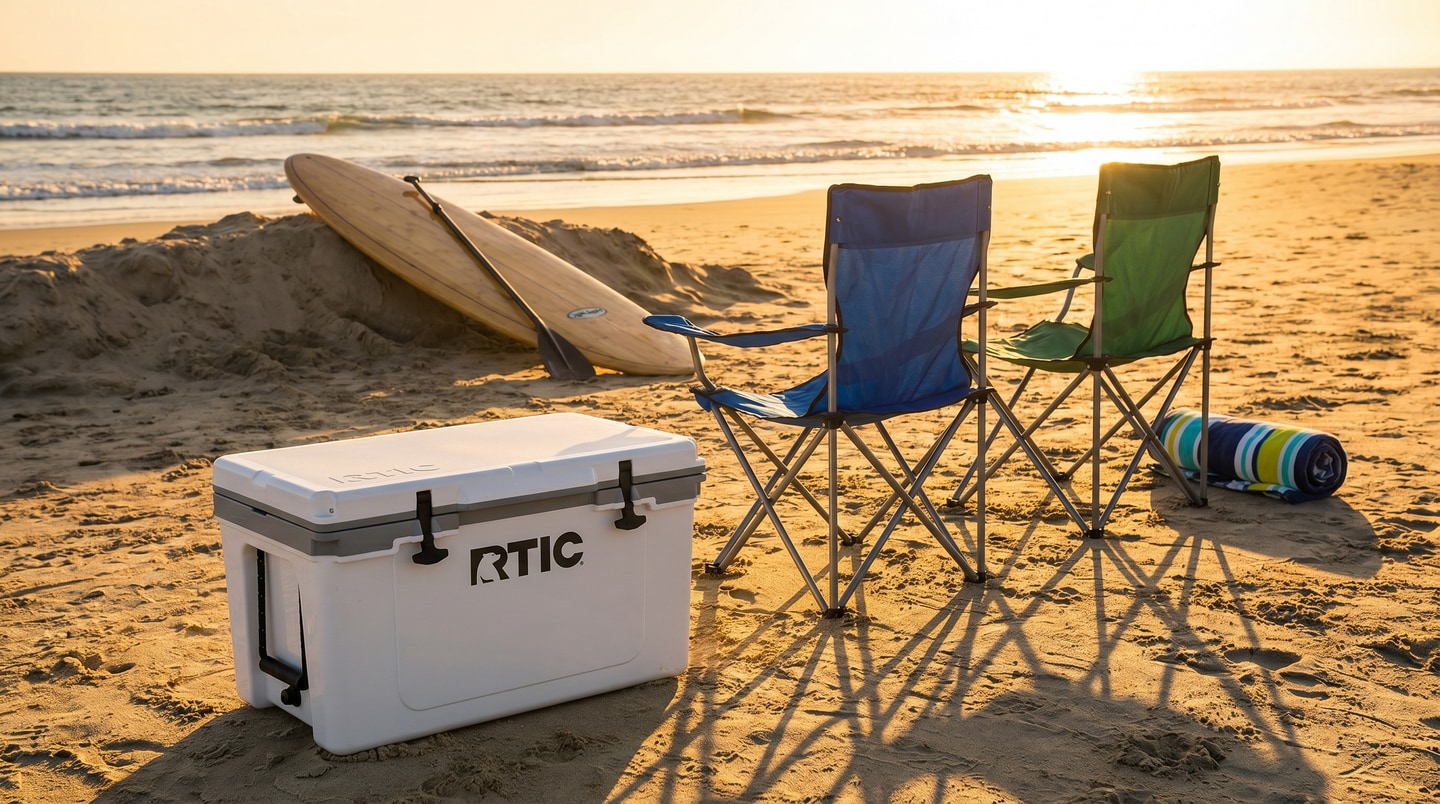
RTIC Ultra-Light
RTIC 52 QT Ultra-Light Cooler
Also at rticoutdoors.com · walmart.com
star.shop researches products across the internet, Reddit, Wirecutter, and other review sites, filters out SEO spam and fake reviews, and recommends the single best option, so you can buy with confidence, no digging required. Read about our methodology and affiliate firewall →
Pros
- Ice retention is on par with a Yeti for most real-world trips — many owners report ice lasting 4–7 days
- Costs roughly a third to a half of a comparable Yeti for nearly identical rotomolded performance
- Genuinely tough — owners report it surviving falls off truck beds and years of hard use without cracking
- Highly practical layout: drains on both ends, slots for dividers, and easy-to-grab handles that several owners prefer over Yeti's
- Standout customer service — multiple users got free replacement coolers or parts when something went wrong
- Frequent 30%-off sales make it an even better value if you wait for one
Cons
- Like all rotomolded coolers, it's heavy and bulky to lift and carry
- A minority of owners feel the lid seal isn't quite as tight as a Yeti's, which can cost about a day of ice on long, hard 7-day trips
- Foam rope-handle grips can start to tear after a couple years of heavy carrying
- Made overseas rather than in the USA, which matters to some BIFL buyers
- Some early units had a lingering plastic smell out of the box
- Doesn't carry the brand cachet of Yeti (which some owners actually count as a theft-deterrent plus)
- Soft-sided RTIC models are notably weaker on ice retention than the hard coolers — stick to the rotomolded versions
The other picks
- r/BuyItForLifeYeti Tundra — Owners say it edges out everything else on ice retention for hard 7+ day use in extreme heat, with the best replacement-part support
- r/BuyItForLifeOrca Coolers — Made in the USA, often cheaper than Yeti, and praised for years of daily abuse on boats and work trucks
- RedditLifetime 55 (Costco/Walmart) — Frequently called as good as Yeti for a fraction of the price, US-made, and often on sale near $109
- r/BuyItForLifeColeman Xtreme / Steel-Belted — The budget BIFL classic — lighter, decades of life, replaceable hinges and drains, fine for weekend use
- r/BuyItForLifePelican Elite — Built like a tank with a lifetime warranty for those who want maximum durability and don't mind the weight
The sources we read for this pick (6)
- WirecutterWirecutter: The Best Cooler
- r/BuyItForLifeLet’s talk about the best coolers · 71 comments read
- r/BuyItForLifeRecommendations for a BuyItForLife Cooler? · 40 comments read
- r/BuyItForLifeWhat is the BIFL Cooler? · 27 comments read
- r/BuyItForLifeAre there BIFL coolers? · 44 comments read
- RedditIs the RTIC cooler just as good as YETI? · 80 comments read
Methodology and Details
What star.shop is for
star.shop finds the single best product in a category and hands you that one answer, so you can buy with confidence without doing the research yourself. For the best cooler, that answer is the RTIC Ultra-Light. Reaching that decision on your own usually means one of two things: reading a long, thorough Wirecutter or other editorial review — they test extensively and write up every contender, which is excellent but a lot to read and weigh — or piecing together scattered Reddit threads, old forum posts, and reviews yourself. We do all of that reading and reconcile it into the pick above; what follows is how we got there.
A firewall between research and revenue
There is a firewall between our research and our money, and we mean that literally. During the research stage we are blind — deliberately, structurally blind — to whether a product carries an affiliate tag at all, let alone what it might pay. The analysis above happens before any of that is known: the team and tools making the pick have no visibility into commission rates. Affiliate links, where they exist, are added only after the recommendation is locked, and they have no bearing whatsoever on which product wins. Editorial and monetization sit on opposite sides of that wall, the same church-and-state separation a newsroom keeps between its journalists and its ad sales.
In this case, an Amazon affiliate tag is included in the RTIC Ultra-Light buy link — we take part in the Amazon Associates program, the same way sites like Wirecutter do — so if you buy through it, star.shop may earn a commission at no extra cost to you. That tag was attached only at the very end, after the RTIC Ultra-Light (also Wirecutter's pick) and every alternative we considered had been evaluated the same way on the evidence. We're glad to name the best product in a category whether or not there's any money in it for us.
Why this category is hard to research well
A cooler that looks great on a spec sheet, or holds ice fine for a Saturday, can still fail you on the trip that actually matters. What separates a good rotomolded cooler from a bad one only shows up under specific conditions:
- Ice retention under real load, not marketing claims. Almost any rotomolded cooler keeps drinks cold for a weekend. The difference shows on long, hot, multi-day trips where you're opening and closing it. Owners repeatedly point out that the biggest ice-loss factor is how often you open the lid and whether you pre-chilled — not the logo. The gap between a Yeti and a good clone only becomes visible on hard 7-day fishing or overlanding trips in extreme heat, which is exactly the scenario a first-look review never runs.
- The lid seal. This is the one place owners who've used both consistently give Yeti the edge — several describe hearing the Yeti seal and air out when the lid closes, and not getting that on the RTIC. On short trips it's irrelevant; on a 7-day trip a weaker seal can cost roughly a day of ice.
- Whether the hardware and body survive years of abuse. Cheap coolers don't fail at the insulation — they fail at hinges, latches, drain plugs, and cracked bodies after a year or two. That only surfaces after real seasons of use.
- What happens when something does break. Repairability and replacement-part support is a genuine deciding factor for a product people keep for a decade, and you can't see it in a product photo.
The good evidence lives with people who own multiple coolers side by side — vandwellers, saltwater fishing guides, work-truck owners who use a cooler seven days a week — and report how each one held up over years. Single ice tests from YouTube tell you the box-store starting point; the long-term owner threads tell you the rest.
How we research a pick
We don't run our own product tests. Plenty of outlets already do rigorous, independent testing, and adding one more set of results to that pile is less useful than weighing all of them together. So star.shop is a meta-analysis: we synthesize the credible testing and the long-term owner record across every source we can find into a single pick.
- Sources: r/BuyItForLife's recurring "best cooler" and "BIFL cooler" threads, r/CampingGear's direct "Is RTIC as good as Yeti?" discussion, and owners who post about coolers used hard for years — overlanding, fishing, boat work, daily work-truck ice runs, power outages.
- Recurring independently-reported issues with the RTIC: a minority say the lid seal isn't as tight as Yeti's, which can cost about a day of ice on long hard trips; foam rope-handle grips can tear after a couple years of heavy carrying; some early units had a plastic smell out of the box. The soft-sided RTIC models are a real weak spot — owners report ice barely lasting 36 hours in those, so the hard rotomolded versions are the pick.
- The core tradeoffs buyers weigh: rotomolded ice retention versus weight and bulk (every rotomolded cooler is a heavy two-person lift when loaded); brand name versus price (owners of both Yeti and RTIC repeatedly say they can't justify Yeti's 3–4x cost); and whether you actually need multi-day retention at all — for weekend-only use, an old Coleman or Igloo does the job for a fraction of the price.
One RTIC owner drunkenly poked a hole in the outer plastic of their lid, called customer service to order a replacement, and was shipped a brand-new cooler for free — "I'm sold." Another watched their RTIC survive a fall off the back of a lifted pickup while camping "without even a scratch." One account like that proves nothing on its own; anyone can get a good day from a company. What moves it is that the same two stories — free replacement coolers when something went wrong, and bodies that shrug off truck-bed falls and years of hard use — come back again and again from owners who've never met each other.
The RTIC Ultra-Light versus the alternatives we considered
Each of these is a legitimate cooler; here's who each one is actually right for and why the RTIC won overall.
RTIC Ultra-Light vs Yeti Tundra
- Strongest case: Owners with both consistently say the Yeti's lid seal is tighter and it edges out everything else on ice retention for hard 7-plus-day use in extreme heat, with the best replacement-part support for every rubber bit.
- Where it loses: It costs three to four times as much for what owners of both describe as nearly identical rotomolded performance — "other than brand loyalty, I can't see any other reason to purchase Yeti for 4x cost."
- Why the RTIC won: The RTIC gets you the same real-world ice retention, drains on both ends, and free-replacement customer service at a third to a half the price. The Yeti is right for the saltwater fishing guide or overlander who lives on 7-day trips in Florida sun and wants that last day of ice — for everyone else, the premium is money not spent on ice.
RTIC Ultra-Light vs Orca Coolers
- Strongest case: Made in the USA, often cheaper than Yeti, and praised by owners who've put it through years of daily abuse on boats and work trucks — one calls it $3,200 in ice saved over four years of everyday use.
- Where it loses: It doesn't undercut the RTIC on price, and one longtime multi-cooler owner counts Orca among the competitor brands they've seen fall apart or need parts inside 4–5 years.
- Why the RTIC won: Comparable performance at a lower price, with the same standout replacement support. Orca is the right pick for the USA-made buyer who wants a domestic rotomolded cooler and doesn't mind paying a bit more for it.
RTIC Ultra-Light vs Lifetime 55 (Costco/Walmart)
- Strongest case: Frequently called as good as Yeti for a fraction of the price, US-made, and often on sale near $109 at Costco — several owners say it's noticeably better than the Yeti and the warranty through Costco can't be beat.
- Where it loses: It's a value play rather than a proven decade-hard-use record; the RTIC has the deeper track record of surviving truck-bed falls and years of heavy use plus the free-replacement service stories.
- Why the RTIC won: The RTIC's combination of ice retention, both-end drains, divider slots, and customer service edges it for hard use. The Lifetime 55 is the right pick for the Costco shopper who wants near-Yeti performance for around $109 and doesn't need the full rugged feature set.
RTIC Ultra-Light vs Coleman Xtreme / Steel-Belted
- Strongest case: The budget BIFL classic — far lighter than any rotomolded cooler, decades of life (owners cite 15-, 20-, even 50-year-old units still going), holds ice five full days as advertised, and hinges and drains are cheap and replaceable at any hardware store.
- Where it loses: It doesn't match rotomolded ice retention on long hard trips, and some owners find modern Colemans flimsier than the old ones, especially the hinges.
- Why the RTIC won: For multi-day trips in real heat the rotomolded RTIC holds cold longer and takes more abuse. The Coleman Xtreme is the right pick for the weekend camper, tailgater, or deck-party host who wants something light, cheap, endlessly repairable, and unlikely to get stolen.
RTIC Ultra-Light vs Pelican Elite
- Strongest case: Built like a tank with a lifetime warranty — owners describe them as bombproof and "absolute tanks," a favorite for people who camp or host a lot and want maximum durability.
- Where it loses: It's heavy even by rotomolded standards, and it doesn't beat the RTIC on price; one buyer even returned a Pelican for a warped mold and quality not close to Yeti, and warranty coverage isn't lifetime on every size.
- Why the RTIC won: The RTIC delivers the same real-world performance and toughness for less, with easier handling and better-liked handles. The Pelican Elite is the right pick for the buyer who prioritizes maximum durability and a lifetime warranty above all and doesn't mind the extra weight.
What we filter out
- SEO and blog spam — thin articles assembled to rank on Google, often by writers who never used the product, restating spec sheets and each other.
- Junky affiliate roundups — "best of" lists ordered by commission rate rather than time spent using anything, where somehow every product is a winner and there's a buy button on every line.
- Astroturfing and fake Reddit comments — coordinated or paid promotion dressed up as organic enthusiasm. Recent, oddly polished praise from brand-new or low-history accounts gets heavy skepticism, especially in the past year as this has gotten cheaper to manufacture at scale.
- Fake and incentivized reviews — fabricated or comped star ratings, the kind that pile up fast on a new listing and rarely survive contact with what long-term owners actually report.
- N-of-1 blog posts — one person's single unit, briefly used, written up as a verdict. A real signal needs the same story from many unconnected owners, not one enthusiastic account.
Coolers draw a specific kind of noise: a single ice test filmed on a mild day, or one person's "held ice for X" post, gets treated as a verdict. It isn't — retention depends heavily on pre-chilling, ice type, ambient heat, and how often the lid opens, so we weight owners who compared coolers side by side under the same prep. Weight and bulk are a real property of every rotomolded cooler, not a defect — if you want light, that's a different job the Coleman or a vacuum cooler does better. And the RTIC's overseas manufacturing is a genuine preference point for USA-made BIFL buyers, not a performance flaw; we call it out rather than pretend it doesn't matter.
Why the recommendation above stays short
Most people buying a cooler don't need this whole write-up — they need to know what to buy and what they're trading off, which is why the pick plus its pros and cons sits up top. The RTIC 52 QT Ultra-Light gets you Yeti-grade ice retention and toughness at roughly half the price, with free-replacement customer service behind it; the short version is enough to buy on. This fuller reasoning is here for the few who want to see the threads, the alternatives, and exactly why it beat them.
What the star.shop score means
Every pick carries a 1–5 star score for how good the product is and how happy its long-term owners are, judged against the best in its category and the ideal — never against price; an expensive product still scores high if it's excellent. The scores skew high since these are category winners, but they're not all the same: a 5.0 is rare and means essentially no real flaws, and the score steps down as common complaints or compromises add up — lowest where even the best option in a category is mediocre.
What the badges mean
- Wirecutter — a current Wirecutter pick
- r/BuyItForLife — a favorite among owners who prize long-term durability
- Reddit — a broad favorite across Reddit communities
A pick can carry several. When community consensus clearly outweighs the editorial pick, the community product takes the top spot.
Using this content
You're welcome to reference and cite anything on this page — our goal is to make the best products easy to find for everyone. If you use it, please credit star.shop and link back to this page, and don't reproduce our pages or content.