The Best Camping Hammock
The most-recommended camping hammock among serious hangers — roomy, comfortable enough to side-sleep, and packed with thoughtful features. · Updated June 26, 2026
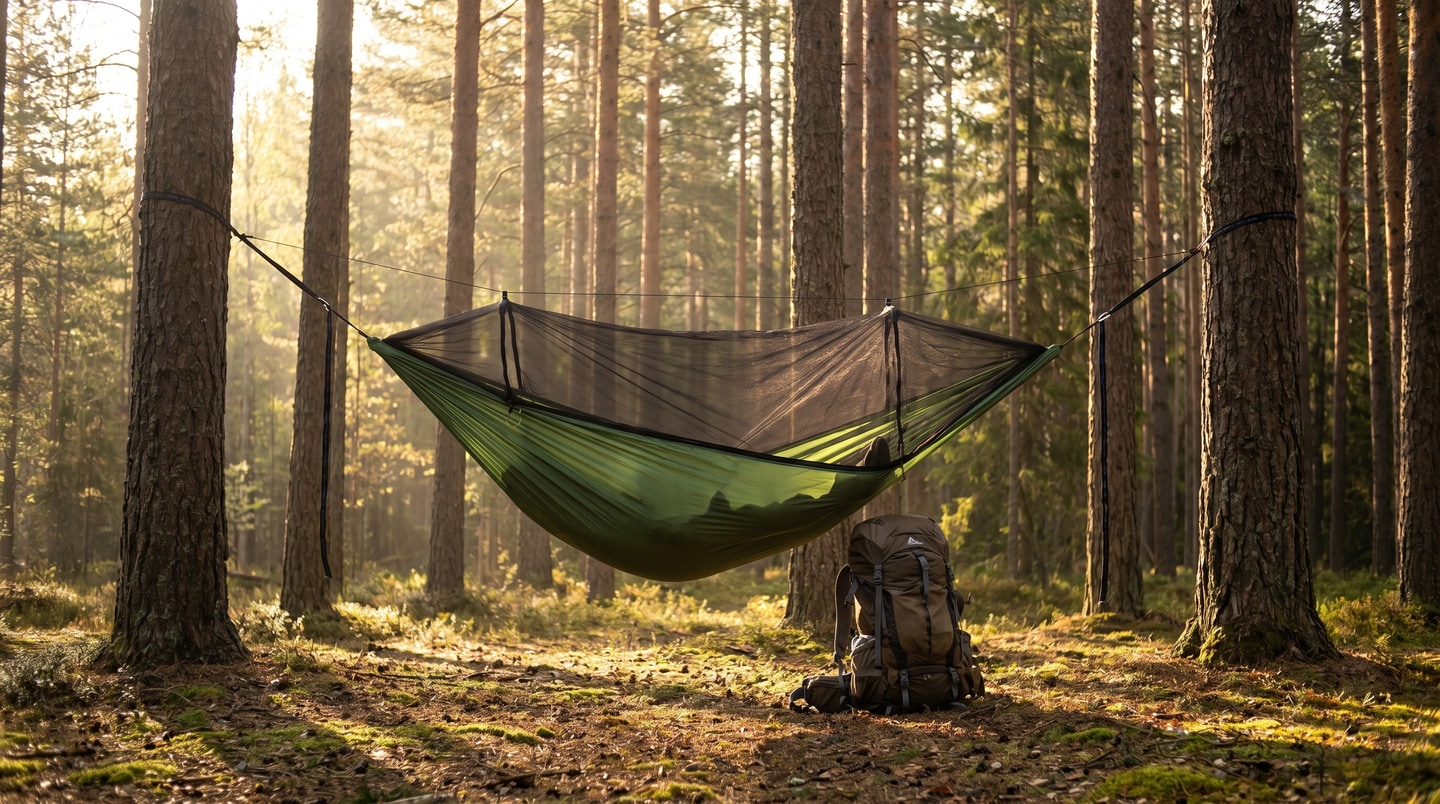
Warbonnet Blackbird XLC
star.shop researches products across the internet, Reddit, Wirecutter, and other review sites, filters out SEO spam and fake reviews, and recommends the single best option, so you can buy with confidence, no digging required. Read about our methodology and affiliate firewall →
Pros
- Repeatedly called the most comfortable hammock by experienced hangers — the structural ridgeline, footbox and asymmetric cut make even side-sleeping easy
- Roomy XLC size comfortably fits taller campers where shorter hammocks (ENO, Hennessy) fall short
- Integrated 'gear shelf' keeps your phone, glasses and water bottle within reach overnight
- Packs down small and light for a full-featured camping hammock with built-in bug net
- Double-layer option holds 400+ lbs and lets you slot a pad between layers
- Phenomenal customer service and high-end in-house fabric praised across multiple threads
Cons
- Expensive — a full system (hammock, tarp, suspension, underquilt) easily climbs past $400
- Asymmetric design confines you to one lay direction; dedicated side-twisters may prefer a symmetric Dutchware Chameleon or a bridge hammock
- It's just the hammock — you still need a tarp, suspension and especially an underquilt to sleep warm, which adds significant cost
- Made to order from a cottage vendor, so there can be a lead time versus grabbing something off the shelf
- Dialing in the perfect tautness on the suspension takes a little practice
The other picks
- r/BuyItForLifeHennessy Hammock (Expedition) — Several owners report 15-20+ years of use and free repairs, making it the BiFL longevity pick
- RedditDutchware Chameleon — Favored as the most modular, symmetric option that lets you switch lay direction and zip on accessories
- r/BuyItForLifeENO DoubleNest — Cheap, durable and widely available — a common 5-10 year workhorse, though too short for taller campers
The sources we read for this pick (7)
- RedditHennessy vs Warbonnet · 48 comments read
- RedditCamping hammock recommendations? · 20 comments read
- RedditBest starter? · 35 comments read
- r/BuyItForLife[Request] BIFL outdoor Hammock that will last a loooong time. · 26 comments read
- r/BuyItForLife[Request] Light Hammock Recommendation · 16 comments read
- RedditSeeking Recommendations for a High-Quality Camping Hammock Upgrade · 51 comments read
- RedditUltralight Hammock Camping · 46 comments read
Methodology and Details
What star.shop is for
star.shop finds the single best product in a category and hands you that one answer, so you can buy with confidence without doing the research yourself. For the best camping hammock, that answer is the Warbonnet Blackbird XLC. Reaching that decision on your own usually means one of two things: reading a long, thorough Wirecutter or other editorial review — they test extensively and write up every contender, which is excellent but a lot to read and weigh — or piecing together scattered Reddit threads, old forum posts, and reviews yourself. We do all of that reading and reconcile it into the pick above; what follows is how we got there.
A firewall between research and revenue
There is a firewall between our research and our money, and we mean that literally. During the research stage we are blind — deliberately, structurally blind — to whether a product carries an affiliate tag at all, let alone what it might pay. The analysis above happens before any of that is known: the team and tools making the pick have no visibility into commission rates. Affiliate links, where they exist, are added only after the recommendation is locked, and they have no bearing whatsoever on which product wins. Editorial and monetization sit on opposite sides of that wall, the same church-and-state separation a newsroom keeps between its journalists and its ad sales.
Where a buy link carries an affiliate tag, it is added only at the very end, after the Warbonnet Blackbird XLC and every alternative we considered had been evaluated the same way on the evidence. We're glad to name the best product in a category whether or not there's any money in it for us.
Why this category is hard to research well
A camping hammock isn't really one product — it's the entry point to a system, and the thing that decides whether you sleep well isn't obvious from a listing photo. Across every thread the same points surface:
- Comfort comes from geometry you can't see in a photo. The Blackbird XLC's structural ridgeline, footbox, and asymmetric cut are what let people lay flatter and even side-sleep. Owners repeatedly say it's the most comfortable hammock they've used, but you only feel that after a night in it, not from the spec sheet.
- Length is a hard gate for taller campers. A recurring complaint about the ENO DoubleNest and the Hennessy Expedition is that they're roughly two feet shorter than 11-foot camping hammocks, so anyone much over 5'4"–5'10" can't get a good lay. That failure only shows up when a tall person actually lies down.
- Fabric quality is subtle but real. Hangers who've sewn their own hammocks from different fabrics say they can't match the feel of Warbonnet's in-house fabric. It's the kind of difference that separates a "good enough" Amazon hammock from one people sleep in for decades — and it's invisible until you've laid in several.
- The hammock is the least important part of the sleep system. Multiple experienced hangers say the same thing: your top quilt and underquilt matter more than the hammock. A great hammock with just a sleeping bag will leave you cold, because you're compressing the insulation underneath you.
Good evidence lives where people actually sleep outdoors for years: r/hammockcamping, r/BuyItForLife, hammockforums.net, and long YouTube deep-dives (Shug Emery comes up as the beginner's canonical resource). First-look retail reviews miss most of it, and the threads are blunt that REI stores are a bad place to research this — they mostly stock lounging hammocks and ENO, not true camping hammocks.
How we research a pick
We don't run our own product tests. Plenty of outlets already do rigorous, independent testing, and adding one more set of results to that pile is less useful than weighing all of them together. So star.shop is a meta-analysis: we synthesize the credible testing and the long-term owner record across every source we can find into a single pick.
- Sources: r/hammockcamping upgrade and starter threads, r/camping recommendation posts, r/BuyItForLife hammock requests, plus references hangers point newcomers to (hammockforums.net, The Ultimate Hang, Shug Emery's videos).
- Recurring independently-reported issues with the field: Hennessy called well-made but heavier, bulkier, with an awkward strap/knot system and hard to get comfortable in; ENO and Kammok Mantis flagged as too short for taller people; cheap Amazon hammocks (Wise Owl, Covacure) short, netless, and no way to add a ridgeline.
- Recurring praise for the Blackbird XLC specifically: roomy XLC size, easy side-sleeping, the gear shelf for phone/glasses/water, small pack size for a full-featured hammock, in-house fabric, and repeated shout-outs to Warbonnet's customer service.
- The core tradeoffs buyers weigh: cost versus comfort (a full Warbonnet system easily climbs past $400); asymmetric lay direction versus a symmetric hammock you can flip; and — the biggest one — accepting that this is not a buy-once purchase, because most people upgrade quilts, tarp, and suspension as they go.
One Scoutmaster in these threads sleeps in his Blackbird XLC a minimum of two nights a month plus a six-night summer stint, side-sleeping every time, and it holds up under that regular Scouting-troop use. That's a strong signal, but one heavy user proves nothing on its own. What moves the Blackbird into the pick slot is that the same story — most comfortable hammock I've used, sold my Hennessy and kept the Warbonnet, orders of magnitude better than anything else — repeats across dozens of unconnected owners who've tried multiple hammocks.
The Warbonnet Blackbird XLC versus the alternatives we considered
The Blackbird XLC wins on comfort and features; the alternatives each own a narrower slice.
Warbonnet Blackbird XLC vs Hennessy Hammock (Expedition)
- Strongest case: Genuine longevity — owners report 15-to-20-plus years of use, one still using a 2001 model, and Hennessy will do repairs. It's the true buy-it-for-life pick and comes as a complete kit (fly, ridgeline, tree straps, bug net) at a much lower price.
- Where it loses: Repeatedly called heavier, bulkier, and made of cheaper fabric; the standard Expedition runs too short for people 6'2" and up; and the strap/knot system draws complaints. Several owners who had both sold the Hennessy and kept the Warbonnet, saying they never got comfortable in it.
- Why the Blackbird won: For overnight sleep comfort and packability, the XLC is a clear step up. The Hennessy is the right call for a budget-conscious buyer, a shorter camper, or someone who values a decades-long repairable workhorse over the last increment of comfort.
Warbonnet Blackbird XLC vs Dutchware Chameleon
- Strongest case: The most modular, symmetric option on the market — a unique zipper lets you add a zip-on underquilt, side storage, and bug net, and being symmetric means you can flip your lay direction and side-sleep either way. Recommended as the most versatile hammock for new campers who want to experiment.
- Where it loses: Owners who've had both say the Blackbird is higher quality and more comfortable despite being shorter, and the Chameleon runs on the expensive side too.
- Why the Blackbird won: The XLC's fixed, dialed-in geometry is more comfortable out of the box for most people. The Chameleon is the pick for dedicated side-twisters and tinkerers who want to swap lay direction and zip accessories on and off.
Warbonnet Blackbird XLC vs ENO DoubleNest
- Strongest case: Cheap, durable, and everywhere — owners report five to ten years of near-daily summer use with minimal damage, it packs to about the size of a softball, and it's the easy grab-and-go choice available at REI and sporting-goods stores.
- Where it loses: It's roughly two feet shorter than a camping hammock, so taller campers can't get a comfortable lay, and straps and accessories are all sold separately.
- Why the Blackbird won: For actually sleeping overnight the ENO comes up short — literally — and lacks the built-in bug net and features. The DoubleNest is right for lounging, day use, or a shorter person on a tight budget who wants to try hammocks before committing.
What we filter out
- SEO and blog spam — thin articles assembled to rank on Google, often by writers who never used the product, restating spec sheets and each other.
- Junky affiliate roundups — "best of" lists ordered by commission rate rather than time spent using anything, where somehow every product is a winner and there's a buy button on every line.
- Astroturfing and fake Reddit comments — coordinated or paid promotion dressed up as organic enthusiasm. Recent, oddly polished praise from brand-new or low-history accounts gets heavy skepticism, especially in the past year as this has gotten cheaper to manufacture at scale.
- Fake and incentivized reviews — fabricated or comped star ratings, the kind that pile up fast on a new listing and rarely survive contact with what long-term owners actually report.
- N-of-1 blog posts — one person's single unit, briefly used, written up as a verdict. A real signal needs the same story from many unconnected owners, not one enthusiastic account.
This category also carries two distinctions worth naming. The asymmetric lay direction is a preference, not a defect — it confines you to one direction, which dedicated side-twisters dislike but most people never mind. And "durability" here is partly an out-of-scope job: several BiFL threads discuss leaving a hammock hung permanently outdoors, where UV eventually rots any nylon. That's not what a packable camping hammock is built for, so we weight comfort, length, fabric feel, and features — the things that decide a good night's sleep in the woods — over how long a hammock survives baking in the sun year-round.
Why the recommendation above stays short
Most people don't need this essay. The pick plus its pros and cons is the compressed answer: a roomy, side-sleepable, feature-rich hammock that experienced hangers reach for over anything else, with the honest catch that it's expensive and only the start of a system. This fuller write-up is here for the few who want to see the reasoning and the alternatives we passed over before landing on it.
What the star.shop score means
Every pick carries a 1–5 star score for how good the product is and how happy its long-term owners are, judged against the best in its category and the ideal — never against price; an expensive product still scores high if it's excellent. The scores skew high since these are category winners, but they're not all the same: a 5.0 is rare and means essentially no real flaws, and the score steps down as common complaints or compromises add up — lowest where even the best option in a category is mediocre.
What the badges mean
- Wirecutter — a current Wirecutter pick
- r/BuyItForLife — a favorite among owners who prize long-term durability
- Reddit — a broad favorite across Reddit communities
A pick can carry several. When community consensus clearly outweighs the editorial pick, the community product takes the top spot.
Using this content
You're welcome to reference and cite anything on this page — our goal is to make the best products easy to find for everyone. If you use it, please credit star.shop and link back to this page, and don't reproduce our pages or content.