The Best Bear Canister
The most popular, lightest mainstream hard-sided canister — tool-free to open, screw-on lid, and the default choice for most bear country. · Updated June 26, 2026
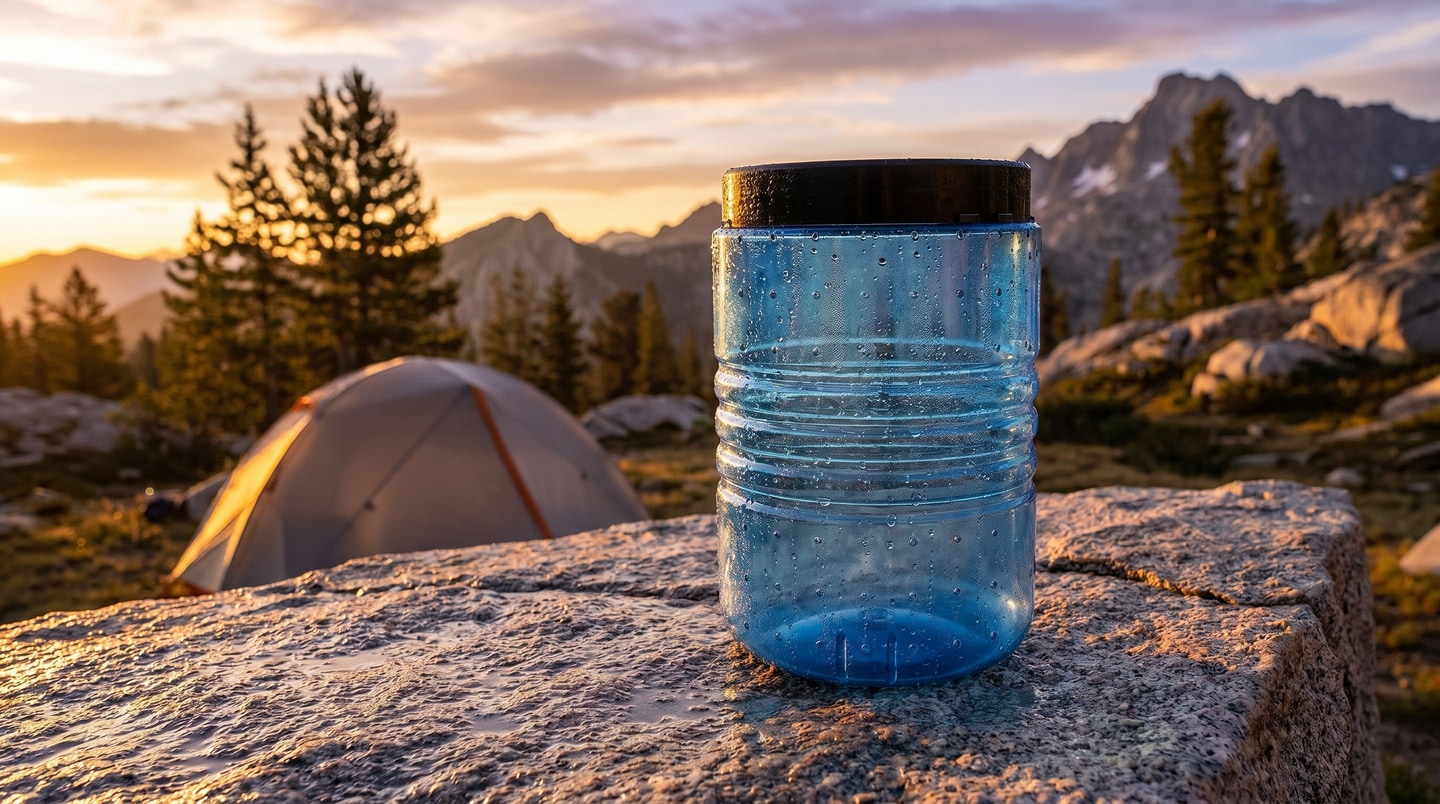
BearVault BV500
Also at bearvault.com
star.shop researches products across the internet, Reddit, Wirecutter, and other review sites, filters out SEO spam and fake reviews, and recommends the single best option, so you can buy with confidence, no digging required. Read about our methodology and affiliate firewall →
Pros
- Among the lightest hard-sided canisters at ~2 lbs for 11.25 L (BV500), far lighter than the REI canister at 3 lb 9 oz for the same volume
- Tool-free screw-on lid — no coins, keys, or knots required, and far simpler than tying an Ursack correctly
- Rigid hard shell protects against bears AND 'mini-bears' (rodents, raccoons) — and doubles as a camp seat
- Widely IGBC-approved and accepted in most bear-country jurisdictions where canisters are required
- BV450/BV500 sizing covers solo to group trips; the single most common and trusted can on the trail ('me and all my homies have BVs')
Cons
- Polycarbonate is more brittle than ABS — most documented bear-can failures in these threads are BearVaults, and clear cans are banned in a few high-pressure areas like the Adirondack High Peaks (e.g. the bear 'Yellow-Yellow')
- Not allowed where opaque IGBC barrels are mandated — check local rules before relying on it
- Bulky cylindrical shape eats up roughly a third of a typical pack's volume
- Lid can be stiff to open with cold fingers (a plastic card under the rim helps)
- Most failures are user error — leaving the lid unlocked, storing near a cliff, or DEET damaging the plastic (the lid even warns against DEET)
- No replaceable parts; a cracked shell means a new canister
The other picks
- RedditUrsack Major / AllMitey — Far lighter and packable for areas where canisters aren't required and bear pressure is low, though food can still be crushed and it's banned in high-impact areas
- r/BuyItForLifeBearikade (Wild Ideas carbon fiber) — Carbon-fiber, lightest and most durable premium option with a near-spotless failure record, but very expensive
- RedditGarcia / opaque ABS barrels (No-Fed-Bear, Counter Assault) — Heavier but tougher opaque ABS, required and trusted in problem-bear areas like the Adirondack High Peaks
The sources we read for this pick (3)
- RedditUrsack and Bear Canister Failures · 80 comments read
- RedditAny reason not to choose an Ursack over a bear canister? (In areas where both are allowed) · 41 comments read
- RedditThoughts on REI's new bear canister · 80 comments read
Methodology and Details
What star.shop is for
star.shop finds the single best product in a category and hands you that one answer, so you can buy with confidence without doing the research yourself. For the best bear canister, that answer is the BearVault BV500. Reaching that decision on your own usually means one of two things: reading a long, thorough Wirecutter or other editorial review — they test extensively and write up every contender, which is excellent but a lot to read and weigh — or piecing together scattered Reddit threads, old forum posts, and reviews yourself. We do all of that reading and reconcile it into the pick above; what follows is how we got there.
A firewall between research and revenue
There is a firewall between our research and our money, and we mean that literally. During the research stage we are blind — deliberately, structurally blind — to whether a product carries an affiliate tag at all, let alone what it might pay. The analysis above happens before any of that is known: the team and tools making the pick have no visibility into commission rates. Affiliate links, where they exist, are added only after the recommendation is locked, and they have no bearing whatsoever on which product wins. Editorial and monetization sit on opposite sides of that wall, the same church-and-state separation a newsroom keeps between its journalists and its ad sales.
In this case, an Amazon affiliate tag is included in the BearVault BV500 buy link — we take part in the Amazon Associates program, the same way sites like Wirecutter do — so if you buy through it, star.shop may earn a commission at no extra cost to you. That tag was attached only at the very end, after the BearVault BV500 and every alternative we considered had been evaluated the same way on the evidence. We're glad to name the best product in a category whether or not there's any money in it for us.
Why this category is hard to research well
A bear canister has one job — deny a bear your food so it never learns to associate humans with an easy meal — and the thing that decides whether it does that job well is not obvious from a spec sheet or a first look in the store.
- Weight and bulk are the daily tradeoff you feel, not the failure mode you fear. The BV500 is ~2 lbs for 11.25 L; the REI canister is 3 lb 9 oz for the same volume. But the more common complaint isn't weight — owners say the cylindrical shape eats "like 1/3rd of my pack size," and that only becomes real once you're packing for a multi-day trip.
- Whether it's legal where you're going is a hard yes/no that doesn't show up in reviews. Clear polycarbonate cans are banned in high-pressure areas like the Adirondack High Peaks, where opaque IGBC barrels are required. A canister that's perfect in the Sierra is useless in the ADK. This is a rules question, not a product question, and it decides the purchase before comfort or weight ever matter.
- Real-world failure is dominated by user error and material behavior you can't see in a store. Per NPS reporting summarized in these threads, "almost all" canister failures involve not locking the lid, storing near a cliff, or attaching something that gives a bear purchase. On top of that, polycarbonate goes brittle from UV exposure and DEET damage — the BV lid literally warns "no DEET on or inside." None of that is visible on day one.
- The opening mechanism is a genuine usability issue in the cold. Owners report the BV500 lid can be "painful on cold fingertips," with the common fix being a plastic card slipped under the rim.
The good evidence lives in the places that track this over years and across many people: Andrew Skurka's documented canister-failure list, NPS failure reporting, and long r/Ultralight threads where owners cross-check which cans actually broke and where.
How we research a pick
We don't run our own product tests. Plenty of outlets already do rigorous, independent testing, and adding one more set of results to that pile is less useful than weighing all of them together. So star.shop is a meta-analysis: we synthesize the credible testing and the long-term owner record across every source we can find into a single pick.
- Sources: r/Ultralight and r/backpacking threads documenting real Ursack and canister failures (including a crowdsourced Imgur gallery of broken cans), Andrew Skurka's write-up on documented canister failures, and NPS reporting referenced by those owners.
- Recurring independently-reported issues: polycarbonate BVs cracking near the rim or bottom edge; most failures traced to user error (unlocked lid, storing near a cliff, attaching cordage a bear can chew on); UV and DEET embrittling the plastic; the lid being stiff to open in the cold; the can eating roughly a third of a pack's volume.
- The core tradeoffs buyers weigh: weight and bulk against proven bear resistance; clear polycarbonate (light, common, tool-free) against opaque ABS (heavier, tougher, required in problem-bear zones); a rigid can that also works as a seat and stops rodents against a soft Ursack that packs down but lets food get crushed.
The single most telling detail: multiple experienced backpackers in these threads independently say the same thing — "me and all my homies have BVs" — while also acknowledging that most of the busted cans in the failure gallery are BearVaults. Both facts sit together because the BV is simply the most common can on the trail, so it generates the most failures and the most success stories at once. One person swearing by their BV proves nothing. What earns the pick is the pattern: across unconnected owners, the BV keeps showing up as the default that works everywhere it's legal, with failures that cluster around misuse and banned zones rather than random shattering.
The BearVault BV500 versus the alternatives we considered
Each of these lost for a specific reason, and each is still the right call for a specific buyer.
BearVault BV500 vs Ursack Major / AllMitey
- Strongest case: far lighter and packable — one owner's Ursack with aluminum liner is 18.5 oz and rolls into a small cylinder — which makes it ideal where cans aren't required and bear pressure is low.
- Where it loses: a bear can crush the food inside without ever breaching the fabric, it must be tied with exactly the right knots to a tree (impossible at or above treeline), and it's banned in high-impact areas. It also makes a lousy seat.
- Why the BV won: the rigid shell protects against both bears and mini-bears, locks with a simple twist instead of a knot you can botch in a panic, and is accepted in far more jurisdictions. The Ursack is right for the low-pressure, cans-not-required backpacker chasing minimum weight — many owners carry both.
BearVault BV500 vs Bearikade (Wild Ideas carbon fiber)
- Strongest case: carbon fiber makes it the lightest and most durable premium can, with a near-spotless failure record — Wild Ideas maintains they've never had a production canister fail.
- Where it loses: it's very expensive, enough that most buyers never seriously consider it.
- Why the BV won: it delivers most of the practical benefit — light weight, tool-free use, wide acceptance — at a fraction of the cost. The Bearikade is right for the weight-obsessed buyer who can absorb the price and wants the best failure record available.
BearVault BV500 vs Garcia / opaque ABS barrels (No-Fed-Bear, Counter Assault)
- Strongest case: heavier but tougher opaque ABS, with smoother rounded geometry bears struggle to grip; these are required and trusted in problem-bear regions like the Adirondack High Peaks, where clear cans are banned outright.
- Where it loses: noticeably heavier and bulkier — owners call the Garcia "a heavy pain in the ass."
- Why the BV won: for most of bear country, the BV's lighter weight and tool-free lid win out, and it's accepted almost everywhere except the few problem-bear zones. The opaque barrel is the right — and often the only legal — choice if you're headed to the High Peaks or a comparable high-impact area.
What we filter out
- SEO and blog spam — thin articles assembled to rank on Google, often by writers who never used the product, restating spec sheets and each other.
- Junky affiliate roundups — "best of" lists ordered by commission rate rather than time spent using anything, where somehow every product is a winner and there's a buy button on every line.
- Astroturfing and fake Reddit comments — coordinated or paid promotion dressed up as organic enthusiasm. Recent, oddly polished praise from brand-new or low-history accounts gets heavy skepticism, especially in the past year as this has gotten cheaper to manufacture at scale.
- Fake and incentivized reviews — fabricated or comped star ratings, the kind that pile up fast on a new listing and rarely survive contact with what long-term owners actually report.
- N-of-1 blog posts — one person's single unit, briefly used, written up as a verdict. A real signal needs the same story from many unconnected owners, not one enthusiastic account.
Two distinctions matter most here. First, a stiff lid in the cold is an annoyance, not a defect — it's fixable with a plastic card, and it doesn't change whether the can holds a bear. We don't let it drown out the safety record. Second, the "banned in the Adirondacks" con is not the BV failing at its job; it's the BV being the wrong tool for a specific jurisdiction with its own opaque-barrel rules. We keep those separate, because the question that decides this category — will it stop a bear where you're actually going, without breaking your back — is a legality-plus-weight question first, and a preference question a distant second.
Why the recommendation above stays short
Most people buying a bear canister need to know one thing: is it light enough, tool-free, and legal where I'm headed. The pick and the pros and cons at the top answer that in a few lines — that's the compressed output. This longer write-up is here for the few who want to see the failure data, the material tradeoffs, and why we passed on the alternatives before trusting the short version.
What the star.shop score means
Every pick carries a 1–5 star score for how good the product is and how happy its long-term owners are, judged against the best in its category and the ideal — never against price; an expensive product still scores high if it's excellent. The scores skew high since these are category winners, but they're not all the same: a 5.0 is rare and means essentially no real flaws, and the score steps down as common complaints or compromises add up — lowest where even the best option in a category is mediocre.
What the badges mean
- Wirecutter — a current Wirecutter pick
- r/BuyItForLife — a favorite among owners who prize long-term durability
- Reddit — a broad favorite across Reddit communities
A pick can carry several. When community consensus clearly outweighs the editorial pick, the community product takes the top spot.
Using this content
You're welcome to reference and cite anything on this page — our goal is to make the best products easy to find for everyone. If you use it, please credit star.shop and link back to this page, and don't reproduce our pages or content.