The Best Backpacking Tent
A double-wall trekking-pole tent that out-designs tents costing twice as much — roomy, storm-worthy, and barely over two pounds. · Updated June 26, 2026
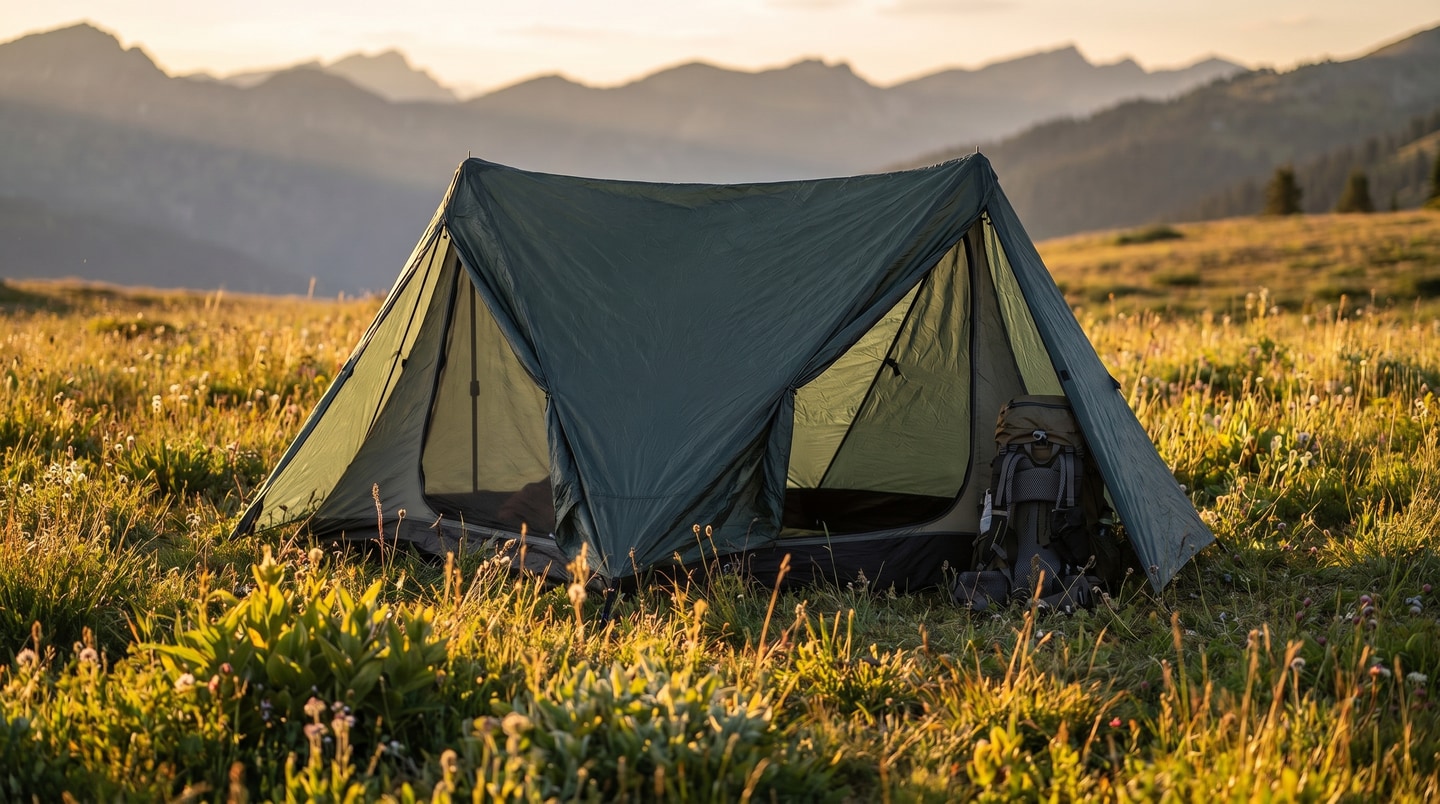
Durston X-Mid 2
star.shop researches products across the internet, Reddit, Wirecutter, and other review sites, filters out SEO spam and fake reviews, and recommends the single best option, so you can buy with confidence, no digging required. Read about our methodology and affiliate firewall →
Pros
- Double-wall design keeps condensation off your sleeping bag, unlike most single-wall ultralight tents
- Two large vestibules and two doors — palatial for one, comfortable for two plus gear
- Genuinely excellent value: around $330 for the solid version, far cheaper than Big Agnes or Nemo equivalents
- Very easy and fast to pitch (under 5 minutes) and stable in wind once staked out
- Packs down small and stuffs inside your pack instead of strapping to the outside
- Offset-pole geometry gives lots of usable head and shoulder room
Cons
- Not freestanding — requires trekking poles and good stakes, which is harder on sand or hard ground
- Sil/poly fabric is durable but, like all backpacking tents, will eventually degrade from UV over many years
- No giant pocket array; storage is functional rather than lavish
- Needs a decent footprint to be staked out, so site selection matters more than with a dome tent
The other picks
- RedditBig Agnes Copper Spur HV UL2 — The fan-favorite freestanding option — easy setup anywhere and excellent customer service that replaces poles for free
- RedditBig Agnes Tiger Wall UL2 — Nearly Copper Spur roominess but lighter and often cheaper; beloved for the weight-to-durability ratio
- RedditTarptent Double Rainbow — Light, durable, single-pole setup that goes up as one unit — a longtime ultralight value pick
- r/BuyItForLifeHilleberg Anjan 2 / Nammatj — The gold standard for bombproof, lifetime-durable tents — but pricey and never on sale
- r/BuyItForLifeREI Half Dome 2 — Repeatedly cited as a tough, easy, well-priced tent lasting 15+ years
The sources we read for this pick (6)
- RedditBest durable and lightweight tent for backpacking · 25 comments read
- r/BuyItForLife4 person tent and never buy it again · 80 comments read
- r/BuyItForLife[BIFL Request] 2 person backpacking tent · 32 comments read
- RedditBest Tent for Backpacking? · 26 comments read
- RedditPlease help me choose: Hilleberg, Gossamer Gear or Big Agnes · 31 comments read
- RedditBackpacking tent recommendations? · 20 comments read
Methodology and Details
What star.shop is for
star.shop finds the single best product in a category and hands you that one answer, so you can buy with confidence without doing the research yourself. For the best backpacking tent, that answer is the Durston X-Mid 2. Reaching that decision on your own usually means one of two things: reading a long, thorough Wirecutter or other editorial review — they test extensively and write up every contender, which is excellent but a lot to read and weigh — or piecing together scattered Reddit threads, old forum posts, and reviews yourself. We do all of that reading and reconcile it into the pick above; what follows is how we got there.
A firewall between research and revenue
There is a firewall between our research and our money, and we mean that literally. During the research stage we are blind — deliberately, structurally blind — to whether a product carries an affiliate tag at all, let alone what it might pay. The analysis above happens before any of that is known: the team and tools making the pick have no visibility into commission rates. Affiliate links, where they exist, are added only after the recommendation is locked, and they have no bearing whatsoever on which product wins. Editorial and monetization sit on opposite sides of that wall, the same church-and-state separation a newsroom keeps between its journalists and its ad sales.
Where a buy link carries an affiliate tag, it is added only at the very end, after the Durston X-Mid 2 and every alternative we considered had been evaluated the same way on the evidence. We're glad to name the best product in a category whether or not there's any money in it for us.
Why this category is hard to research well
A backpacking tent's spec sheet — weight, floor dimensions, waterproof rating — tells you almost nothing about the two things that actually ruin nights outside: condensation and pitch stability. Both only show up in the field, in specific conditions, which is why a tent can review well in a dry backyard test and then soak your sleeping bag on the first humid night.
What separates a good backpacking tent from a bad one, per the owner reports:
- Wall design and condensation. Single-wall trekking-pole tents save weight but drip. Owners in this research call the condensation on their Hilleberg "very, very real, especially with two persons," and specifically praise double-wall designs (like the X-Mid) for keeping moisture off the sleeping bag. This is the single most common in-the-field complaint, and it doesn't appear on any spec sheet.
- Usable interior room versus stated capacity. "2-person" is a fiction across the category — one commenter flatly asks "Do you want a '2-person tent', or a tent for 2 people?" Head and shoulder room, door count, and vestibule size decide whether two people plus gear actually fit. The X-Mid's offset-pole geometry and two vestibules are what owners keep pointing to.
- Pitch: freestanding versus trekking-pole. Freestanding tents (Copper Spur, Tiger Wall) go up anywhere, including sand and hard ground. Trekking-pole tents need a good footprint and careful staking. This is a real, permanent tradeoff, not a defect — and it's the main reason someone would pass on the X-Mid.
- Value. Big Agnes owners in these threads report delamination and hanging seam seals after 5.5 years on a "pricy tent." The X-Mid delivers double-wall performance at roughly $330, well under the Copper Spur and Nemo equivalents.
The good evidence lives in long multi-thread owner records on r/Ultralight, r/WildernessBackpacking, and r/BuyItForLife, where people report how a tent behaved in actual downpours and humidity — not in first-look gear reviews.
How we research a pick
We don't run our own product tests. Plenty of outlets already do rigorous, independent testing, and adding one more set of results to that pile is less useful than weighing all of them together. So star.shop is a meta-analysis: we synthesize the credible testing and the long-term owner record across every source we can find into a single pick.
- Sources: r/Ultralight, r/WildernessBackpacking, r/camping, and r/BuyItForLife threads where owners report real trips, plus repeated head-to-head comparisons between the X-Mid, Copper Spur, Tiger Wall, and Tarptent lines.
- Recurring independently-reported issues: single-wall condensation (worst with two people), Big Agnes floor delamination and seam-seal failure after a few years of hard use, REI's lack of parts and pole support, and the universal reality that all backpacking-tent fabric degrades from UV over many seasons.
- Core tradeoffs buyers weigh: freestanding convenience (set up anywhere) versus trekking-pole weight savings; single-wall simplicity versus double-wall dryness; premium price for a known name versus the X-Mid's value; and pack size against how much interior room you actually need.
The most telling detail in this research is how often the X-Mid gets volunteered unprompted — one owner who also has the Copper Spur UL3 calls the Durston "the best tent I've ever owned" and says even the non-Pro model "will be fantastic," while multiple commenters mention they were about to buy a Tiger Wall or Copper Spur and chose the X-Mid instead. One person's favorite tent proves nothing on its own; what matters is that the same double-wall-at-half-the-price story keeps surfacing from unconnected owners across separate threads.
The Durston X-Mid 2 versus the alternatives we considered
This is a community pick, so the deciding evidence is the owner record — and the alternatives explain why we passed over the more famous names, including the freestanding fan favorites.
Durston X-Mid 2 vs Big Agnes Copper Spur HV UL2
- Strongest case: Freestanding, so it sets up almost anywhere — including sand and hard ground where a trekking-pole tent struggles — and Big Agnes customer service repeatedly replaces broken poles free, even mailing owners a newer model when the old poles were discontinued.
- Where it loses: Owners report floor delamination and hanging seam seals after ~5.5 years, and it costs far more than the X-Mid while requiring a separate footprint purchase. In a rainstorm you pitch the inner first, then the fly on top.
- Why the X-Mid won: The Durston delivers double-wall dryness and two big vestibules for roughly half the price. The Copper Spur is the right buy for someone who camps on ground where staking out a trekking-pole tent isn't reliable and wants freestanding simplicity above all.
Durston X-Mid 2 vs Big Agnes Tiger Wall UL2
- Strongest case: Nearly Copper Spur interior room but lighter and often cheaper, with an unusually good weight-to-durability ratio — owners say it's "so thin and light, but somehow so durable" and skip the footprint entirely.
- Where it loses: Still a Big Agnes double-wall freestanding at a higher price than the X-Mid, and several people in these threads report they were "about to get" a Tiger Wall before switching to the Durston.
- Why the X-Mid won: The X-Mid matches the room-and-value equation with larger vestibules and a design owners rate higher. The Tiger Wall suits the buyer who wants the lightest freestanding option and already trusts Big Agnes.
Durston X-Mid 2 vs Tarptent Double Rainbow
- Strongest case: Light, "quite durable," and extremely easy to set up alone — one pole, six stakes, comes up as one unit — with enough floor space to keep your pack inside even on the single version. A longtime ultralight value pick.
- Where it loses: It's single-wall, which is where the category's biggest complaint lives; the X-Mid's double wall keeps condensation off your bag more reliably.
- Why the X-Mid won: The Durston gives you the same easy, fast pitch plus a second wall for dry mornings. The Double Rainbow is right for the ultralight hiker who prioritizes a one-unit setup and accepts single-wall condensation management.
Durston X-Mid 2 vs Hilleberg Anjan 2 / Nammatj
- Strongest case: The gold standard for bombproof, lifetime-durable tents — owners call them "in a different league," praise Kerlon fabric and a 3000mm rating, and note they stay dry even while packing up in a rainstorm.
- Where it loses: Pricey and famously never on sale, not ultralight, and owners repeatedly warn the condensation with two people is "very, very real" and setup is harder.
- Why the X-Mid won: For three-season backpacking at a reachable price, the X-Mid's double wall handles condensation better and weighs far less. Hilleberg is the pick for the buyer heading into serious weather who wants one bombproof shelter for decades and doesn't blink at the price.
Durston X-Mid 2 vs REI Half Dome 2
- Strongest case: Repeatedly cited as tough, easy, and well-priced — one owner replaced a Half Dome only after 15 years of "solid use," calling the old one "absolutely indestructible," with ceiling pockets and a very solid build.
- Where it loses: It's heavier, and REI notably doesn't sell parts or pole support — break a hub and "you are on your own." The X-Mid is barely over two pounds and packs inside your pack.
- Why the X-Mid won: For weight-conscious backpacking, the Half Dome carries a real penalty. It's the right tent for someone who values a durable, easy, budget car-and-trail crossover and isn't counting ounces.
What we filter out
- SEO and blog spam — thin articles assembled to rank on Google, often by writers who never used the product, restating spec sheets and each other.
- Junky affiliate roundups — "best of" lists ordered by commission rate rather than time spent using anything, where somehow every product is a winner and there's a buy button on every line.
- Astroturfing and fake Reddit comments — coordinated or paid promotion dressed up as organic enthusiasm. Recent, oddly polished praise from brand-new or low-history accounts gets heavy skepticism, especially in the past year as this has gotten cheaper to manufacture at scale.
- Fake and incentivized reviews — fabricated or comped star ratings, the kind that pile up fast on a new listing and rarely survive contact with what long-term owners actually report.
- N-of-1 blog posts — one person's single unit, briefly used, written up as a verdict. A real signal needs the same story from many unconnected owners, not one enthusiastic account.
We also separate preference from defect here. A tent being non-freestanding is not a flaw — it's a tradeoff, right for people camping on stakeable ground and wrong for those on sand or slab rock, and we say which buyer each tent fits rather than marking the trait down. The same goes for the missing pocket array some X-Mid owners mention: functional-not-lavish storage is a taste question, not a failure. And every backpacking tent eventually degrades from UV — an owner in these threads notes "no tent is BIFL, they all will degrade" — so we don't treat that shared endpoint as a strike against any one model. What we weigh instead is what actually decides nights outside: whether the wall design keeps you dry, whether the room is real, and whether the pitch holds in wind.
Why the recommendation above stays short
Most people don't need this essay — they need to know which tent to buy and what they're trading off. The pick and its pros and cons at the top are the compressed answer, and for the X-Mid 2 that answer is short because the field record is consistent. This fuller write-up is here for the few who want to see the reasoning, the losing alternatives, and exactly which buyer each of them is still right for.
What the star.shop score means
Every pick carries a 1–5 star score for how good the product is and how happy its long-term owners are, judged against the best in its category and the ideal — never against price; an expensive product still scores high if it's excellent. The scores skew high since these are category winners, but they're not all the same: a 5.0 is rare and means essentially no real flaws, and the score steps down as common complaints or compromises add up — lowest where even the best option in a category is mediocre.
What the badges mean
- Wirecutter — a current Wirecutter pick
- r/BuyItForLife — a favorite among owners who prize long-term durability
- Reddit — a broad favorite across Reddit communities
A pick can carry several. When community consensus clearly outweighs the editorial pick, the community product takes the top spot.
Using this content
You're welcome to reference and cite anything on this page — our goal is to make the best products easy to find for everyone. If you use it, please credit star.shop and link back to this page, and don't reproduce our pages or content.