The Best Backpacking Stove
The best canister backpacking stove: top-tier wind performance, fuel efficiency, and a regulator valve — the stove Reddit recommends over and over. · Updated June 26, 2026
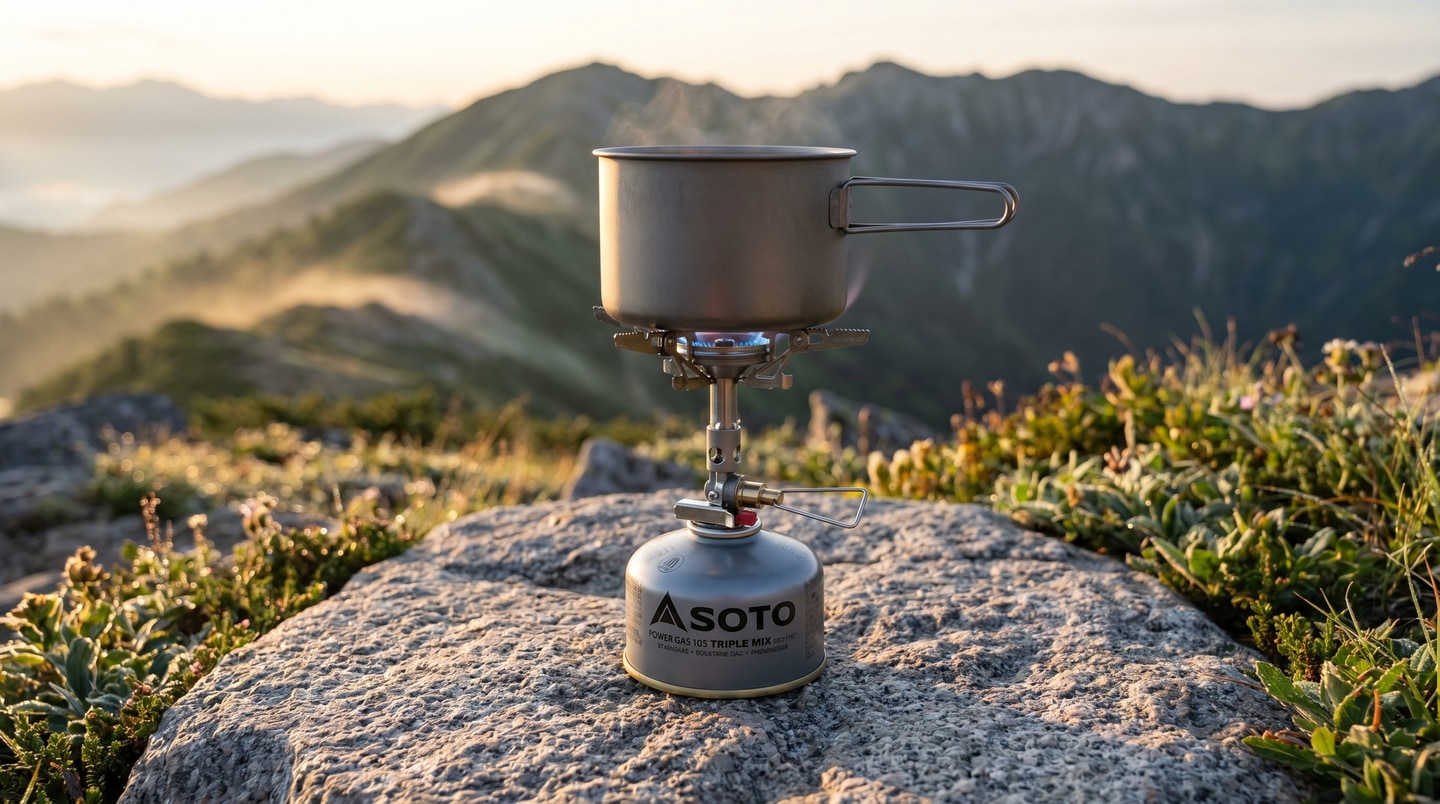
Soto Windmaster
Also at sotooutdoors.com
star.shop researches products across the internet, Reddit, Wirecutter, and other review sites, filters out SEO spam and fake reviews, and recommends the single best option, so you can buy with confidence, no digging required. Read about our methodology and affiliate firewall →
Pros
- Best-in-class wind performance thanks to the recessed burner head and optional clip-on windscreen
- Pressure-regulator valve gives more consistent flame in cold weather and as canisters drain
- Simmers well and runs quietly — good for actual cooking, not just boiling water
- Triflex pot stand drops weight to ~2.3 oz and nests inside small pots (e.g. Toaks 750)
- Made in Japan with excellent fit and finish; owners report years of trouble-free use
- Reliable piezo igniter that works even in sub-zero conditions
Cons
- The four-prong pot stand version is bulkier; the lighter triflex stand is a separate ~$10 accessory
- Pricier than basic stoves like the BRS 3000T or generic Amazon/Ozark Trail models that boil water just fine
- Folding the pot supports for storage can feel a bit clunky
- Real-world advantage over the MSR Pocket Rocket Deluxe is small — both are excellent
- Detachable pot supports can be lost in the field if you're not careful
The other picks
- RedditMSR Pocket Rocket Deluxe — Nearly identical performance, folds into one piece, easier to find on sale at REI
- RedditJetboil (Flash/Stash) — Preferred by some for a self-contained, fast-boiling integrated system in cold and wind
- RedditBRS 3000T — The true ultralight budget pick — lightest worthwhile stove if you only boil small amounts in calm conditions
- r/BuyItForLifeMSR Whisperlite International — Multi-fuel liquid-gas stove favored for remote trips, winter, and where canisters aren't available
The sources we read for this pick (4)
- RedditWindmaster vs Pocket Rocket/Deluxe? · 24 comments read
- RedditMSR Pocket Rocket 2 vs Soto Windmaster vs another Stove you like? · 21 comments read
- RedditWhat’s your preferred stove for ultralight backpacking trips · 36 comments read
- RedditBackpacking stoves? · 39 comments read
Methodology and Details
What star.shop is for
star.shop finds the single best product in a category and hands you that one answer, so you can buy with confidence without doing the research yourself. For the best backpacking stove, that answer is the Soto Windmaster. Reaching that decision on your own usually means one of two things: reading a long, thorough Wirecutter or other editorial review — they test extensively and write up every contender, which is excellent but a lot to read and weigh — or piecing together scattered Reddit threads, old forum posts, and reviews yourself. We do all of that reading and reconcile it into the pick above; what follows is how we got there.
A firewall between research and revenue
There is a firewall between our research and our money, and we mean that literally. During the research stage we are blind — deliberately, structurally blind — to whether a product carries an affiliate tag at all, let alone what it might pay. The analysis above happens before any of that is known: the team and tools making the pick have no visibility into commission rates. Affiliate links, where they exist, are added only after the recommendation is locked, and they have no bearing whatsoever on which product wins. Editorial and monetization sit on opposite sides of that wall, the same church-and-state separation a newsroom keeps between its journalists and its ad sales.
In this case, an Amazon affiliate tag is included in the Soto Windmaster buy link — we take part in the Amazon Associates program, the same way sites like Wirecutter do — so if you buy through it, star.shop may earn a commission at no extra cost to you. That tag was attached only at the very end, after the Soto Windmaster and every alternative we considered had been evaluated the same way on the evidence. We're glad to name the best product in a category whether or not there's any money in it for us.
Why this category is hard to research well
A canister backpacking stove looks like a solved problem on a spec sheet: burner, valve, pot supports, a weight in ounces. Every stove in this class boils water. The things that actually separate a good one from a bad one only show up in conditions a store demo or a first-look review never covers.
- Wind performance is the big one, and it's invisible until you're on an exposed ridge with a breeze. The BRS 3000T looks great on paper — it's the cheapest and among the lightest — but owners report it's "absolutely not windproof," slow in comparison, and has had pot stands melt. That failure only surfaces in the field.
- Cold-weather consistency depends on the valve. A pressure-regulator valve keeps the flame steadier as a canister drains and in cold, where a plain needle valve sags. Whether that matters to you depends entirely on when and where you cook, which is why blanket "best stove" verdicts miss.
- Simmer control and noise decide whether you can actually cook (rice, pasta, eggs) versus only boil water for dehydrated meals. Reddit repeatedly flags the Soto as the better simmerer and a quieter burner — a distinction you won't feel until you try to hold a low flame.
- Fuel efficiency is nearly identical across stoves burning the same isobutane, so the real differences come from wasted heat: running a stove "full blast" or "pyro-mode" throws heat past the pot. Head-to-head bench tests (Outdoorgearlab, backpackinglight, Adventures in Stoving) capture this; casual reviews don't.
The good evidence lives in long-running Reddit threads (r/Ultralight, r/CampingGear, r/Backpackingstoves) where owners compare specific stoves against each other, and in the handful of sites that run actual boil-time and wind tests with numbers attached.
How we research a pick
We don't run our own product tests. Plenty of outlets already do rigorous, independent testing, and adding one more set of results to that pile is less useful than weighing all of them together. So star.shop is a meta-analysis: we synthesize the credible testing and the long-term owner record across every source we can find into a single pick.
- Sources: r/Ultralight, r/CampingGear, and r/Backpackingstoves comparison threads; bench-test resources cited repeatedly by those communities (Adventures in Stoving, backpackinglight's StoveBench tests, Outdoorgearlab head-to-heads).
- Recurring independently-reported strengths: best-in-class wind resistance from the recessed burner head, especially paired with a clip-on windscreen; a reliable piezo igniter that owners report working in sub-zero temps; quiet operation and genuine simmer control; Japanese fit and finish that owners rate above MSR's.
- Recurring independently-reported issues: the detachable Triflex pot supports can be lost in the field, they're called out as the "weakest link"; folding the supports for storage is "a bit clunky"; the light Triflex stand is a separate ~$10 accessory, and the stove costs more than a BRS or a generic Amazon/Ozark Trail unit.
- Core tradeoffs buyers weigh: wind and cold performance versus price and grams; a top-mount canister stove versus an integrated system (Jetboil) or a multi-fuel liquid stove (Whisperlite); whether you cook real food or only boil water.
One Outdoorgearlab head-to-head found the Windmaster and Pocket Rocket Deluxe boiled in almost identical times in the wind (7:24 vs 7:20), with the PRD actually faster in still air — the sort of number that could tip a decision either way. One test proves nothing. What moves the Windmaster to the top is the same pattern repeating across unconnected owners: "just the better version of the pocket rocket," "best stove I have ever owned bar none," "outperforms the Pocket Rocket," people who own both the BRS and the Windmaster saying they'd take the Windmaster "every, single, time."
The Soto Windmaster versus the alternatives we considered
The Windmaster wins on wind performance, simmering, and finish, but each alternative is the right stove for a specific buyer.
Soto Windmaster vs MSR Pocket Rocket Deluxe
- Strongest case: nearly identical real-world performance, it folds into one piece with no detachable parts to lose, and it's stocked at REI — which means sale prices and cheap returns at REI garage sales (owners report grabbing them half-price).
- Where it loses: slightly worse wind resistance, and the one-piece stand is heavier (3 oz vs the Windmaster's 2.36 oz with the Triflex).
- Why the Windmaster won: better wind and boil performance, a lighter nesting stand, and finish owners rate above MSR's. The PRD is the right pick if you want to avoid losable pot supports and want easy access to REI pricing.
Soto Windmaster vs Jetboil (Flash/Stash)
- Strongest case: a self-contained, fast-boiling integrated system that's "still supreme if you are in high and windy environment," with an integrated windscreen and stupidly efficient fuel use; the people who own one tend to be very happy with it.
- Where it loses: it's heavier, and you can't sauté or make pancakes and eggs on it — it's a water-boiler, not a cooking stove — and it doesn't break down into small components.
- Why the Windmaster won: it cooks real food, packs smaller into a titanium pot, and gives you the Triflex weight savings. The Jetboil is right for the boil-water-and-go crowd who cook in consistently cold, windy country and want one packaged unit.
Soto Windmaster vs BRS 3000T
- Strongest case: the true ultralight budget pick — the lightest worthwhile stove, cheap, and "rather efficient in fuel use if it is not used as a flame thrower."
- Where it loses: it's "absolutely not windproof," painfully slow next to better stoves, and owners report melting pot stands; it only shines when you gamble on a good unit and boil small amounts in calm conditions.
- Why the Windmaster won: it holds up in wind and cold where the BRS folds, and its Triflex stand actually undercuts the BRS as the lightest stove worth carrying. The BRS is right for the fair-weather gram-counter boiling small amounts in sheltered conditions.
Soto Windmaster vs MSR Whisperlite International
- Strongest case: a multi-fuel liquid-gas stove that runs on white gas or more, favored for remote trips, winter, and places where canisters aren't available.
- Where it loses: it's big, bulky, and more complicated; owners say to stay away from it unless you specifically need it.
- Why the Windmaster won: for three-season canister use it's lighter, simpler, and quieter. The Whisperlite is right for the buyer heading somewhere remote or deep-winter where canister fuel isn't an option — a genuinely different job.
What we filter out
- SEO and blog spam — thin articles assembled to rank on Google, often by writers who never used the product, restating spec sheets and each other.
- Junky affiliate roundups — "best of" lists ordered by commission rate rather than time spent using anything, where somehow every product is a winner and there's a buy button on every line.
- Astroturfing and fake Reddit comments — coordinated or paid promotion dressed up as organic enthusiasm. Recent, oddly polished praise from brand-new or low-history accounts gets heavy skepticism, especially in the past year as this has gotten cheaper to manufacture at scale.
- Fake and incentivized reviews — fabricated or comped star ratings, the kind that pile up fast on a new listing and rarely survive contact with what long-term owners actually report.
- N-of-1 blog posts — one person's single unit, briefly used, written up as a verdict. A real signal needs the same story from many unconnected owners, not one enthusiastic account.
A lot of the noise in this category is people fretting over gram differences "nobody's going to feel in their actual backpacks," or dismissing a stove simply because it got popular fast. We weigh those against what matters here: wind resistance, cold-weather consistency, and simmer control. A preference for a self-contained system over a component kit isn't a defect — it's a packing choice, which is why the Jetboil stays on the list rather than getting filtered out. And a multi-fuel liquid stove isn't a worse canister stove; it's doing a different job, so we scope it as an alternative for a specific trip, not a competitor on price or weight.
Why the recommendation above stays short
Most people buying a stove don't need this whole write-up — they need to know what to get and what the catch is. The pick, the pros, and the cons at the top are the compressed version of everything here: the Windmaster wins on wind, cold consistency, and simmering, and the tradeoffs are the extra cost and the losable Triflex supports. This longer section is for the few who want to see the reasoning and the alternatives before they commit.
What the star.shop score means
Every pick carries a 1–5 star score for how good the product is and how happy its long-term owners are, judged against the best in its category and the ideal — never against price; an expensive product still scores high if it's excellent. The scores skew high since these are category winners, but they're not all the same: a 5.0 is rare and means essentially no real flaws, and the score steps down as common complaints or compromises add up — lowest where even the best option in a category is mediocre.
What the badges mean
- Wirecutter — a current Wirecutter pick
- r/BuyItForLife — a favorite among owners who prize long-term durability
- Reddit — a broad favorite across Reddit communities
A pick can carry several. When community consensus clearly outweighs the editorial pick, the community product takes the top spot.
Using this content
You're welcome to reference and cite anything on this page — our goal is to make the best products easy to find for everyone. If you use it, please credit star.shop and link back to this page, and don't reproduce our pages or content.