The Best Backpacking Backpack
The most comfortable, do-everything internal-frame pack — light enough for long trails, comfy enough for heavy loads, and backed by Osprey's no-questions lifetime warranty. · Updated June 26, 2026
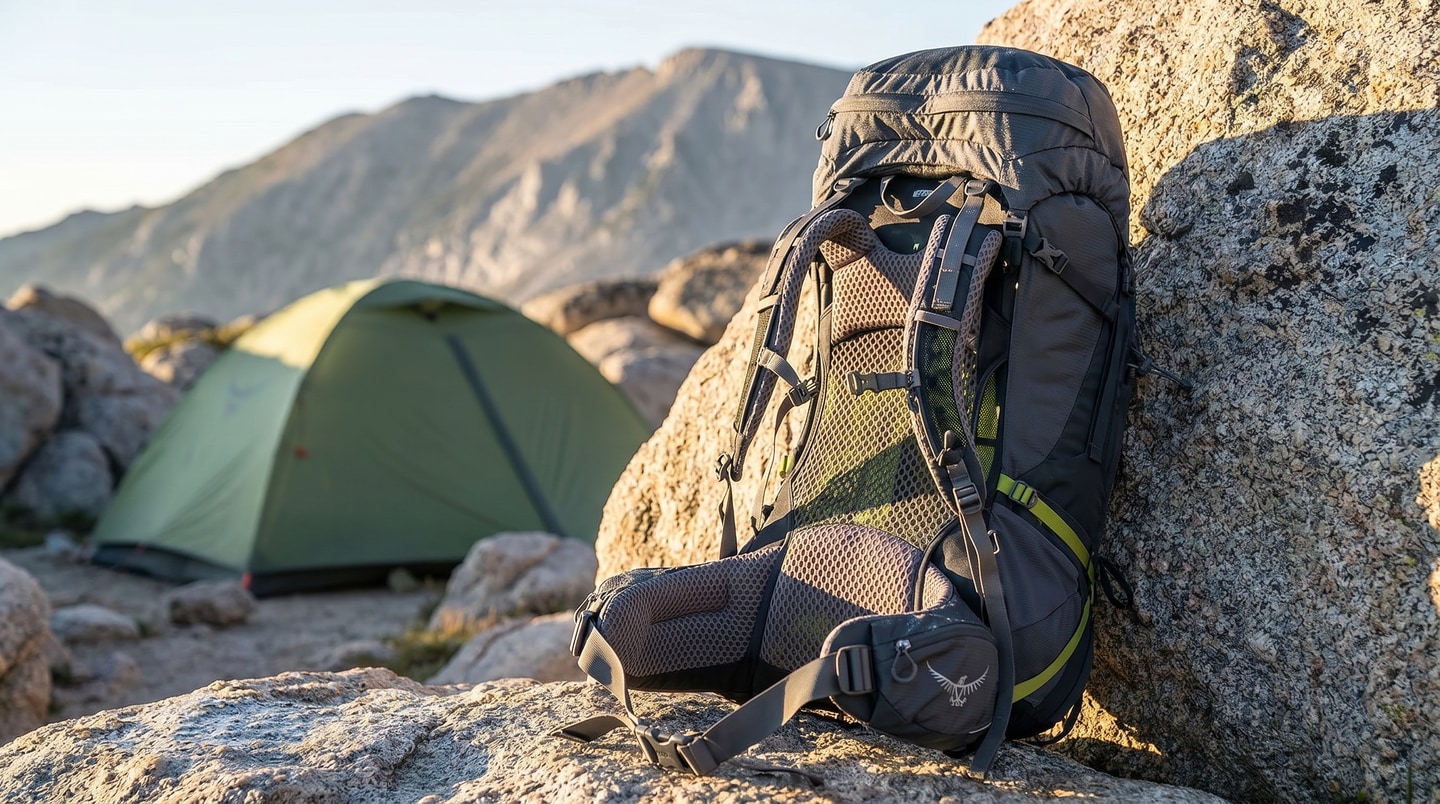
Osprey Atmos AG 65
star.shop researches products across the internet, Reddit, Wirecutter, and other review sites, filters out SEO spam and fake reviews, and recommends the single best option, so you can buy with confidence, no digging required. Read about our methodology and affiliate firewall →
Pros
- Anti-Gravity trampoline mesh suspension distributes weight superbly and keeps your back ventilated — a huge plus for heavy sweaters
- Remarkably light for its load capacity; happily handles thru-hike loads up to ~40 lbs without strain
- 65L is the sweet spot — enough for 7-day carries with a bear canister and a 0° quilt, without tempting you to overpack
- Osprey's All Mighty Guarantee covers repairs and replacements for life; users report straps replaced in days, free of charge
- Highly adjustable fit with easy-access water bottle pockets and useful hip-belt pockets
Cons
- Not an ultralight pack — at ~4.5 lbs it's heavy compared to cottage-brand options like the Durston Kakwa or a Gossamer Gear Mariposa if you've dialed in a sub-15 lb base weight
- Comfort is fit-dependent; a minority of users find the hip belt or load placement uncomfortable on their body, so trying it on (loaded) at a store like REI is strongly advised
- For loads above ~45 lbs, dedicated load-haulers like the Gregory Baltoro or Mystery Ranch carry heavy weight more comfortably
- The Anti-Gravity mesh back panel is harder to repair yourself than a simple suspension if it ever fails (though the lifetime warranty covers it)
- Side water-bottle pockets sit slightly far back for some shorter-armed users to reach on the move
The other picks
- RedditGregory Baltoro 65 — Many heavier/wider-framed hikers find Gregory fits them better and carries heavy loads with top-notch padding
- RedditMystery Ranch Terraframe / Bridger 65 — Bombproof and the most comfortable choice for genuinely heavy loads (40+ lbs), though heavier and less breathable
- RedditDurston Kakwa 55 — The ultralight crowd's favorite — far lighter, cheaper, and well-reviewed for dialed-in sub-15 lb base weights
- RedditGossamer Gear Mariposa / ULA Circuit — r/Ultralight favorites with more robust suspension than Hyperlite for comfortable lightweight carries
The sources we read for this pick (6)
- RedditBackpackers of Reddit: What packs do you recommend? · 42 comments read
- RedditWho makes the best pack? · 66 comments read
- RedditGossamer Gear versus Hyperlite · 62 comments read
- RedditOsprey, Gregory or Mystery Ranch? · 37 comments read
- RedditWhich backpack? · 30 comments read
- RedditMost comfortable UL pack? · 54 comments read
Methodology and Details
What star.shop is for
star.shop finds the single best product in a category and hands you that one answer, so you can buy with confidence without doing the research yourself. For the best backpacking backpack, that answer is the Osprey Atmos AG 65. Reaching that decision on your own usually means one of two things: reading a long, thorough Wirecutter or other editorial review — they test extensively and write up every contender, which is excellent but a lot to read and weigh — or piecing together scattered Reddit threads, old forum posts, and reviews yourself. We do all of that reading and reconcile it into the pick above; what follows is how we got there.
A firewall between research and revenue
There is a firewall between our research and our money, and we mean that literally. During the research stage we are blind — deliberately, structurally blind — to whether a product carries an affiliate tag at all, let alone what it might pay. The analysis above happens before any of that is known: the team and tools making the pick have no visibility into commission rates. Affiliate links, where they exist, are added only after the recommendation is locked, and they have no bearing whatsoever on which product wins. Editorial and monetization sit on opposite sides of that wall, the same church-and-state separation a newsroom keeps between its journalists and its ad sales.
In this case, an Amazon affiliate tag is included in the Osprey Atmos AG 65 buy link — we take part in the Amazon Associates program, the same way sites like Wirecutter do — so if you buy through it, star.shop may earn a commission at no extra cost to you. That tag was attached only at the very end, after the Osprey Atmos AG 65 and every alternative we considered had been evaluated the same way on the evidence. We're glad to name the best product in a category whether or not there's any money in it for us.
Why this category is hard to research well
A backpacking pack is a bad candidate for a pick because the thing that decides it — fit — is personal. The same pack that one owner calls "the most comfortable pack I've ever owned" leaves another with shoulder pain, and neither is wrong. A pack's rating on a spec sheet tells you almost nothing about how it will sit on your specific torso and hips under a real load.
What actually separates a good backpacking pack from a bad one, per the research:
- How it carries weight, and up to what load. The recurring refrain across every thread is "the best pack is the one that fits you." The Atmos AG earns its reputation because its Anti-Gravity trampoline suspension distributes weight well and vents your back — a real difference for heavy sweaters — but even fans note comfort is body-dependent. A pack that's superb at 35 lbs can tap out at 45.
- Ventilation. Owners who "sweat gallons" repeatedly single out the mesh back panel as the reason they switched. One owner reported the Hyperlite "makes your back sweat like crazy"; the trampoline design is the counterpoint.
- Right-sizing the volume. 65L is called out again and again as the sweet spot for 7-day carries with a bear canister and 0° quilt — big enough without tempting you to overpack. Owners who bought 75-85L packs report filling them and suffering for it.
- Warranty behavior when something fails. Osprey's All Mighty Guarantee comes up constantly, with owners reporting replacement straps mailed out in three days, free.
None of these show up in a first-look review. They surface after 150 nights in the backcountry, or a section hike where a strap fails, or a hot climb where the back panel decides whether you're miserable. The good evidence lives in long-thread Reddit discussions from people with hundreds of trail nights, and in the pattern of who ends up switching to what.
How we research a pick
We don't run our own product tests. Plenty of outlets already do rigorous, independent testing, and adding one more set of results to that pile is less useful than weighing all of them together. So star.shop is a meta-analysis: we synthesize the credible testing and the long-term owner record across every source we can find into a single pick.
- Sources: multi-year r/backpacking and r/Ultralight threads, thru-hiker reports (people with 1,900+ trail miles on a single pack), and REI-floor accounts of trying loaded packs on before buying.
- Recurring independently-reported issues: side water-bottle pockets that sit too far back to reach on the move (raised for the Talon line and echoed for the Atmos); the trampoline mesh being harder to field-repair than a simple suspension; and, most importantly, that comfort is fit-dependent — a minority find the hip belt or load placement wrong for their body.
- The core tradeoff buyers weigh: weight versus load comfort and durability. At ~4.5 lbs the Atmos is heavy next to cottage ultralight packs, but owners with base weights above ~15 lbs consistently report that a proper-fitting framed pack distributes weight better than a lighter frameless one.
- The other real tradeoff: how heavy a load you actually carry. Below ~20 lbs base, ultralight packs win. Above ~45 lbs, dedicated load-haulers win. The Atmos owns the wide middle.
One Atmos owner reported carrying it nearly 150 nights in the backcountry "not a single complaint"; another thru-hiked the Appalachian Trail for around eight months on an Atmos AG 65 and now owns three of them. Impressive — and on its own, meaningless. One person's happy pack proves nothing about how yours will fit. What moves the needle is the same account showing up over and over from unconnected owners across years of threads: the Atmos surfacing as the most-recommended framed pack, replacement straps mailed free, the back panel keeping heavy sweaters cool. The pattern is the signal, not any single trip report.
The Osprey Atmos AG 65 versus the alternatives we considered
Every alternative here lost for a specific reason, and each is genuinely the right call for a specific buyer.
Osprey Atmos AG 65 vs Gregory Baltoro 65
- Strongest case: heavier, wider-framed hikers repeatedly report the Gregory fits them better — "I went in thinking I'd buy an Osprey and came out with a Gregory because it fit me better. I'm a heavy guy with a wide frame." Owners call its padding and weight balance top-notch.
- Where it loses: one owner flagged that Gregory shoulder straps can tear at the sew point ("all of their bags are poorly designed at the sew of the shoulder strap"), and it's less breathable than the Anti-Gravity mesh.
- Why the Atmos won: it fits more body types out of the box and vents better, but if you're big-framed and try both loaded at REI and the Gregory sits better on you, buy the Gregory — fit beats brand every time.
Osprey Atmos AG 65 vs Mystery Ranch Terraframe / Bridger 65
- Strongest case: it's bombproof and the most comfortable choice for genuinely heavy loads of 40+ lbs, with a reputation for being the toughest pack short of nothing.
- Where it loses: heavier and less breathable than the Atmos, and overkill for the loads most weekenders and thru-hikers actually carry.
- Why the Atmos won: the Mystery Ranch is built for weight the Atmos struggles above; for the common ~40 lb ceiling the Atmos is lighter and cooler. If you routinely haul 45+ lbs — hunting, expedition, hauling shared gear — the Mystery Ranch is the pick.
Osprey Atmos AG 65 vs Durston Kakwa 55
- Strongest case: far lighter and cheaper than the Atmos, well-reviewed, and owners with dialed-in loads say it "carries larger loads pretty easily."
- Where it loses: it's a pack that "either fits really well or people find uncomfortable," and its ultralight suspension isn't built for the heavier base weights the Atmos handles without strain.
- Why the Atmos won: the Kakwa rewards a sub-15 lb base weight; if you're not there yet, its lighter frame works against you. If you've genuinely dialed in your kit and want to shed weight and cost, the Kakwa is the smart move.
Osprey Atmos AG 65 vs Gossamer Gear Mariposa / ULA Circuit
- Strongest case: r/Ultralight favorites with more robust, more adjustable suspension than frameless competitors — one owner switched to the Mariposa after a painful section on a Hyperlite that "taps out over 20 lbs," and ULA gets praised across 1,900-mile thru-hikes.
- Where it loses: wide straps rub some narrower-framed users at the neck, and one owner's friend thru-hiked the AT on a Mariposa and "didn't love it after that." These are lightweight packs, not do-everything load carriers.
- Why the Atmos won: the Mariposa and Circuit shine for lightweight carries up to roughly 30-35 lbs, but the Atmos handles a wider load range and vents better. If your base weight is low and you want to move toward ultralight without going frameless, these are excellent bridges.
What we filter out
- SEO and blog spam — thin articles assembled to rank on Google, often by writers who never used the product, restating spec sheets and each other.
- Junky affiliate roundups — "best of" lists ordered by commission rate rather than time spent using anything, where somehow every product is a winner and there's a buy button on every line.
- Astroturfing and fake Reddit comments — coordinated or paid promotion dressed up as organic enthusiasm. Recent, oddly polished praise from brand-new or low-history accounts gets heavy skepticism, especially in the past year as this has gotten cheaper to manufacture at scale.
- Fake and incentivized reviews — fabricated or comped star ratings, the kind that pile up fast on a new listing and rarely survive contact with what long-term owners actually report.
- N-of-1 blog posts — one person's single unit, briefly used, written up as a verdict. A real signal needs the same story from many unconnected owners, not one enthusiastic account.
These threads were also full of a specific kind of link spam — "Amazon list of hiking backpacks recommended by other Reddit members" posts pointing to off-brand roundup sites, sometimes copy-pasted with lookalike characters swapped in. Those got dropped on sight. We also filtered out a distinct kind of noise unique to this category: people trying to use a wilderness pack as urban travel luggage. Half of one thread argued the poster wanted a carry-on travel pack, not an expedition backpack at all. That's an out-of-scope job, not a knock on the Atmos. And "it's heavy" is a preference, not a defect — the ~4.5 lb weight is the price of the suspension and load range that make the pack what it is. The one thing we treated as central is fit under a real load, because that's the only thing that actually decides whether this pack works for you.
Why the recommendation above stays short
The buyer picking a pack for a 7-day carry doesn't need this essay — they need to know the Atmos AG 65 is the safe default, that it vents well and carries up to about 40 lbs comfortably, and that they should try it on loaded before committing. That's the pick and the pros and cons, compressed. This longer write-up is here for the few who want to see the reasoning, the field record, and why every alternative lost — and to whom each one still makes sense.
What the star.shop score means
Every pick carries a 1–5 star score for how good the product is and how happy its long-term owners are, judged against the best in its category and the ideal — never against price; an expensive product still scores high if it's excellent. The scores skew high since these are category winners, but they're not all the same: a 5.0 is rare and means essentially no real flaws, and the score steps down as common complaints or compromises add up — lowest where even the best option in a category is mediocre.
What the badges mean
- Wirecutter — a current Wirecutter pick
- r/BuyItForLife — a favorite among owners who prize long-term durability
- Reddit — a broad favorite across Reddit communities
A pick can carry several. When community consensus clearly outweighs the editorial pick, the community product takes the top spot.
Using this content
You're welcome to reference and cite anything on this page — our goal is to make the best products easy to find for everyone. If you use it, please credit star.shop and link back to this page, and don't reproduce our pages or content.